Vietnam Airlines reports Q1 2026 results, proactively adapts to global market volatility
Vietnam Airlines (stock code: HVN) has announced its business performance for the first quarter of 2026, amid emerging uncertainties in the global aviation market driven by ongoing tensions in the Middle East.
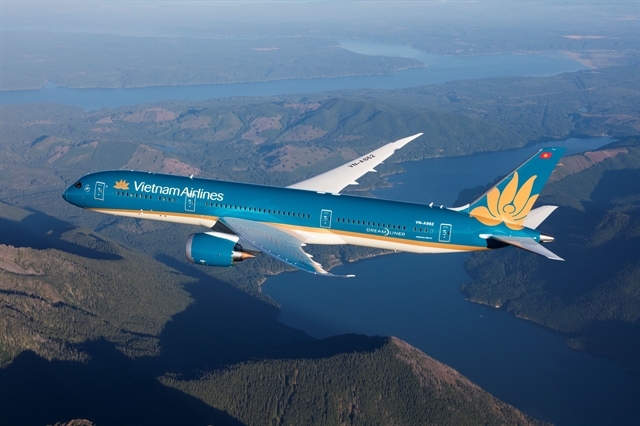
HÀ NỘI — Vietnam Airlines (stock code: HVN) has announced its business performance for the first quarter of 2026, amid emerging uncertainties in the global aviation market driven by ongoing tensions in the Middle East.
In response, the national flag carrier has rolled out a series of operational measures to proactively manage risks expected to intensify in the coming quarters.
During the first quarter, Vietnam Airlines operated nearly 43,000 flights and carried over 6.9 million passengers, marking year-on-year increases of 11 per cent and nearly 12 per cent, respectively. These results reflect not only the continued recovery of the aviation market but also the airline’s effective and flexible capacity management aligned with supply-demand dynamics.
Notably, during the Tết (Lunar New Year) peak – the busiest period of the year – the airline ensured safe and efficient operations, with daily flight frequencies reaching 660–670 flights at peak times, up more than 13 per cent compared to the same period in 2025.
Alongside its business operations, Vietnam Airlines continued advancing its long-term strategic initiatives. During a high-level working visit to the US, the airline signed an agreement to purchase 50 Boeing 737-8 aircraft. This move represents a significant milestone in its fleet modernisation roadmap, enhancing operational efficiency and strengthening competitiveness in the medium and long term.
In terms of network expansion, the airline further strengthened its key international routes, achieving a 28.6 per cent growth in Q1 compared to the same period last year. It currently operates 11 direct routes to Europe using its modern wide-body fleet of Airbus A350 and Boeing 787 aircraft, maintaining direct connectivity with major markets. Starting June 16, 2026, a new direct route between Hà Nội and Amsterdam will be launched, further expanding its presence in Western Europe.
Additionally, from July 1, the frequency on the Hà Nội–Moscow route will increase to four flights per week to meet growing demand. These adjustments underscore the airline’s consistent strategy of expanding key markets while maintaining strategic routes, thereby reinforcing Việt Nam’s connectivity with major global economic hubs.
Vietnam Airlines also reaffirmed its leading position in operational performance, recording the highest on-time departure rate (OTP) in Vietnam’s aviation industry in March 2026 at 80.4 per cent, a 22 per cent increase year-on-year. This achievement highlights the airline’s strong efforts to enhance service quality and operational efficiency.
The airline continued to gain international recognition in Q1 2026, including being ranked among the world’s top 25 safest full-service airlines, placing 19th globally according to AirlineRatings. It was also honoured by the SkyTeam alliance at The Aviation Challenge 2025 with an award for direct impact initiatives, and was listed among the Top 500 Asia-Pacific enterprises in 2026. These accolades further reinforce the reputation and global standing of Việt Nam’s national flag carrier.
On this foundation, the airline maintained solid financial performance in Q1. Consolidated revenue reached over VNĐ37.5 trillion (approximately US$1.5 billion), with after-tax profit of VNĐ4.514 trillion. The parent company alone recorded revenue of more than VNĐ29.5 trillion and after-tax profit of VNĐ3.948 trillion. This growth was largely supported by the strong recovery in international travel demand.
Although tensions in the Middle East began impacting global energy markets from March 2026, their effects on the aviation sector were not yet significantly reflected in Q1 results.
Beyond market factors, these outcomes also reflect the airline’s proactive management approach, including close monitoring of supply-demand trends, strengthened operational discipline, flight schedule optimisation, and rigorous cost control across the system.
Rising cost pressures expected from Q2 amid growing uncertainties
Entering the second quarter of 2026, the aviation industry is expected to face mounting challenges as uncertainties become more pronounced, particularly in relation to fuel price volatility.
The ongoing complexities of the Middle East conflict are directly affecting global energy markets. Fuel typically accounts for 30–40 per cent of an airline’s operating costs, meaning any fluctuation in fuel prices has an immediate impact on operating expenses and business performance.
As of late April 2026, Jet A1 fuel prices remained high, averaging between $190 and $220 per barrel, and at times exceeding $240 due to geopolitical factors. This level is nearly three times higher than the typical range of $80–90 per barrel. Notably, for every $1 increase per barrel above plan, Vietnam Airlines’ annual costs may rise by more than VNĐ300 billion. This highlights the significant cost pressure posed by fuel price volatility, which directly narrows profit margins and presents major challenges for the airline in the coming quarters.
In response, the Government has implemented measures to ensure energy security, including diversifying fuel import sources and supply chains, flexibly managing prices, utilising market stabilisation tools, and adjusting relevant taxes and fees on aviation fuel.
To adapt to these market fluctuations, Vietnam Airlines has proactively developed flexible operational scenarios, focusing on optimising its network across key domestic and international routes, tightening cost control, and improving fleet utilisation efficiency.
At the same time, the airline continues to uphold its role as the national carrier by maintaining connectivity, supporting trade, tourism, and international economic integration. Guided by the directions of the Party and Government, Vietnam Airlines aims to sustain double-digit growth in 2026, contributing to macroeconomic stability and sustainable national development.
The airline will continue closely monitoring market developments and geopolitical factors, adjusting operations flexibly in line with real conditions. Key priorities remain ensuring absolute safety, maintaining stable flight operations, controlling costs, and enhancing resource efficiency to ensure uninterrupted air transport services amid ongoing market volatility. — VNS