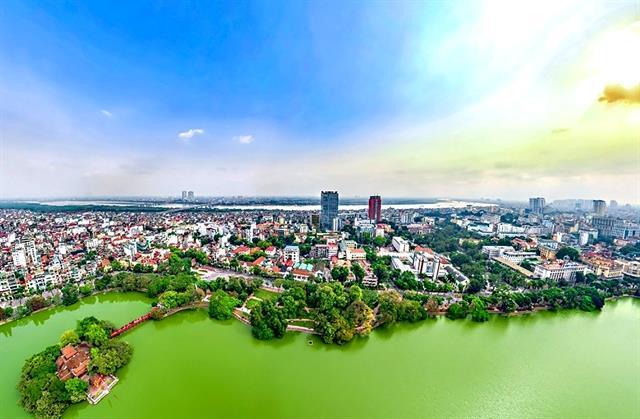
Hà Nội is targeting about $4.5 billion worth of foreign investment in 2026, roughly double the annual average of $2-2.2 billion recorded in previous years.
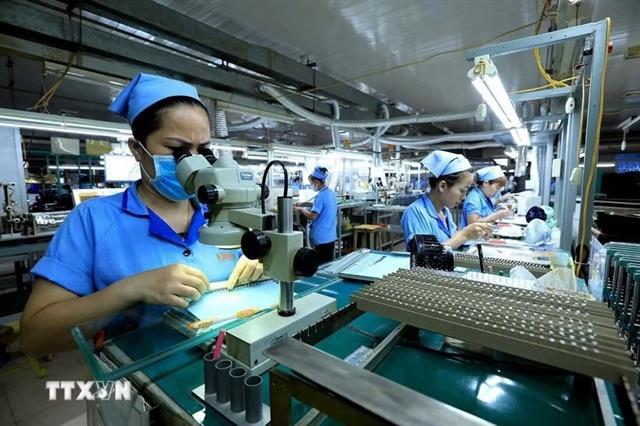
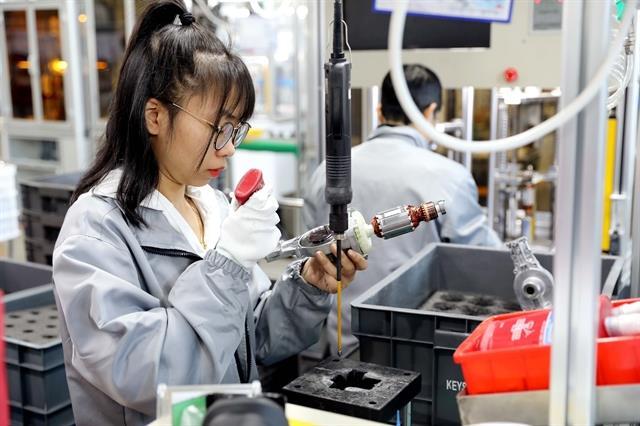
Việt Nam''s share of global manufactured-goods exports has nearly quadrupled over the past three decades, overtaking Malaysia in 2017 to become the largest in ASEAN.
The new model should give SCIC greater flexibility and efficiency in investment and capital management, while allowing it to operate according to market principles rather than being constrained by administrative management.
After a year of preparation, the CTJ joint venture’s plant has officially begun operations, with a target of producing more than 100 UAVs of various types, ranging from drones to electric vertical take-off and landing (e-VTOL) aircraft, per day once fully...
The three industrial infrastructure projects are expected to help expand the province’s industrial space and improve its capacity to attract large-scale, high-tech investments.
Professor Ngô Thắng Lợi, senior lecturer at the National Economics University, speaks with Việt Nam News reporter Khánh Dương about Việt Nam''s economic achievements over 40 years of Đổi mới (Renewal) and future development orientations.
Việt Nam currently has 223 investment projects in Cambodia with total registered capital of nearly US$3.4 billion. Vietnamese companies operate in agriculture, particularly large-scale farming, finance and banking, telecommunications, aviation, processing, trade and services.
Besides infrastructure, Việt Nam must also rapidly develop a highly skilled workforce to attract investment in AI, semiconductors and advanced manufacturing, experts have said.
With more than 30 years of operations in Việt Nam, Decathlon plans to continue investing in the country’s industrial ecosystem, working with local suppliers to increase product value while promoting innovation, technical expertise and sustainable development.
Hà Nội’s efforts to complete legal procedures for projects demonstrate its consistent commitment to a transparent and favourable investment environment and its readiness to work with foreign investors.
Việt Nam ranked ahead of Indonesia, at 57 per cent, and Malaysia and Thailand, both at 49 per cent, making it the preferred ASEAN market for European business expansion for the second consecutive year.
The event brought together more than 1,900 brands from 49 countries, with artificial intelligence (AI), robotics and connected devices among the major trends on display.
By the end of July, accumulated newly registered and adjusted Japanese investment reached about $80.3 billion, ranking third among 153 countries and territories investing in Việt Nam.