












These developments highlight growing confidence in Vietnam as a destination for hyperscale, cloud, and AI infrastructure. The broader digital infrastructure ecosystem also strengthened during the period.
Data-sharing mechanisms between the Ministry of Finance, the Ministry of Public Security, the Ministry of Industry and Trade, the Ministry of Science and Technology and the State Bank of Vietnam have significantly improved the monitoring of financial flows, particularly in...
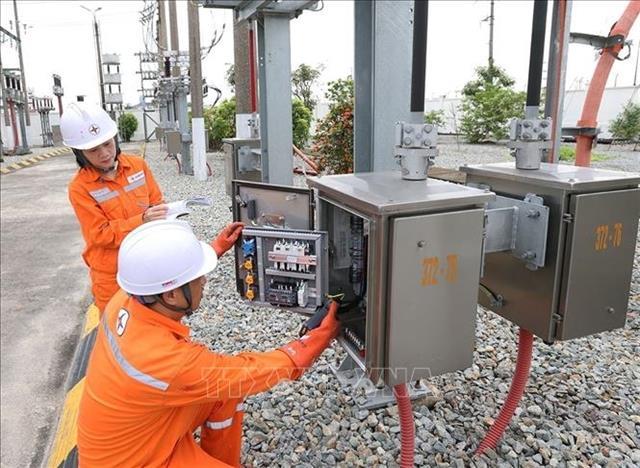
The development of AI, data centres, the trend towards carbon neutrality, and the need to ensure energy security are reshaping the game for the electricity industry.
The nationwide census, conducted by the National Statistics Office (NSO) under the Ministry of Finance, recorded nearly 6.3 million active economic entities engaged in production and business, making it the largest economic census ever carried out in Việt Nam.
The changes are not only transforming how banks serve customers but also creating room to reduce compliance costs, improve government services and support broader economic growth.
Hà Nội’s power sector is accelerating the shift towards a data-driven smart grid, demonstrating how science, technology and digital transformation under Resolution 57 are being applied to modernise critical infrastructure.
With total investment of more than VNĐ7.6 trillion (around US$300 million), G-Campus is among the largest AI-focused digital infrastructure projects planned for the hi-tech park.
Among the country''s core data assets, land information is considered particularly important because of its links to urban planning, investment, credit markets, real estate transactions and public asset management.
Viettel Group has announced that its Hòa Lạc 2 Data Centre has become the first digital infrastructure facility in the Asia-Pacific region to integrate NVIDIA H200 GPU supercomputing systems.
HCM City is seeing a sharp rise in FDI in high-tech sectors, particularly data infrastructure, which is emerging as a core pillar of the digital economy.
From technology-driven urban governance solutions to local online public services, digital technology is steadily narrowing the gap between Government and the business community.