Banking digital transformation opens new engine for growth
The changes are not only transforming how banks serve customers but also creating room to reduce compliance costs, improve government services and support broader economic growth.

HÀ NỘI — Opening a bank account, verifying identity or conducting transactions which once meant paperwork and branch visits now can be done with a few taps on a screen.
The shift reflects Việt Nam's broader push to digitise its economy under the Politburo's Resolution 57-NQ/TW, which identifies science, technology, innovation and digital transformation as new engines of growth.
For the banking sector, that has meant investment in digital infrastructure, data integration and cybersecurity, while expanding cashless payments and simplifying administrative procedures.
The changes are not only transforming how banks serve customers but also creating room to reduce compliance costs, improve government services and support broader economic growth.
"Digital transformation is not only about technology but also about changing the mindset, awareness and working methods of every employee across the banking sector," State Bank of Vietnam (SBV) Governor Phạm Đức Ấn said.
The strategy extends beyond digitising individual banking services to rebuilding the sector's underlying infrastructure, from governance and payment systems to customer identification and public services.
That effort is beginning to reshape consumer behaviour.
Data from the SBV showed that in the first five months of 2026, the number of non-cash payment transactions rose 34.77 per cent from a year earlier, while their value increased 11.48 per cent.
Internet banking transactions jumped 52.82 per cent by volume and mobile banking transactions increased 33.6 per cent, while the value of QR code payments climbed nearly 40 per cent. ATM transactions, meanwhile, fell 9.17 per cent, suggesting cash is gradually giving way to digital payment methods.
Authorities say the expansion has been supported by continued investment in payment infrastructure.
Việt Nam has upgraded its interbank electronic payment system and expanded the network operated by the National Payment Corporation of Vietnam (NAPAS), which is increasingly linked with public services including healthcare, education and transport.
Cross-border QR code payment arrangements with Thailand, Laos, Cambodia, China, South Korea and Singapore have also broadened digital payment options for travellers and businesses.
The digital transformation extends beyond customer services into the banking system's core infrastructure.
According to Hoàng Minh Tiến, deputy director general of the SBV's Information Technology Department, as of June 26, 57 credit institutions and 39 payment intermediaries had introduced mobile authentication using Việt Nam's chip-based citizen identity cards, while 64 banks had deployed the technology at branch counters.
The banking sector has completed biometric verification for more than 162.9 million individual customer records and over 2.6 million corporate accounts, covering all accounts conducting transactions through digital channels, Tiến said.
Linking banks with the national population database has shortened customer verification procedures while allowing lenders to develop more secure digital products and services, he added.
The SBV has also synchronised four specialised databases with the National Data Centre and established common standards for reference data, part of an effort to improve data quality and interoperability across the financial system.
Officials say the combination of regulatory reform, digital infrastructure and shared data is helping shift the banking sector beyond digitising individual products towards building a digital foundation for financial services.
Cutting costs
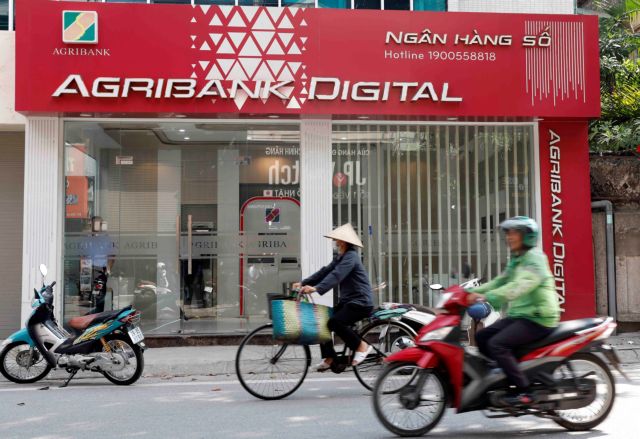
As procedures move online and customer data are automatically verified, businesses and individuals spend less time completing paperwork and fewer resources complying with regulations.
Under Việt Nam's national digital identity programme, the banking sector has connected with the national population database to simplify customer verification and redesign operational processes.
By June 23, the SBV had upgraded its centralised administrative services platform and launched 43 fully online public services through the National Public Service Portal, allowing all eligible banking administrative procedures to be completed electronically.
The platform is linked with multiple government databases, enabling automatic verification and reducing documentation requirements during application processing.
The SBV said faster processing times lower compliance costs, allowing businesses to focus resources on production and investment while improving access to financial services.
Quicker banking procedures can accelerate capital flows through the economy, improve resource allocation and support productivity growth.
The SBV will continue to strengthen the regulatory framework, expand digital infrastructure and data systems, and build a more integrated digital banking ecosystem centred on the needs of businesses and consumers, Ấn said.
Security race
As digital banking expands, authorities are placing greater emphasis on cybersecurity amid growing concerns over sophisticated online fraud.
The central bank amended security regulations in late 2025 to prevent the exploitation of artificial intelligence and deepfake technology to circumvent biometric authentication.
Accordingly, from July 1, 2026, banks are required to deploy biometric authentication systems capable of detecting presentation attacks, including fake faces created using photographs, videos or three-dimensional masks.
The systems must comply with ISO 30107 Level 2 standards and undergo regular testing against simulated deepfake attacks.
Banks must also strengthen mobile banking applications to detect compromised devices, including rooted or jailbroken smartphones, emulators and devices infected with malicious software. The measures mark a shift from reactive security to proactive prevention as cyber threats become more sophisticated.
The impact is already visible through the System for Information, Management, Oversight, and Prevention of Fraud Risks in Payment Activities (SIMO).
By June 29, SIMO247 had been deployed across 12 credit institutions and three payment intermediaries, issuing fraud-risk warnings to around 4.6 million customers.
Following those alerts, customers voluntarily suspended or cancelled more than 1.5 million transactions worth over VNĐ5.2 trillion (US$199 million), according to the SBV.
"When data are connected, procedures simplified and transactions made safer, the benefits will extend beyond the banking sector to the wider economy," Ấn said. "That will provide a foundation for cashless payments, the digital economy, digital government and stronger national competitiveness." — VNS