AI, electric vehicles put new pressure on power industry
The development of AI, data centres, the trend towards carbon neutrality, and the need to ensure energy security are reshaping the game for the electricity industry.
Compiled by Thu Hà
HÀ NỘI — New electricity demands from data centres, high-tech industries and electric vehicles are requiring Việt Nam to make a profound transformation to ensure both sufficient and stable supply, experts said.
As these groups are accelerating to become among the main growth drivers, the capacity of the power industry to meet their power demands will become a decisive factor for the competitiveness of the economy.
In the latest report on the power sector released recently, experts of the KB Securities Vietnam (KBSV) forecasts electricity consumption for the whole year of 2026 to grow by 10-12 per cent.
The rise is more notable in the context that there is a change in power usage requirements. New customer groups such as data centres, high-tech industries and electric vehicles require a stable and continuous power supply. This forces the electricity industry to shift its approach from not only developing supply sources but also building more flexible operating systems.
Lee Sang Ho, a member of the Board of Directors of the Korea Electrical Manufacturers Association (KOEMA), said that the global electricity industry is entering a profound transformation phase as the development of AI, data centres, the trend towards carbon neutrality, and the need to ensure energy security are reshaping the game for the electricity industry.
He believes as AI develops rapidly, data centres with continuous operation needs will become one of the factors changing the structure of electricity consumption. Along with that, the electrification of transportation through electric vehicles will also increase pressure on the supply system.
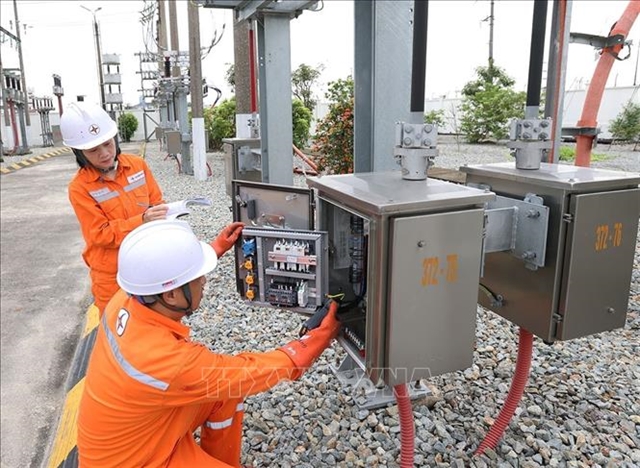
The new demands not only increase electricity consumption but also place higher demands on electricity quality. Data centres, AI and high-tech manufacturing require a stable and continuous power supply. Therefore, the electricity sector needs not only more power generation but also upgrades to the transmission and distribution grid and operational capacity, especially as major electricity-consuming industries expand.
In a recent report, Savills believes that as existing connectivity and legal frameworks are now in place, grid-scale power delivery is the next major constraint for Việt Nam’s data centre cycle.
The demand for domestic data sovereignty, especially under the impact of the Personal Data Protection Law, is creating a foundation to promote the development of domestic storage facilities. However, the power supply capacity must also be upgraded accordingly to keep pace with the increasing demand for industry and digital infrastructure.
Stable and scalable energy is becoming a competitive advantage in attracting investment in warehousing, semiconductors, and data centres. Therefore, energy security needs to be considered right from the site selection stage for new projects.

Besides high-tech industries, the rapid development of electric vehicles in major cities is also creating additional pressure on electricity demand and supply infrastructure.
Statistics show that by the end of 2025, Việt Nam had approximately 215,000 electric cars and nearly 2.6 million electric motorcycles, with an estimated electricity demand of about 652 million kWh, equivalent to 0.2-0.3 per cent of total commercial electricity demand.
It is projected that by 2030, when the number of electric cars could reach 1.6 million and electric motorcycles between 8-13 million, the electricity demand for transportation will increase to approximately 3.1-5.6 billion kWh, accounting for 0.68-1.1 per cent of commercial electricity demand.
The increase in the new customer groups is placing further demands on the supply capacity and flexibility of the power system.
Gas-fired power
To meet this demand, KBSV’s experts said that Việt Nam is accelerating investment and expanding the gas-fired power sector with the goal of reaching a total capacity of 19,685 MW by 2030, including 10,861 MW of domestic gas-fired power and 8,824 MW of LNG-fired power.
However, realising this goal still faces many challenges as of the 19 projects with identified investors, only Nhơn Trạch No.3 and No.4 is operational, while Hiệp Phước No.1 and Quảng Trạch No.2 are still in the planning stages.
KBSV attributed the slow implementation of gas-fired power projects to unattractive electricity pricing mechanisms and contract volumes; and difficulties in securing contractors, land and equipment, which make investors cautious. Price fluctuations and global LNG supply also increase operational risks.
KBSV believes perfecting policy mechanisms is considered key to unlocking capital into gas-fired power plants. According to analysts, new policies such as Resolution No. 253/2025/QH15, Decree No. 56/2025/NĐ-CP, and a proposal to raise the minimum long-term contracted electricity output ratio from 65 per cent to 75 per cent over 15 years will create momentum to attract investment, promote new projects, and make gas-fired power a pillar of the energy sector.
However, alongside the need to develop new power sources, Việt Nam must also consider the transformation of existing power sources. Coal-fired power still accounts for a large proportion of the power structure, but some plants may have to reduce capacity or cease operation if they do not meet new emission standards. This adds further pressure to the problem of ensuring electricity supply.
Upgrading exhaust gas treatment systems has become a crucial solution to maintain the operation of existing coal-fired power plants and meet environmental requirements. The Ministry of Industry and Trade (MoIT) last month requested localities to review power sources and propose new, highly feasible projects, in which coal-fired power plants must be linked to technology and exhaust gas treatment methods. This approach helps balance three goals: ensuring electricity supply, reducing environmental impact, and optimising energy costs.
Besides addressing traditional power sources, the electricity sector is also aiming for long-term changes in its structure and operating methods. Nguyễn Thị Lam Giang, Director of the MoIT’s Department of Innovation, Green Transformation and Industrial Promotion noted that developing clean energy, upgrading infrastructure, and applying digital technology in operations are priority directions to increase the capacity of the power system.
While previously the biggest challenge for Việt Nam was to ensure sufficient power supply, now the country needs a smarter and more flexible power system for the new economy. To achieve this, the power sector must simultaneously develop supply sources, upgrade the transmission grid, promote digitalisation, and attract investment.
As data centres, high-tech industries and electric vehicles are accelerating to become among the main growth drivers, the capacity of the power sector to meet their power demands will become a decisive factor for the competitiveness of the economy. — BIZHUB/VNS