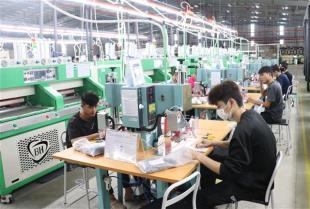
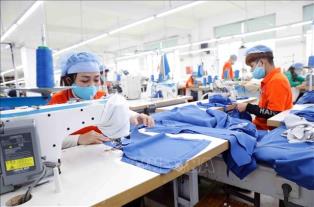
Labour shortages in the technology and electronics sector
Economic experts said the sharp increase in FDI in the electronics sector is creating significant opportunities for Việt Nam, while also intensifying competition for labour.
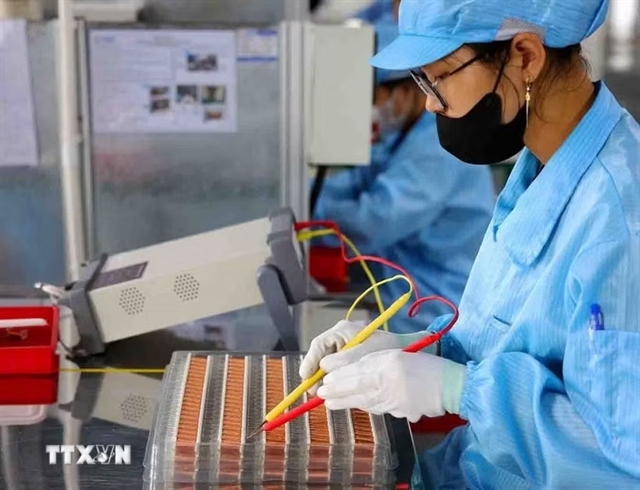
Compiled by Yến Vy
HÀ NỘI — Labour shortages are emerging as one of the biggest challenges facing Việt Nam’s domestic electronics companies, as global corporations increase their investments in the country and show growing interest in technology-intensive, high value-added sectors such as semiconductors, electronic components, precision engineering, high-tech equipment and smart manufacturing.
Citing statistics from the Ministry of Industry and Trade, economic experts said the sharp increase in FDI in the electronics sector is creating significant opportunities for Việt Nam, while also intensifying competition for labour.
Nguyễn Văn Đông, chairman of the Vietnam Electronic Industries Association (VEIA), said Việt Nam’s electronics business community currently comprises more than 80,000 companies.
Electronics is among Việt Nam’s largest export sectors, accounting for more than 30 per cent of total exports, providing jobs for approximately 1.9 million workers and playing a particularly important role in economic growth, digital transformation, innovation and boosting national competitiveness.
Deputy general director of Hanel PT NextTech JSC Trần Đức Tùng told Đại Đoàn Kết (Great National Unity) newspaper that severe labour shortages have become one of the biggest obstacles facing domestic electronics businesses, citing difficulties in recruitment and the rising cost of labour.
In recent years, alongside large construction projects, new FDI projects have attracted a large pool of workers while pushing up wage levels.
The electronics industry is deeply integrated into global supply chains, with production plans and order forecasts subject to change on a monthly or even weekly basis, Tùng said. When customers unexpectedly demand higher output, companies must quickly mobilise additional workers, organise production and deliver orders on schedule.
As a result, even companies with a relatively stable workforce can face capacity shortages when orders surge unexpectedly. If Vietnamese companies are unable to meet demand, orders may be shifted to other factories.
Flexible arrangements for workers and businesses
Economic experts said rising FDI is making bottlenecks in the domestic sector increasingly apparent. Labour availability and overtime are only part of the challenge. Other challenges include productivity, automation and the ability to respond quickly to rapidly changing orders within global supply chains.
Against this backdrop, Tùng proposed studying a more flexible mechanism for allocating overtime on a quarterly and annual basis, particularly for electronics companies, exporters and businesses participating in global supply chains.
Some workers in industrial parks also want to work overtime to increase their incomes, he said. During recruitment, one of the most common questions workers ask is whether a company offers overtime and how much they could earn in total each month.
During the transition period, Tùng emphasised four key principles: overtime must be voluntary, workers must receive full pay, adequate rest must be ensured and workers’ safety and health must be protected.
Deputy Minister of Home Affairs Nguyễn Văn Hồi said at recent a meeting with VEIA and several major electronics and semiconductor import-export firms that regulations on overtime should be reviewed and adjusted to meet businesses’ labour needs, reflect production realities and align with practices in developed countries.
He said overtime could potentially be increased by around 20 hours per week, equivalent to a maximum of 960 hours per year.
However, economic experts noted that in the short term, more flexible labour arrangements could help companies cope with peak production periods and fluctuations in orders. In the longer term, competitiveness must come from higher productivity, technology and the ability to generate greater value added.
With exports worth hundreds of billions of US dollars, electronics has become one of Việt Nam’s leading export sectors. However, retaining a larger share of the value generated by these exports will require strengthening the capabilities of domestic companies, developing supporting industries and moving further into higher-value, technology-intensive stages of production.
According to Deputy Minister of Industry and Trade Nguyễn Sinh Nhật Tân, the ministry has proposed prioritising support for domestic companies to research and master core and foundational technologies in areas such as semiconductors, integrated circuits, electronic materials and automation.
The ministry is also seeking to encourage greater investment in R&D and domestic production of electronic components and materials.
Lê Song Hào, general director of SHDC Electronic Company Limited, said Việt Nam is a leading global electronics export hub, but domestic electronics companies remain relatively small. He said local firms are currently stuck at the first-order stage, constrained by the capital required for equipment investment and operations.
Hào therefore proposed establishing a Vietnam Electronics Development Fund, or merging it with the Semiconductor Fund into a single fund, and reforming collateral and cash-flow mechanisms. The aim would be to open channels of preferential medium- and long-term credit, allowing companies to use machinery and high-tech production lines acquired with borrowed capital as collateral. — VNS