Eight-month economy stays on track, but business pressures remain
Việt Nam’s economy maintained strong momentum in eight months, but slower business re-entry, rising dissolutions and inflationary pressures highlight challenges as the Government pushes for double-digit growth.
Compiled by Mai Hương
Việt Nam’s economy entered the final third of 2026 with a strong set of headline numbers.
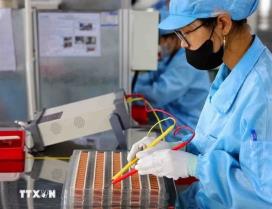
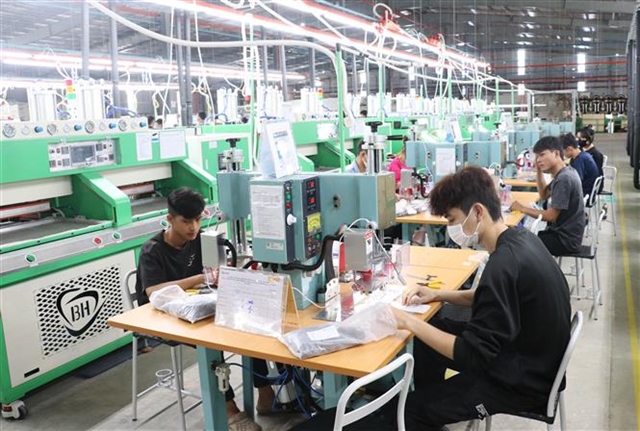
Industrial production rose 11.9 per cent in the first eight months, its fastest eight-month growth in years. Total trade reached a record US$770 billion, while registered foreign investment jumped 55.4 per cent to $40.63 billion. Disbursed FDI reached $17.25 billion, the highest level for the first eight months in five years.
Tourism also remained a bright spot. Nearly 15.9 million international visitors arrived in Việt Nam during the period, up 14.4 per cent year-on-year.
The overall picture remains positive, although some indicators point to areas that will require closer attention in the months ahead. The domestic business sector is one of them.
Business activity needs closer attention
In August alone, nearly 12,200 new enterprises were registered, down 40.5 per cent from a year earlier. Registered capital fell 41.9 per cent, while registered employment dropped 43.5 per cent.
The eight-month picture is less negative. Nearly 138,100 new enterprises entered the market, up 7.7 per cent year-on-year, with registered capital rising 36.2 per cent. But the number of enterprises returning to operation fell 15.8 per cent.
Taken together, the number of newly established and returning enterprises reached about 206,400 in the first eight months, 1.4 per cent lower than a year earlier.
At the same time, nearly 157,400 enterprises left the market.
More than 88,000 temporarily suspended operations. Nearly 28,600 stopped operating while waiting for dissolution procedures. Another 40,800 completed dissolution procedures, a sharp 125.5 per cent increase from the same period last year.
The figure, however, needs to be considered in the context.
Authorities in several localities, particularly HCM City, are accelerating efforts to clean up business and tax databases. Many companies that had stopped operating years ago remained on official records because they had not completed the necessary procedures. Their removal is now being recorded as formal dissolution.
This means the surge in dissolutions does not fully reflect the current health of the business sector.
Phạm Bình An, deputy director of the HCM City Institute for Development Studies (HIDS), said simplifying dissolution procedures and reducing compliance costs would help businesses that no longer have a need to operate complete the process. This would also help improve the accuracy of business data and create a more transparent business environment.
However, the figures also highlight some underlying challenges in the business sector beyond technical reasons.
Dr Nguyễn Quốc Việt, a public policy expert at the University of Economics, Vietnam National University, Hà Nội, noted that before the COVID-19 pandemic, the number of businesses entering or returning to the market was roughly twice the number leaving. In 2025 and particularly in the first eight months of 2026, the ratio had fallen to around 1.2–1.3 times.
Businesses continue to face high input and logistics costs, difficult access to capital and relatively high lending rates. Domestic firms also face weaker export performance in some traditional product groups. These pressures matter because the ability of companies to absorb losses for a long period has become more limited, Việt said.
Pressure builds ahead of year-end
There are other warning signs.
The trade figures are impressive, but imports continued to grow faster than exports. In the first eight months, exports rose 22.4 per cent while imports surged 35.3 per cent, leaving a trade deficit of $20.46 billion.
The imbalance is even more pronounced when looking at business ownership. The foreign-invested sector posted a trade surplus of $8.68 billion, while domestic enterprises recorded a deficit of $30.17 billion.
This suggests that stronger trade growth has not yet translated evenly across the economy.
Consumer demand is another area to watch.
Retail sales and consumer service revenue rose 13.3 per cent in the first eight months, broadly in line with the Government’s full-year target of 13-15 per cent. But after excluding price effects, growth was only 7.6 per cent, roughly unchanged from a year earlier.
In other words, nominal spending is growing strongly, but underlying purchasing power is less dynamic.
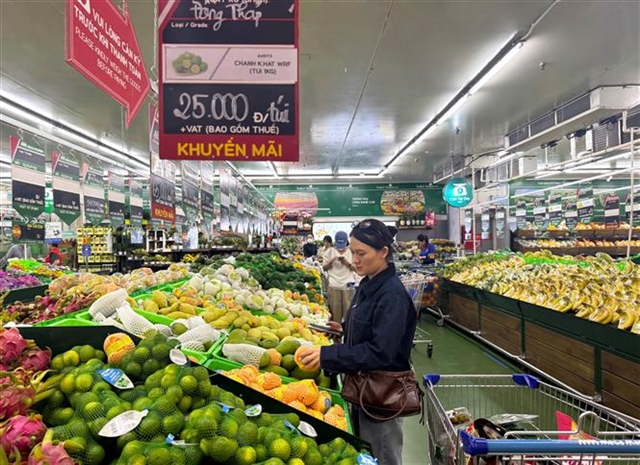
Inflation is also leaving less room for policy manoeuvre. Consumer prices rose 4.45 per cent on average in the first eight months. The Government’s target is to keep inflation at around 4.5 per cent for the full year.
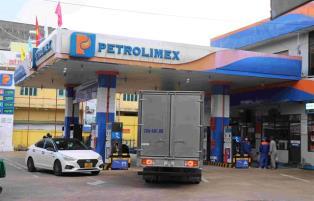
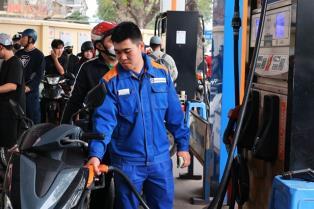
With fuel prices already nearly 15 per cent higher year-on-year, price pressures could intensify in the final four months.
Public investment offers another potential source of growth, but implementation remains uneven. Disbursement reached VNĐ509.6 trillion in the first eight months, or 49.8 per cent of the annual plan. Six ministries and agencies had disbursed less than 10 per cent, while 14 key transport projects had disbursement rates below 5 per cent.
This leaves a relatively narrow window for policymakers.
The economy needs to sustain industrial production, exports and investment while supporting domestic businesses and keeping inflation under control. At the same time, the Government must accelerate public investment without creating additional pressure on prices, interest rates or the financial system.
The challenge is particularly significant because the growth target has not been lowered.
Despite acknowledging the pressure, the Ministry of Finance has called for continued determination to achieve double-digit economic growth in 2026 while maintaining macro-economic stability and keeping inflation at around 4.5 per cent.
The numbers from the first eight months show that Việt Nam has strong engines to build on. But they also show that those engines are not running at the same speed.
With four months left, the Government is stepping up fiscal and monetary measures, accelerating public investment and supporting businesses and exports, while removing obstacles to stalled projects and improving the business environment. It remains committed to the double-digit growth target for 2026. — VNS