Petrol price rises put pressure on inflation, production costs
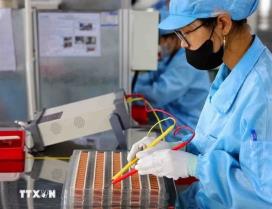
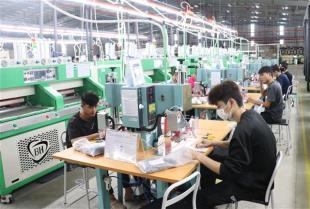
Fuel prices have risen in four consecutive adjustments for petrol and three for diesel, adding to costs for businesses ranging from livestock producers to transport operators.
Compiled by Thu Trà
HÀ NỘI — Higher fuel prices are driving up production, transportation and commodity costs in Việt Nam, adding to inflationary pressures. With limited scope for further policy measures, economists said extending fuel tax cuts and targeting support for diesel could help ease the impact on prices.
Fuel prices have risen in four consecutive adjustments for petrol and three for diesel, adding to costs for businesses ranging from livestock producers to transport operators.
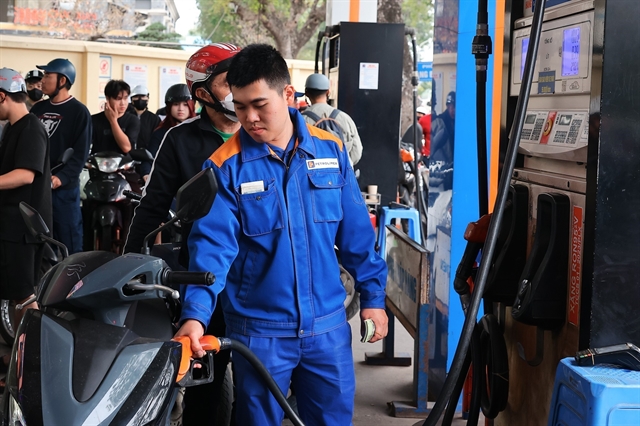
E5RON92 petrol rose to VNĐ26,397 per litre on Thursday, while E10RON95-III increased to VNĐ27,087. Diesel rose to VNĐ30,497 per litre, according to the latest price adjustment.
E5 petrol has risen by VNĐ4,634 per litre over the four consecutive increases, while E10 petrol has gained VNĐ4,485. Diesel prices have increased by VNĐ2,754 over three consecutive adjustments.
The higher fuel costs are already feeding through to production.
Nguyễn Công Bắc, director of a livestock company in Sơn La Province, said animal feed prices have increased three times in the past 20 days, by a combined VNĐ900 per kg.
The increases have pushed up the company's pig production costs by about VNĐ2,000 per kg, Bắc said.
His farm raises about 10,000 pigs and consumes roughly 700 tonnes of animal feed each month. Live pig prices are currently around VNĐ56,000 per kg, compared with production costs of about VNĐ60,000, leaving the farm with an estimated loss of up to VNĐ4,000 per kg sold, he said.
In Hà Nội, higher petrol prices are also putting pressure on manufacturing, trading and import-export businesses, according to the Hanoi Association of Small and Medium Enterprises.
For exporters, higher petrol costs are increasing transportation expenses as well as container freight, domestic shipping, insurance and other related charges. Because businesses often agree on prices before goods are delivered, cost increases during the contract period can quickly squeeze profit margins, the association said.
Inflation pressures
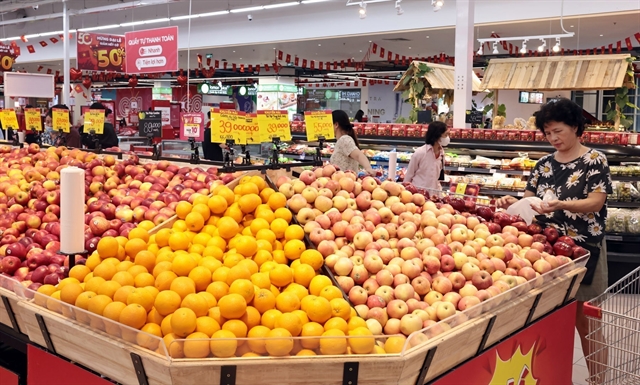
The General Statistics Office said consumer prices rose 0.47 per cent in August from the previous month, mainly due to domestic petrol price adjustments following increases in global prices. Transportation prices rose 4.09 per cent, contributing 0.41 percentage point to the overall monthly consumer price index increase.
Diesel prices rose 22.15 per cent and petrol prices 9.53 per cent during the period, the statistics office said.
Average consumer prices in the first eight months of 2026 were 4.45 per cent higher than a year earlier. Housing, electricity, water, fuel and construction materials rose 6.71 per cent, while transportation increased 5.38 per cent and food and catering services rose 4.76 per cent.
Việt Nam is likely to face continued inflationary pressure in the final four months of 2026, driven by higher global oil prices, construction costs and domestic economic factors, MB Securities JSC (MBS) said.
As a net energy importer, Việt Nam is particularly exposed to higher global oil prices, which could put further pressure on domestic fuel prices, according to MBS.
Construction material prices are also expected to rise on strong demand from infrastructure and residential real estate projects, with steel prices forecast to increase 7 per cent from a year earlier.
Changes in business tax collection could also feed into consumer prices, while the effects of exchange rate movements and strong credit growth in 2025 are expected to gradually pass through to prices in 2026, MBS said.
MBS forecasts average consumer price inflation of 4-4.5 per cent in 2026 and third-quarter GDP growth of 8.7-9 per cent.
The brokerage said inflationary pressures in the second half of the year would come from both external and domestic factors, leaving limited room for measures to contain consumer prices in the final months.
Limited room for policy response
Nguyễn Tú Anh, macroeconomics research project director at VinUniversity's Smart Green Transformation Centre, said the scope for Government intervention is narrowing.
Fuel tax reductions have limited room for further adjustment, while some existing tax measures are due to expire on September 30, Tú Anh told VietNamNet. He also said the country's petrol price stabilisation fund has limited capacity to absorb further increases.
The latest petrol price increases have added significantly to inflationary pressures and, without appropriate policy support, inflation could exceed the Government's 4.5 per cent target by year-end, he said.
Given the limited policy room, Tú Anh said broad-based petrol price support should be avoided in favour of targeted measures, with priority given to diesel.
Diesel is a key input for road, rail and maritime transport, as well as machinery used in production. Higher diesel prices therefore feed directly into transportation and production costs and can add to inflationary pressures, while petrol is used mainly for personal transport, he said.
He also proposed extending tax reductions on petrol and diesel beyond September 30 to ease cost pressures on businesses and consumers.
Under Resolution 34, the environmental protection tax exemption for petrol, excluding ethanol, diesel, kerosene, mazut fuel oil and aviation fuel is due to remain in effect until September 30. Excise tax rates are currently 8 per cent for E5 petrol and 7 per cent for E10 petrol. — VNS