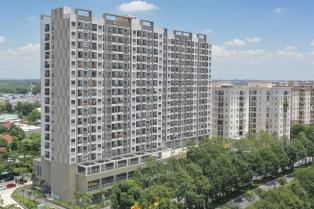
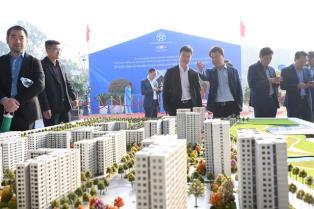
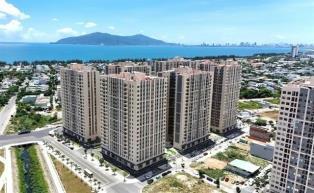
Việt Nam's social housing programme reaches 77 per cent of target
According to the Ministry of Construction’s report, 875 social housing projects with total planned investment of about VNĐ637 trillion (US$24 billion) are being carried out nationwide.
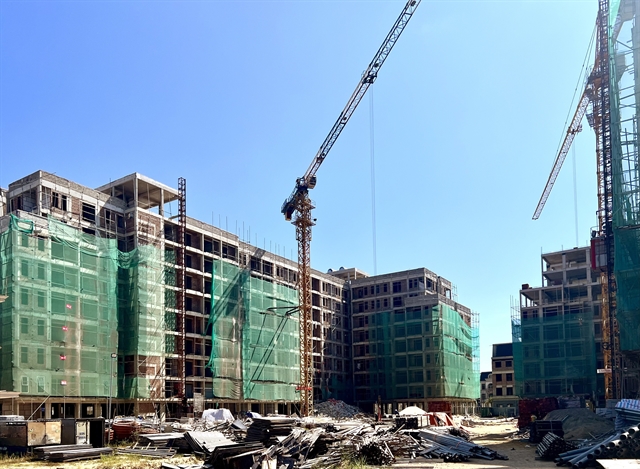
HÀ NỘI — Việt Nam has completed, started construction on or approved investment plans for 875 social housing projects comprising a total of 773,457 units as of the end of July, reaching 77 per cent of the target set under a Government programme to build at least one million homes for low-income earners and workers by 2030.
According to the Ministry of Construction’s report, 875 social housing projects with total planned investment of about VNĐ637 trillion (US$24 billion) are either newly completed or currently being carried out nationwide.
Of these, 289 projects comprising 197,805 units have already been built, with a total investment of about VNĐ162.9 trillion.
Another 270 projects, providing 270,409 units, are under construction, while 316 projects with 305,243 units have received investment policy approval.
Some localities are making headway on social housing, including Hải Phòng, Đà Nẵng, Thái Nguyên, Hưng Yên, Bắc Ninh, Thanh Hóa, Nghệ An, Khánh Hòa and Cà Mau, the ministry said.
Nationwide, about 1,986 sites covering 10,279 ha have been earmarked for social housing development, including more than 6,047 ha of standalone land and about 3,174 hectares set aside as the 20 per cent land allocation within commercial housing projects.
The ministry said the policy framework for social housing had undergone significant changes, with the 2023 Law on Housing, National Assembly Resolution No. 201/2025 and new regulations on land, investment and taxation.
But the ministry said having land available on paper did not necessarily mean that suitable housing will reach workers. Many planned sites are located far from urban centres and industrial parks, while transport connections remain underdeveloped, making commuting and access to essential services difficult.
The ministry’s report pointed out that some local authorities have not given sufficient priority to social housing development or allocated enough local budget for compensation, resettlement and infrastructure to clear land for projects.
Other problems include complicated administrative procedures involving investment, land, construction and housing, as well as difficulties accessing credit while State budget funding remains limited.
Shortage of rental housing
Demand for affordable rental housing remains particularly high nationwide, but available supply has yet to meet expectations or the urgent needs of workers and low-income households, the ministry said.
The ministry estimated that demand for rental housing nationwide exceeded one million units, with about 85 per cent of demand coming from workers and employees in industrial parks while actual supply remains limited.
Việt Nam had around 205,074 publicly owned rental housing units at the end of July, including about 13,450 social housing units, nearly 78,500 official residences and more than 64,800 student dormitory rooms. Some resettlement and old public housing units also remain unused.
The ministry has therefore proposed a broader shift in housing policy, with simultaneous development of commercial housing and rental housing rather than focusing mainly on home ownership.
Rental housing should become a strategic, long-term segment of the housing market to strengthen social welfare, stabilise the industrial workforce and improve the balance of the property market, the ministry said.
The ministry said rental housing development should be prioritised in major cities, industrial parks, high-tech zones and areas planned for transit-oriented development.
The ministry also proposed streamlining investment, planning, land allocation, construction licensing and access to preferential credit through a one-stop mechanism with clear deadlines and responsibilities.
The goal is not only to meet the numerical target of one million social housing units by 2030 but also to change the structure of housing supply, with rental housing becoming a key pillar of national housing policy.
Under Resolution 07/NQ-CP issued on January 12, the Government raised the overall target for the ten-year programme to 1,140,600 units from 1,062,200. — BIZHUB/VNS