Hà Nội targets up to 27,000 social housing units in 2026
The target exceeds the minimum of 18,700 units assigned to the capital by the Prime Minister and forms part of Hà Nội's 2026-30 housing development plan, which includes 236 social housing projects.
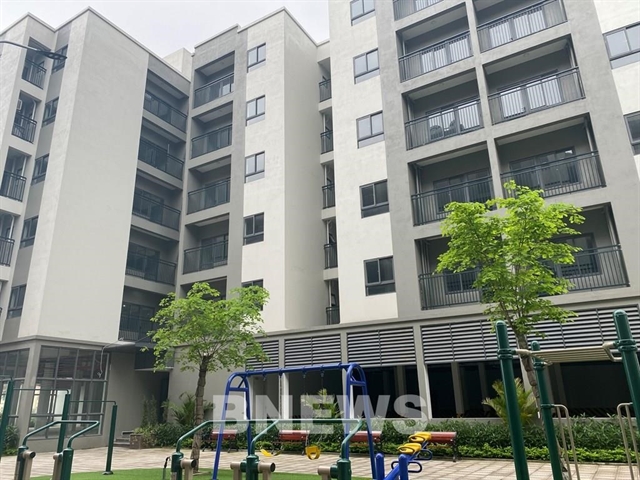
HÀ NỘI — Hà Nội aims to complete and bring to market between 25,000 and 27,000 social housing units in 2026 after introducing a fast-track approval mechanism designed to halve administrative processing times for such projects, according to a city directive.
The target exceeds the minimum of 18,700 units assigned to the capital by the Prime Minister and forms part of Hà Nội's 2026-30 housing development plan, which includes 236 social housing projects.
The municipal People's Committee said in Directive No 16/CT-UBND that it would apply a 'green lane' mechanism to planning, investment, land and construction procedures, requiring departments and agencies to cut processing times for social housing projects by at least 50 per cent.
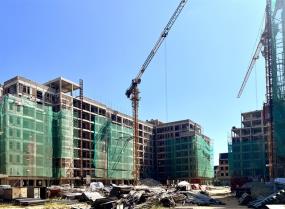
The city has approved or selected investors for 147 social housing and housing projects for the armed forces, covering about 583ha and providing around 132,000 apartments with total planned investment of about VNĐ290.5 trillion (US$11.1 billion). Construction has begun on 30 of those projects, representing roughly 24,120 apartments.
It plans to start work on the remaining 114 listed projects during the second half of 2026 while accelerating construction on projects already under way. It aims to complete foundation work on about 77 projects, enabling approximately 46,100 apartments to be brought to market in accordance with regulations.
The directive also delegates greater authority to commune-level people's committees to appraise and approve detailed 1:500 planning, with approvals or adjustments to be completed by August 2026.
The Department of Construction is assigned as the standing agency of the Special Task Force on Social Housing Development, responsible for inspecting and monitoring progress every two weeks. It is also required to appraise feasibility studies and issue construction permits within ten working days of receiving complete applications.
At the same time, the Hanoi Department of Finance, the Hanoi Investment Fund for Development, and the Vietnam Bank for Social Policies' branch in Hà Nội are required to prioritise funding and lending to support the implementation of the projects.
Investors are required to meet committed timelines, coordinate with relevant authorities to utilise the 'green lane' mechanism and expedite investment and construction procedures. Projects that are delayed or fail to meet commitments without valid reasons could face licence revocation or exclusion from future developments in the city.
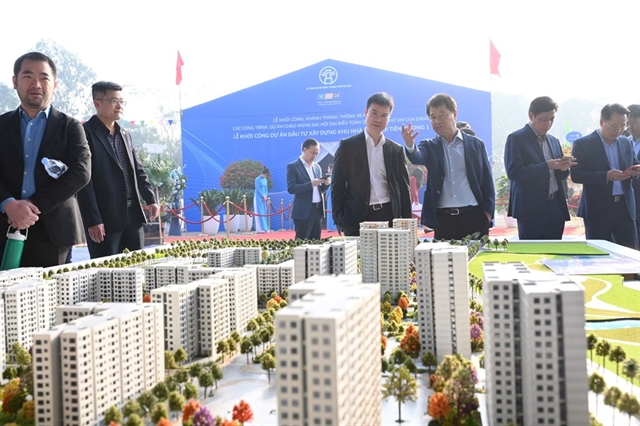
Nguyễn Thế Điệp, vice chairman of the Hanoi Real Estate Club, said the directive marked one of the city's strongest policy moves in recent years to accelerate social housing development.
Điệp emphasised the shift from a management mindset to one focused on supporting businesses, saying lengthy administrative procedures had long been a major obstacle to project delivery.
The 'green lane' mechanism will prioritise the processing of applications, reduce waiting times between stages and strengthen the accountability of Government agencies. If implemented effectively, reducing administrative processing times by at least 50 per cent would make a significant difference, Điệp said.
He added that the mechanism would send a strong signal that Hà Nội considers social housing a priority and intends to accelerate social housing development alongside other key socio-economic projects.
In addition to administrative reforms, three other factors will be critical to achieving the target of starting construction on 114 social housing projects in the second half of the year, Điệp said.
Land availability should be the top priority, with local authorities continuing to prepare cleared sites and ensure supporting infrastructure is in place so projects can begin as soon as approval procedures are completed.
Access to financing will also be essential, with social housing projects requiring preferential loans with stable interest rates and long repayment terms to enable both developers and homebuyers to secure financing.
Coordination among government departments and local authorities will also be crucial, he said, adding that if each agency fulfils its responsibilities and processes applications on schedule, project implementation would proceed more smoothly.
Further improvements to incentive policies would also be needed to attract long-term private investment in the sector, he said.
Developers would commit to the social housing market only if they see viable investment returns and transparent administrative procedures, Điệp noted. — VNS