Việt Nam seeks to put its financial centre on the global capital radar amid shifting flows
Việt Nam is positioning its international financial centre to tap shifting global capital flows, focusing on niche segments, competitive costs and a modern regulatory framework to attract strategic investors.
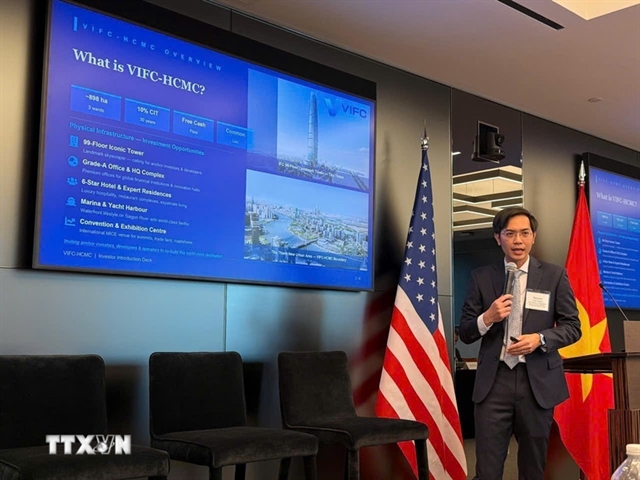
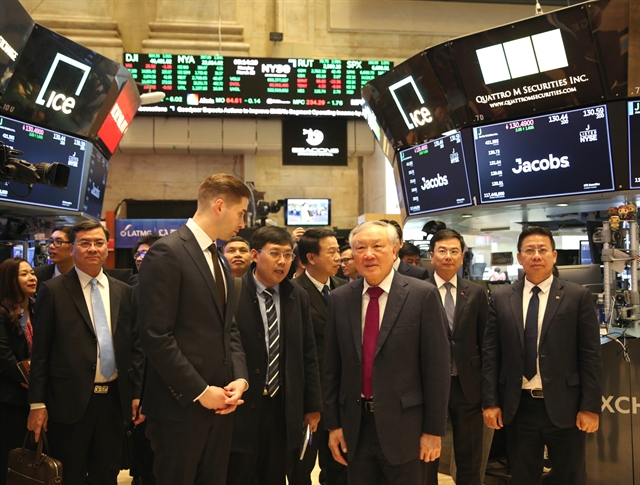
Việt Nam’s International Financial Centre (VIFC) is entering its formative stage, with participation by major institutions expected to generate strong spillover effects and attract broader investor interest. A recent US visit led by Permanent Deputy Prime Minister Nguyễn Hòa Bình, chairman of the VIFC Executive Board, is seen as a strategic move to strengthen ties with global financial institutions and raise the centre’s international profile.
Associate Professor Dr Nguyễn Hữu Huân, vice chairman of the VIFC Executive Authority in HCM City (VIFC-HCMC), shared insights with Vietna
m News Agency on capital attraction, positioning and future prospects.
What impact do you expect the recent US visit to have on VIFC-HCM City’s ability to attract international capital?
The visit plays a critical role in promoting and positioning VIFC-HCM City on the global financial map. It should be seen not merely as a diplomatic mission but as a large-scale financial investment promotion effort aimed at directly engaging leading financial institutions, investment funds and exchanges.
First, it provides access to core sources of global capital. Meetings with international banks, funds, exchanges and fintech firms allow Việt Nam to present not only its broader investment environment but also specific opportunities at VIFC-HCM City. This is particularly important at an early stage, when participation by major players can generate strong spillover effects.
Second, the engagements help position the centre as a next-generation financial hub in the region, with a focus on digitalisation, green finance and emerging models such as tokenisation, fintech and aviation and maritime finance.
Third, in practical terms, such missions often deliver three outcomes: attracting strategic investors, advancing concrete projects such as international exchanges or financial data centres, and building market confidence, a key factor in drawing global capital.
In discussions with international partners, how is VIFC-HCM City positioned to differentiate itself from other regional financial centres?
VIFC-HCM City is positioned not as a broad-based rival to mature hubs like Singapore, Hong Kong (China) or Dubai but as a niche-focused centre leveraging its late-mover advantage to adopt modern financial models.
One key focus is aviation finance. Việt Nam is among the fastest-growing aviation markets in the region, yet activities such as aircraft financing, insurance and fuel hedging are still largely conducted in centres like Singapore or Hong Kong. The aim is to gradually bring these transactions back to Việt Nam and build a complete aviation finance ecosystem.
Maritime finance is another priority, linked to Việt Nam’s role in global logistics. The Cái Mép-Thị Vải deep-water port cluster is one of the few in the region capable of handling large container vessels on direct routes to Europe and the US. However, most related financial services including shipping finance, insurance and trade finance are still handled offshore. VIFC-HCM City is expected to become a hub for these activities.
Beyond sector-specific segments, the centre is positioned as a destination for global financial and technology firms to set up headquarters and innovation hubs, with HCM City offering significantly lower operating costs, around one-fifth of those in Singapore or Dubai, while maintaining an international business environment and modern financial infrastructure.
Another advantage is human capital. Việt Nam has a young, dynamic workforce with strong technological adaptability, supported by a growing pool of well-trained engineers, data specialists and finance professionals capable of supporting emerging areas such as fintech, blockchain and financial data analytics.
In short, rather than replicating existing financial centres, the strategy is to target niche segments aligned with Việt Nam’s strengths, leveraging cost efficiency, human capital and a fast-growing market to build a distinct regional position.
More broadly, as global investors reassess risk amid geopolitical volatility, how is capital shifting and what opportunities could VIFC capture?
The reallocation of geopolitical risk is under way, but it has not led to a broad withdrawal of capital from established financial centres in the Middle East. What is more evident is a reassessment of risk, particularly as conflicts begin to affect energy and transport infrastructure and weigh on market sentiment in the Gulf.
Recent developments have pressured regional markets, with bank stocks falling and liquidity support measures introduced while risks to energy infrastructure and disruptions around the Strait of Hormuz have pushed oil prices higher. Although leading centres such as the Dubai International Financial Centre (DIFC) remain resilient, there are signs of caution, with Dubai’s property transactions slowing and some assets declining in value as investors reassess regional risks.
This creates a window of opportunity for emerging centres such as VIFC. Not as a replacement for existing hubs but as part of a multi-centre strategy. As geopolitical risks rise, global institutions tend to diversify their presence across locations offering relative neutrality, lower costs and policy flexibility.
If positioned well, VIFC could attract investors seeking an additional Asia hedge, particularly in segments where HCM City has strong economic fundamentals. These include maritime and aviation finance, digital finance and tokenisation as well as integrated financial services combining traditional and digital banking.
What foundations are needed for VIFC to move beyond positioning and build real investor confidence?
The core factor is the institutional framework. National Assembly Resolution No. 222/2025/QH15 provides the legal foundation for VIFC, but more importantly is how supporting institutions are designed.
The establishment of specialised courts and international arbitration mechanisms based on common law, with the participation of international judges and arbitrators, marks a significant step. This is a key consideration for global investors, as it ensures dispute resolution in line with international standards.
At the same time, the Government has issued guiding decrees, creating a relatively coherent policy framework. Incentives are designed to be competitive, including corporate and personal income tax exemptions for the first four years, extended to 2030, followed by a corporate tax rate of around 10 per cent, lower than both domestic levels and many regional centres.
VIFC is also expected to operate under international legal practices, with a relatively independent mechanism from the existing system to enhance transparency and investor confidence. A regulatory sandbox further allows space for new financial models, particularly in fintech and innovation.
On operations, administrative procedures are simplified and licensing timelines shortened, improving flexibility for investors. Market response has been positive, with more than US$9 billion in committed capital within just over two months of operation.
While it will take time to develop into a fully-fledged international financial centre, VIFC is gradually moving from positioning to building credibility, laying the groundwork to attract global capital in the years ahead. — VNS