Livestock sector targets green and sustainable development
As Việt Nam’s livestock sector faces the need to renew its growth model, enhance added value and fulfil its sustainable development commitments, Deputy Director of the Department of Livestock Production and Animal Health Phạm Kim Đăng spoke to Việt Nam News reporter Trần Như about the sector’s key orientations and solutions for 2026.
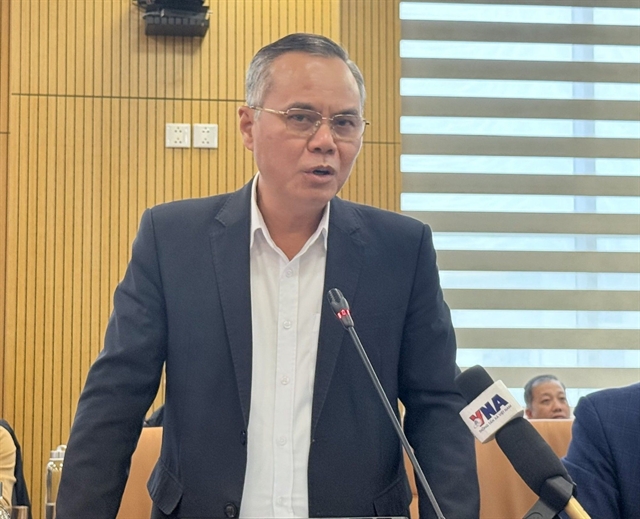
As Việt Nam’s livestock sector faces the need to renew its growth model, enhance added value and fulfil its sustainable development commitments, Phạm Kim Đăng, deputy director of the Ministry of Agriculture and Environment's Department of Livestock Production and Animal Health, spoke to Việt Nam News reporter Trần Như about the sector’s key orientations and solutions for 2026.
The year 2025 was considered a challenging one, yet the livestock sector maintained growth. What are the sector’s orientations and targets for 2026?
It can be said that 2025 was a pivotal year for the livestock sector. Amid ongoing global economic volatility, unstable input prices and persistent risks of animal diseases, Việt Nam’s livestock industry nevertheless maintained growth momentum and ensured a stable food supply for the domestic market.
In 2025, livestock production value was estimated to grow by 4.3–4.5 per cent, below the target of 5.7–5.98 per cent set by the ministry. The main reason was the severe impact of natural disasters and disease outbreaks on livestock herds.
In terms of herd size, by the end of 2025 the pig population nationwide reached about 31.4 million head. The poultry population rose to around 585 million units, up 3 per cent compared to the previous year. By contrast, buffalo and cattle herds continued their downward trend, standing at about 1.95 million buffalo and 6.14 million cattle.
Looking ahead to 2026, the livestock and animal health sector aims to achieve production value growth of 5–5.2 per cent compared to 2025, with total live-weight meat output estimated at about 9.09 million tonnes, up 4.9 per cent.
The sector will pursue stable and sustainable development, minimising supply–demand shocks. At the same time, efforts will focus on increasing added value and enhancing the competitiveness of livestock products, not only in the domestic market but also in export markets.
However, 2026 is also forecast to be a year of considerable volatility, as the sector will be affected simultaneously by economic, technological, epidemiological and climate change factors. In particular, the risk of outbreaks of dangerous diseases such as African swine fever, avian influenza and foot-and-mouth disease remains high.
The sector will continue to accelerate the restructuring of livestock production towards modernisation, gradually reducing small-scale and fragmented farming. At the same time, it will develop concentrated, high-biosecurity farming models linked to processing and market outlets. This aims to lay a foundation for stable medium- and long-term development.
The sector will also continue to refine institutions, improve productivity, quality and competitiveness, expand markets and modernise livestock governance for greater efficiency.
In addition, it will focus on effectively implementing the Law on Animal Husbandry, the Law on Veterinary Medicine, relevant decrees and sectoral development strategies.
It will also strengthen communication efforts to raise awareness and responsibility among farmers, enterprises and management agencies.
One of the major bottlenecks at present is disease safety and export conditions. What solutions will the sector prioritise to address this issue?
Disease safety is a prerequisite for enhancing the value of livestock products and expanding export markets. In recent years, Việt Nam has made significant progress in controlling animal diseases. However, substantial efforts are still required to meet the stringent requirements of demanding markets.
From 2026, the sector will intensify the development of disease-free zones and facilities in accordance with standards set by the World Organisation for Animal Health. This is regarded as a technical passport enabling Vietnamese livestock products to access official and sustainable export channels.
At the same time, we will continue to improve the disease surveillance system, strengthen the capacity of local veterinary agencies and promote the application of digital technologies in monitoring and early warning.
Close coordination among management authorities, enterprises and farmers is also crucial to ensuring that disease safety standards are implemented consistently and substantively.
Many believe that enterprises and value chains are playing an increasingly important role in modern livestock development. What is your view on this?
We clearly identify enterprises as the core driving force leading the livestock sector at this stage. Large enterprises not only possess financial and technological capacity but are also capable of organising production along value chains, effectively connecting farmers with the market.
The sector is strongly encouraging value chain linkages, from breeding stock and feed to farming, slaughtering, processing and distribution. When these stages are closely connected, product quality can be better controlled, costs optimised and benefits more harmoniously shared among stakeholders.
From the regulatory perspective, the department of livestock production will continue to advise on improving mechanisms and policies that encourage enterprises to invest in deep processing, brand building and export market development.
This is an inevitable direction for elevating Vietnamese livestock products, rather than focusing solely on output volume as in the past.
What concrete steps will the sector take in the coming period to respond to requirements for green development, emissions reduction and the Net Zero commitment?
Developing livestock production in a green, circular and low-emission direction is no longer merely a trend but a mandatory requirement, as Việt Nam implements its commitment to achieve Net Zero by 2050.
In the coming period, the sector will prioritise promoting circular livestock models, making use of agricultural by-products and treating livestock waste to produce organic fertiliser and bioenergy. This approach will both reduce environmental pollution and increase economic value.
Alongside this, digital transformation in livestock management will be accelerated, including the development and completion of a national livestock database to support governance, market forecasting and product traceability.
With transparent data, the livestock sector will be better positioned for sustainable development, risk reduction and enhanced consumer confidence both domestically and internationally.
According to various recent reports and analyses, Việt Nam’s livestock sector is facing intertwined opportunities and challenges. Domestic demand for food continues to grow, while export opportunities are expanding thanks to new-generation free trade agreements.
However, animal feed costs remain high and heavily dependent on imported raw materials; requirements concerning disease safety, traceability and emissions reduction are becoming increasingly stringent.
In this context, restructuring the livestock sector towards a modern, green and sustainable model, closely aligned with market demand, is seen as an inevitable path. — VNS