Việt Nam pushes to localise EV technology as regional race accelerates
HÀ NỘI — Việt Nam is stepping up efforts to build a domestic electric vehicle (EV) industry as competition in Asia’s fast-growing EV market intensifies.
As the global automotive sector shifts towards electrification, Việt Nam is seeking to expand EV adoption while developing core technologies such as batteries, motors and thermal management systems, which experts say are key to helping the country move beyond assembly work and become a regional manufacturing hub.
The push to localise EV technology also aligns with Resolution 57-NQ/TW, which identifies science, technology, innovation and digital transformation as key drivers of Việt Nam’s long-term economic growth and industrial competitiveness.
This strategy reflects a wider shift taking place across Asia. Countries including China and South Korea spent years investing heavily in battery technology and local supply chains, before emerging as major players in the global EV market.
China is now the world’s largest EV producer and consumer. Its rise was driven by aggressive localisation policies, large-scale battery production and strong government support for domestic firms.
Meanwhile, South Korea followed a different path. The country focused on developing globally competitive battery makers and automotive suppliers through long-term industrial policies and technology investment.
Analysts say Việt Nam is trying to follow a similar trajectory, though on a smaller scale, by encouraging local companies to develop core technologies instead of relying heavily on imported components.
The push also supports the country’s long-term energy and climate goals. Việt Nam has pledged to achieve net zero emissions by 2050, with electric mobility expected to play a major role in that transition.
According to the Ministry of Industry and Trade, EV development should be viewed as the creation of an entirely new industrial ecosystem rather than simply a change in transportation.
Phạm Văn Quân, deputy director of the ministry’s Industry Agency, said Việt Nam has made significant progress in localising EV production in recent years.
By the end of 2025, the country had introduced 28 technical standards related to charging stations, chargers and batteries.
Authorities expect the legal framework for EV charging infrastructure to be completed in the third quarter of 2026.
Domestic automaker VinFast said localisation rates for some vehicle models had reached around 60 per cent by late 2025, noting that this figure could rise to 80 per cent once a battery factory in Hà Tĩnh Province becomes fully operational.
The company has also rapidly expanded charging infrastructure, installing more than 150,000 charging ports nationwide to support EV adoption.
Industry observers say battery production and electric motors are among the most important areas of focus, because they account for a large share of vehicle value.
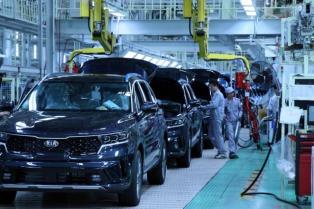
This marks a sharp contrast with Việt Nam’s traditional automobile sector, where foreign-invested manufacturers have maintained relatively low localisation rates for decades.
Economist Võ Trí Thành, director of the Institute for Brand and Competitiveness Strategy, said future competition would depend less on assembly capacity and more on technological capability.
“The key issue is whether businesses can master precision engineering, software and circular economy technologies,” he said.
Thành added that Việt Nam would need to support both supply and demand to build a sustainable EV ecosystem.
On the supply side, businesses need stronger support to join global supply chains. On the demand side, the domestic market must grow large enough to support hundreds of suppliers and technology firms.

The transition is especially important in the two-wheeled vehicle segment.
Việt Nam remains one of the world’s largest motorcycle markets. According to Mordor Intelligence, Việt Nam’s electric motorcycle market could exceed US$8.8 billion by 2031.
However, adoption remains slower than expected because many consumers still worry about charging infrastructure, battery life and driving range.
Some domestic companies are trying to solve these problems through technology, rather than relying entirely on charging networks.
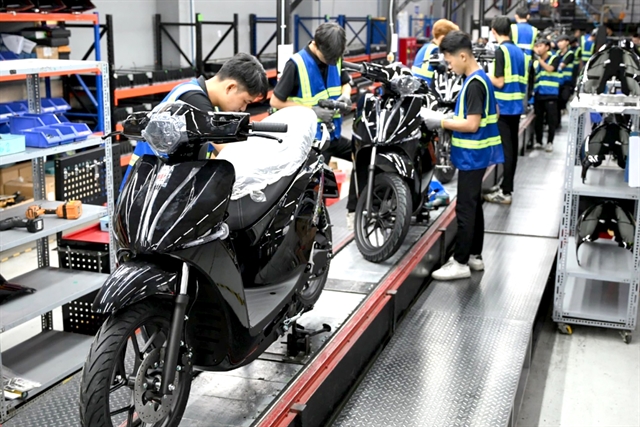
Vietnamese start-up Dat Bike has focused on improving battery performance and charging flexibility.
The company said its latest models can travel up to 285km on a single charge. Some versions can recharge in as little as 2.5 hours using standard household power outlets.
Dat Bike chief executive Nguyễn Bá Cảnh Sơn said the company has adopted a vertically integrated model. It develops core technologies in-house, including motors, battery systems, battery management software and charging technology.
According to Sơn, localisation rates for some components have exceeded 90 per cent.
Competition is also intensifying in the passenger vehicle segment.
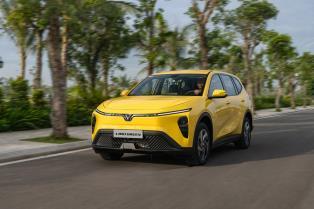
VinFast recently introduced a new integrated thermal management system for its VF 8 SUV. The system manages heat distribution throughout the vehicle and is designed to improve battery performance, increase charging efficiency and extend battery lifespan.
It helps maintain stable battery temperatures during charging and operation, especially under harsh weather conditions.
Experts say thermal management systems are becoming increasingly important as automakers compete to improve charging speed and battery durability.
For Việt Nam, mastering core EV technologies could shape the future of its automotive industry.
Analysts say the country’s long-term success will depend on whether local companies can narrow the technology gap, strengthen supply chains and compete with global automakers investing heavily in the sector. — BIZHUB/VNS