Traditional markets grasp the digital era
The market is becoming a crossroads where traditional life meets modern technology. And in that current, what changes is not only how people buy and sell, but how they adapt to a world that moves a little more every day.
Thu Trang
HÀ NỘI — As dawn breaks over Hà Nội, its traditional wet markets spring to life. The rhythmic clatter of cleavers on chopping boards, the familiar calls of stallholders, and the scent of fresh vegetables, fish and meat have long defined the city's daily pulse.
Yet amid this timeless ritual, a quiet transformation is unfolding.
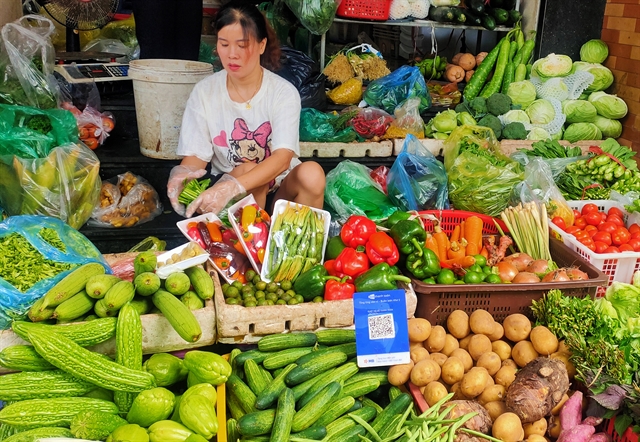
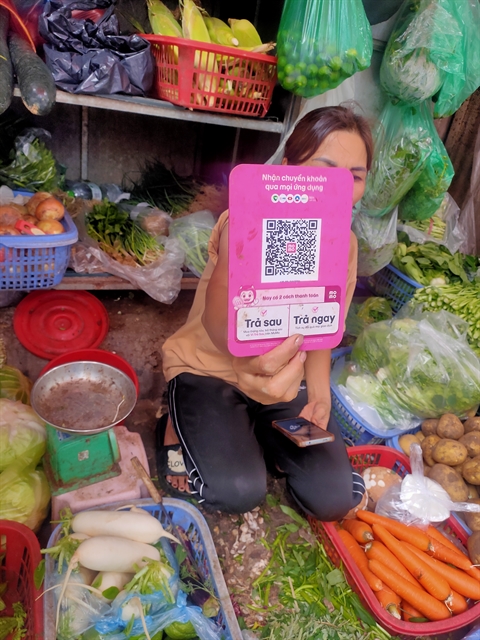
Amid that familiar scene, changes are taking place, quietly but unmistakably. At her small vegetable stall, 56‑year‑old Nguyễn Thị Quý deftly ties a bunch of greens while pointing to a plastic board hung in front of her. A bank QR code is printed on it.
“Now customers transfer money all the time,” she says. “I used to not even know how to use a smartphone.”
She recalls customers who are young but hesitant because they lack cash. “Some would say they’d come back another day, and then… they never returned,” she said.
Moments like those made Quý realise she was being left out of a new shopping habit. At first she was wary. “If I can’t hold the money in my hand, I don’t feel secure," Quý said.
But her son helped her open an account, print a QR code and showed her how to check transactions. In the early days she was clumsy and had to ask neighbours for help. Now she is used to it.
Quý is not alone, as many stallholders are changing day by day. In another corner of the market, Hà Thị Thu, who sells pork, positions her phone in front of her and broadcasts live.
“Today the pork belly is really good, everyone,” she said as she sliced it for a customer at the counter.
Changing habits
Dozens of comments scrolled across the screen: people asking for prices, placing orders and asking someone to reserve a portion.
“This way of selling is fun,” she said. "Regular customers who live far away can still buy, and I don’t have to open another shop.”
For her, livestreaming is a new way of calling customers. The difference is that this call now reaches beyond the market to neighbourhoods.
Meanwhile, buyers are changing quietly too. For many young people, going to the market no longer means carrying a wallet. They buy vegetables, eggs and meat, all payable in just one or two seconds.
Those small habits are creating substantial pressure. Sellers, whether they like it or not, must adapt. In a crowded market, if one stall doesn’t accept transfers, customers can simply move to the next one.
Digital transformation in traditional markets is not only about convenience, and some traders are thinking further. They take photos of produce, post them on social media, clearly state their origins and even update prices daily. Practices once seen only in supermarkets or e‑commerce platforms are now appearing in local community markets.
Still, not everyone finds it easy to step into the digital world. For many older people, using banking apps or resolving technical issues remains a barrier. Some fear making mistakes. Infrastructure is not always reliable – weak networks, faulty devices, or simply no one to provide guidance.
Yet, amid these difficulties, adaptation continues, slowly but steadily. Far from disappearing as some predicted, traditional markets are adjusting to fit a new era.
Policy push
In Hà Nội’s plan through 2030, over 100 markets, including two large wholesale markets, are to be newly built or rebuilt. At the same time, nearly 120 existing markets will be renovated and upgraded to better meet the growing buying and selling needs of residents.
The most striking element of this plan is the push to promote digital transformation within market spaces.
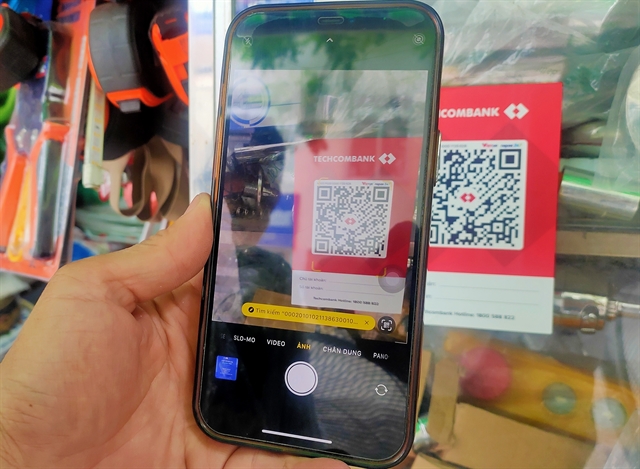
Hà Nội aims for all market business households to have a QR code to enable cashless payments. Proposed measures include stall management software, price control, product origin traceability and the digitisation of business data.
Notably, Hà Nội targets having 50 per cent of fixed market businesses establish a presence on e‑commerce platforms. This opens a major opportunity for traditional traders to reach customers beyond their immediate neighbourhoods, expanding their markets through online sales, home delivery or livestreaming.
With new e‑commerce regulations and accompanying guidelines, a unified database system is being built. This system will allow seller traceability, control of counterfeit goods and protection of consumer rights. That means traditional market vendors will also have to adapt and conduct business on digital platforms.
Market future
The Việt Nam E‑commerce and Digital Economy Agency (IDEA) under the Ministry of Industry and Trade last month launched the Programme for Digital Transformation of Traditional Market Traders.
IDEA director Lê Hoàng Oanh emphasised that digital payments were indispensable for the development of e‑commerce and the digital economy in Việt Nam.
"As the digital economy grows strongly, digital payment methods not only boost transaction efficiency but also provide a foundation to expand markets and connect small traders with a much larger customer base," Oanh said.
The national master plan for e‑commerce development for 2026–2030 targets the proportion of cashless payments in e‑commerce reaching 80 per cent.
“To achieve this target, alongside completing the legal framework and policy mechanisms, developing core technology infrastructure and ensuring safety and security, we need to focus on developing cashless payment solutions to support e‑commerce, and strengthen connectivity and integration between payment service providers and the payment acceptance infrastructure of merchants,” she said.
Initial participation in digital payments not only offers convenience and reduces costs for traders but also serves as an important stepping stone for them to join e‑commerce.
“It will open new sales channels, expand markets beyond the physical limits of traditional markets, help traders modernise their operations, meet new consumer trends and enhance their competitiveness. Through these activities, the awareness and skills of both consumers and traders in digital payment will also be improved, contributing to the promotion of cashless payments,” Oanh said.
A handbook to guide the digital transformation of traditional market traders has been launched at https://sotay.tieuthuongvietnam.vn as a practical guide for people on their path to digitalisation.
The familiar calls remain, the friendly conversations endure, and the market’s flexible spirit still shapes every transaction. But now those sounds are interspersed with the “ting ting” of payment notifications and livestreams beside baskets of greens and slabs of meat. — VNS