

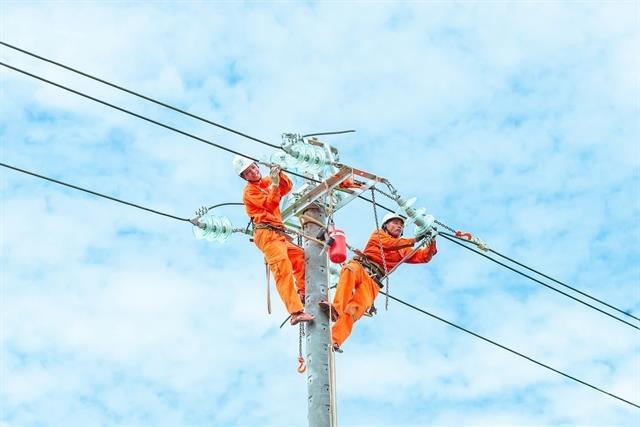
The study also found that the revised PDP8 has a more efficient investment structure and reasonable development orientation than the global benchmarks based on reports of the International Energy Agency.
Public debt is forecast to reach 36-37 per cent of GDP by the end of 2026, while government debt will stand at 34-35 per cent of GDP. Foreign debt is expected at 32-33 per cent of GDP.
The draft resolution encourages private enterprises to participate in SMR development to supply electricity for industrial projects such as steel plants, petrochemical complexes, and data centres.
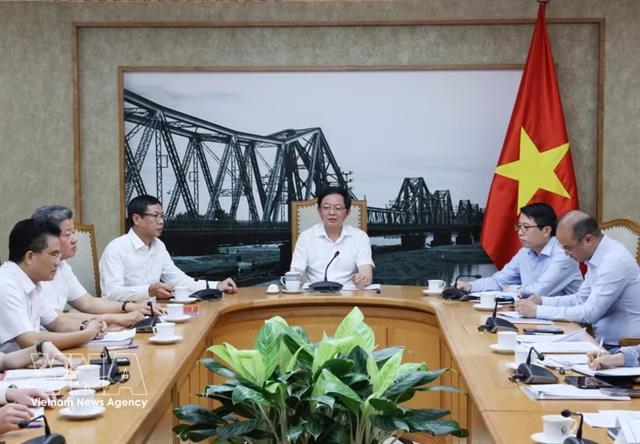
Deputy Prime Minister Bùi Thanh Sơn at a conference on Thursday asked strict penalties to be raised against developers of stagnant power projects to prevent setbacks from threating the national energy security.
Party General Secretary Tô Lâm has signed a Politburo’s resolution on national energy security through 2030 with a vision to 2024, pledging stable supply, reduced emissions and a push into nuclear power to meet the demand for rapid and sustainable...
Hưng Yên is pushing the formation of a free economic zone (FEZ) with a strategic vision to make it one of the most dynamic, open and investor-friendly economic zones in Southeast Asia.
Việt Nam is undergoing rapid change amid the Industry 4.0 and facing global challenges such as pollution, climate change, energy insecurity, and resource depletion.
Vĩnh Long Province is calling for investment projects in its key economic and industrial zones, with a focus on renewable energy, logistics, infrastructure and urban development.
The total issuance value is estimated at VNĐ214 billion, which will raise Techcombank’s charter capital from VNĐ70.649 trillion to approximately VNĐ70.862 trillion.
Green investment in SEA-6 reached US$8 billion in 2024, a 43 per cent increase year-on-year, with Việt Nam standing out for its growing green investment momentum.
The plan aims to fully meet domestic electricity demand, supporting national socio-economic development with an average annual GDP growth rate of around 10 per cent from 2026 to 2030, and 7.5 per cent from 2031 to 2050.