Việt Nam must improve DPPA, energy storage framework to accelerate green transition
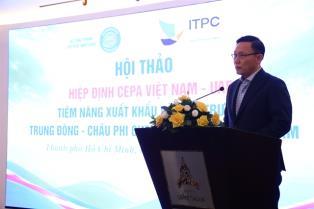
Organised by the Vietnam Chamber of Commerce and Industry (VCCI) and Diễn Đàn Doanh Nghiệp (Business Forum) magazine, the event gathered policymakers and industry representatives to discuss how to accelerate renewable energy adoption and ensure stable power supply.
HÀ NỘI — It is critical for Việt Nam to improve the legal framework to unlock direct power purchase agreements (DPPAs) and battery energy storage systems (BESS) to accelerate the green transition as demand for renewable energy surges, a forum heard on Tuesday in Hà Nội.
Organised by the Vietnam Chamber of Commerce and Industry (VCCI) and Diễn Đàn Doanh Nghiệp (Business Forum) magazine, the event gathered policymakers and industry representatives to discuss how to accelerate renewable energy adoption and ensure a stable power supply.
VCCI Chairman Hoàng Quang Phòng said the resolve to complete the energy transition, along with the target of double-digit GDP growth, weighs on the national power system, calling for DPPA expansion and BESS development.
Despite strong potential for renewable energy, Phòng said a number of bottlenecks in implementation are present.
Companies face difficulties due to unclear DPPA regulations, especially pricing, transmission costs and settlement mechanisms. The policy framework for BESS, including investment rules, pricing, technical standards and access to green finance, also remains underdeveloped, he added.
Phan Thị Thu Thủy, a representative of the Electricity Authority of Việt Nam under the Ministry of Industry and Trade, said access to green electricity is increasingly essential for maintaining export orders and participating in global supply chains.
“Many major export markets are imposing strict emissions and green electricity requirements, making it urgent to establish mechanisms that allow businesses to access clean power at predictable costs,” she said.
DPPA is a key tool in Việt Nam’s energy transition, she stressed, adding that it is necessary to expand eligible participants, including data centres and electrified transport infrastructure, under an appropriate roadmap.
Roles and responsibilities in industrial park power supply models must also be clarified, along with enhancing market-based pricing mechanisms.
Nguyễn Anh Tuấn, deputy president of the Vietnam Energy Association, noted that the green transformation in industrial parks remains fragmented.
“This is not just about rooftop solar, but about synchronising industrial, energy and infrastructure policies,” he said.
Tuấn highlighted growing demand for green power in industrial zones, but said legal bottlenecks still limit electricity sharing between firms.
He called for clearer guidance on internal DPPA schemes and the development of microgrids, where industrial park developers could act as coordinators.
To improve transparency in energy tracking and payments, he also proposed adopting digital technologies, such as blockchain and smart contracts.
Financing challenges and infrastructure risks were identified as key barriers to BESS deployment. Tuấn called for greater access to green capital and clearer technical standards, including battery lifecycle management.
He added that revising electricity could significantly affect project viability, noting that a two-component tariff system could lower costs compared to current models.
“Completing the DPPA framework and advancing energy storage will not only provide clean power, but also enhance the efficiency and competitiveness of industrial zones,” he said. — VNS