Top priority for energy development to meet double-digit growth target
Việt Nam has given top priority for energy development to ensure energy security and meet double-digit growth target in the coming years.
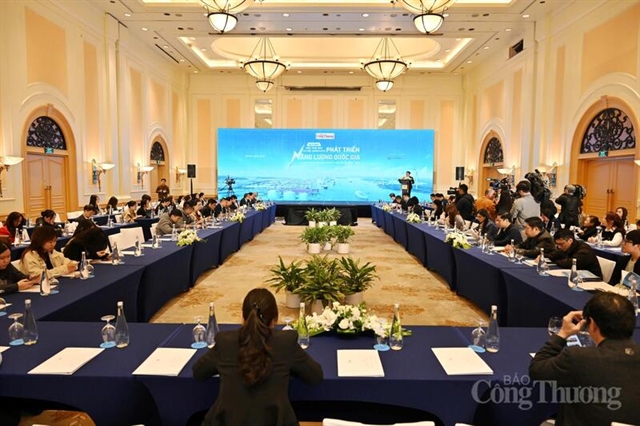
HÀ NỘI — Việt Nam is giving top priority to energy development to safeguard energy security and support its ambition of double-digit economic growth in the coming years, officials said at a forum on Thursday, underscoring the sector’s central role in the country’s next phase of development.
At the forum on policies for national energy development in the 2026–30 period, held in Hà Nội, Trần Hoài Trang, deputy director of the Ministry of Industry and Trade’s Electricity Department, said Việt Nam is accelerating its energy transition while refining its institutional framework for sustainable energy development.
The goal, he said, is to ensure energy security for rapid and sustainable national development, particularly in achieving two strategic objectives: reducing greenhouse gas emissions and building a green economy by 2030 and 2045.
According to Trang, Việt Nam is prioritising the comprehensive, rational and diversified development of energy sources, with a strong focus on renewable energy, new energy and clean energy.
He added that the country is applying science, technology, innovation and digital transformation to promote the rapid and sustainable development of the energy sector. This includes gradually mastering modern technologies, such as nuclear energy technology, and moving towards self-sufficiency in the production of energy equipment to meet domestic demand and for export.
Dr Cấn Văn Lực, chief economist of BIDV and member of the Prime Minister’s Policy Advisory Council, told the forum that Việt Nam’s energy development needs will continue to rise sharply in the coming decades, in line with the country’s industrialisation, urbanisation and transformation of its growth model.
Electricity demand is projected to grow by around 8 per cent per year during the 2021–25 period, 10–12 per cent per year in the 2026–30 period and then stabilise at 7–7.5 per cent per year during 2030–35, Lực said.
He noted that such high growth rates will require massive investment in energy infrastructure, particularly in power generation, transmission and solutions that support a sustainable energy transition. During the 2026–30 period, Việt Nam’s energy investment needs are expected to exceed US$77 billion, equivalent to more than $15 billion per year. Total investment needs through to 2050 are estimated at about $400 billion, averaging roughly $16 billion annually.
To drive the energy sector forward, Lực stressed the need to firmly implement the revised Power Development Plan VIII, promptly finalise the direct power purchase agreement (DPPA) mechanism, effectively carry out Resolution 70 on energy security and set reasonable electricity prices while prioritising investment in transmission.
He also said it is essential to clarify energy finance needs in order to build a portfolio of projects that can attract international capital, including from initiatives such as the Just Energy Transition Partnership (JETP) and the SUSI Asia Energy Transition Fund (SAETF). This should go hand in hand with developing a balanced financial market, upgrading commodity exchanges, establishing a carbon market and supporting businesses in accessing international financing.
At the same time, Lực highlighted the importance of swiftly enacting the Law on Renewable Energy, along with programmes for energy transformation, saving and optimisation.
Participants at the event also discussed measures to effectively implement the National Assembly’s Resolution 253/2025/QH15 on mechanisms and policies for national energy development in the 2026–30 period, which is set to take effect in March this year.
Resolution 253 is seen as having particular significance, both institutionally and in practical terms, as it marks the official entry of Việt Nam’s energy sector into a new phase of development. This is especially critical during the pivotal 2026–30 period, when demands for energy security, green transition and autonomy are expected to intensify.
Participants further proposed policies to support the development of offshore wind power and energy storage systems, alongside solutions to remove obstacles related to land, environmental issues and administrative procedures in the implementation of energy projects. — BIZHUB/VNS