


Once operational, the zone is expected to contribute 8-12 per cent of the province’s gross regional domestic product and between 150,000 and 250,000 high-quality jobs.
Việt Nam needs to foster a new generation of private enterprises with stronger technological capabilities to lead key industries and shift from supporting growth to driving the country’s modernisation.
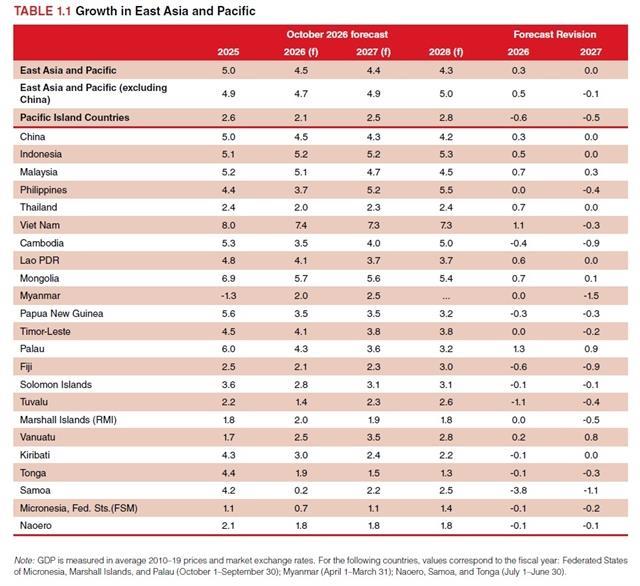
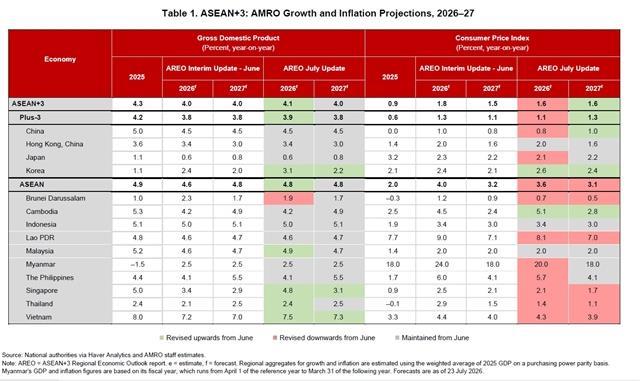
Gross domestic product (GDP) growth is projected to moderate to 7.2 per cent in 2026 and 7.0 per cent in 2027 under the ADB''s baseline scenario, after expanding by 8.0 per cent in 2025.
As savings rate of Vietnamese people is very high at up to 37 per cent of GDP, experts said it is a potential available capital resource that should be exploited to promote economic growth.
Looking back, from a poor, war-torn and underdeveloped country, Việt Nam has travelled a long and challenging path yet proud with far-reaching achievements that have strengthened the country’s economic capacity, social resilience and international standing.
The new policies must focus on optimising State resources, improving governance, promoting digitalisation and green development, and balancing State and private sector resources, while reducing unnecessary administrative intervention.
Prime Minister Phạm Minh Chính directs the State Bank of Vietnam to finalise documentation for the national gold exchange as part of economic growth strategy.
The Government’s Steering Committee on Macroeconomic Management and Administration met to review economic performance in 2025 and outline priorities for 2026 and the 2026–2030 period on Monday.
Prime Minister Phạm Minh Chính directs the State Bank of Vietnam to finalise documentation for national gold exchange as part of economic growth strategy.
Lê Thị Thuỳ Vân, Deputy Director of the Institute for Economic and Financial Strategy and Policy under the Ministry of Finance spoke with Vietnam News Agency about key solutions to help the economy sustain growth momentum.