40 years of renewal lay solid ground for Việt Nam’s new growth chapter
Looking back, from a poor, war-torn and underdeveloped country, Việt Nam has travelled a long and challenging path yet proud with far-reaching achievements that have strengthened the country’s economic capacity, social resilience and international standing.
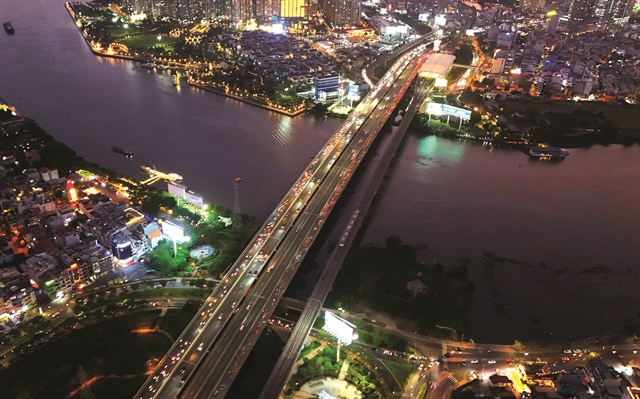
HÀ NỘI — Nearly four decades after the launch of Đổi mới (Renewal), Việt Nam has moved decisively from poverty to momentum, transforming itself into one of the world’s most dynamic economies and laying firm foundations for a new phase of growth on the path towards becoming a high-income developed country by 2045.
Looking back, from a poor, war-torn and underdeveloped nation, Việt Nam has travelled a long and challenging road, yet one marked by far-reaching achievements that have strengthened the country's economic capacity, social resilience and international standing.
According to a report by the Central Committee of the Communist Party of Viêt Nam (CPV) reviewing theoretical and practical issues of the Đổi mới process, the Vietnamese economy has undergone a profound transformation since reforms began in 1986.
Before Đổi mới, the country was heavily damaged by war and mired in a severe socio-economic crisis in the late 1970s and early 1980s. In the decade following national reunification from 1975 to 1985, per capita income stood at just US$125-200 a year, placing Việt Nam among the world’s 20 poorest countries.
After the reforms were launched, growth gathered pace, with relatively strong expansion between 1986 and 1995, followed by improved macroeconomic stability from 1996 to 2005. From 2006 to 2015, Việt Nam became a lower-middle-income country while maintaining political and social stability despite the global financial crisis.
The period from 1991 to 2016 marked deeper international integration, with export value increasing more than 60-fold and imports rising more than 80-fold.
Between 2016 and 2025, the economy continued to undergo broad-based and positive restructuring, with macroeconomic stability maintained, inflation contained, major economic balances safeguarded, public debt reduced and bad debts kept under control.
Despite external shocks, including the COVID-19 pandemic and global trade disruptions, average GDP growth during this period reached about 6.2 per cent a year. By 2025, GDP exceeded US$510 billion, ranking 32nd globally, while per capita GDP surpassed $5,000, marking Việt Nam’s entry into the upper-middle-income group.
Growth quality also improved, with total factor productivity contributing around 47 per cent to overall economic expansion, underscoring the economy’s increasing resilience and ability to adapt to external shocks.
Integration and expansion
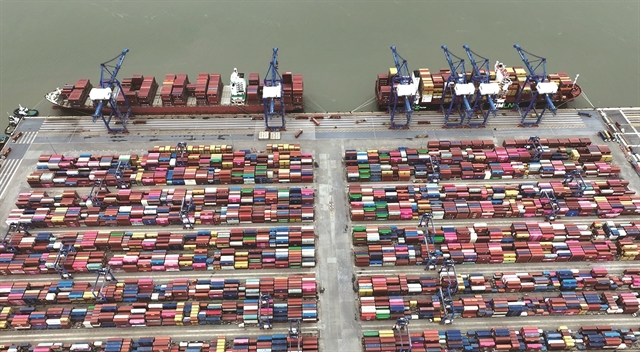
Việt Nam has transformed from a closed economy into a major exporter, recording a trade value of $900 billion in 2025 and becoming a signatory to new-generation free trade agreements such as the Comprehensive and Progressive Agreement for Trans-Pacific Partnership, the EU–Việt Nam Free Trade Agreement and the Regional Comprehensive Economic Partnership, while also emerging as an increasingly attractive destination for multinational corporations.
The economic structure has shifted markedly from agriculture towards industry and services, with agriculture’s share of GDP declining from more than 40 per cent to below 15 per cent, alongside significant improvements in socio-economic infrastructure.
“The achievements during the last four decades are an Asian miracle,” said Vũ Văn Hiền, former vice chairman of the Central Theoretical Council.
According to Vũ Văn Phúc, former vice chairman of the Scientific Council of the Central Party Agencies, the achievements of 40 years of Đổi mới mark a milestone of historical significance, providing a solid foundation for the country to enter a new phase of development with confidence.
However, Việt Nam is also facing mounting challenges, including the risk of falling behind and becoming trapped in middle-income status, with growth yet to be sustainable, the report noted. Notably, the fourth industrial revolution is creating new demands, highlighting the need for deeper reforms and a fundamental shift in the growth model.
A new chapter

Over the past four decades, Việt Nam has laid a solid foundation for economic growth, but achieving a faster and more sustainable development trajectory will require a new and more powerful growth engine as rising global uncertainty weighs on prospects.
These challenges include supply chain disruptions, tighter monetary policies, rising trade protectionism and shifts in the global economic structure and geopolitical relations.
As a highly open economy, Việt Nam is particularly exposed to such volatility, with direct impacts on exports, capital inflows, financial markets and macroeconomic stability. At the same time, internal challenges such as labour productivity, growth quality, corporate resilience and the need to shift towards a greener and more sustainable development model are adding significant pressure.
Against this backdrop, the resolution of the 14th National Congress of the CPV sets out goals for the 2026-30 period, including maintaining peace and stability, accelerating rapid and sustainable development, improving people’s living standards in a comprehensive manner and strengthening strategic autonomy and self-reliance as Việt Nam advances into a new era of development.
In particular, GDP growth is targeted at at least 10 per cent a year, per capita GDP at around $8,500 by 2030, manufacturing at 28 per cent of GDP and the digital economy contributing about 30 per cent of output. Total factor productivity is expected to account for 55 per cent of growth, while labour productivity is projected to rise by about 8.5 per cent annually.
Rethinking growth
The resolution outlines a new growth model centred on productivity, efficiency, higher value added and competitiveness, with science and technology, innovation and digital transformation identified as the key drivers of double-digit growth.
“Nearly four decades of Đổi mới have transformed Việt Nam from a closed, underdeveloped economy into a dynamic market economy with middle-income status and deep integration into global value chains,” said Nguyễn Sĩ Dũng, former deputy director of the National Assembly Office.
However, the old growth model, largely reliant on capital, labour and natural resources, was losing momentum, while labour productivity remained modest and pressures from environmental strain, energy constraints and population ageing were intensifying, Dũng said, stressing that "the new growth model set out in the resolution represents not merely a policy adjustment but a fundamental shift in mindset".
“This is the inevitable path if Việt Nam is to avoid the middle-income trap and move into the ranks of developed economies by the middle of the 21st century,” Dũng said.
Dũng said innovation would allow Việt Nam to break through development barriers, while digital transformation could narrow the gap with advanced economies. Data and artificial intelligence (AI) were increasingly viewed as national strategic assets rather than merely supporting tools, he stressed.
“This is not simply a global trend, but a strategic choice for a country seeking breakthrough growth. It is necessary to build a national innovation ecosystem linking scientists, businesses, policymakers and the public around a shared vision."
Education should be regarded as the country’s most important endogenous resource, essential for developing high-quality human capital capable of sustaining a knowledge-based and digitally driven economy.
“If the old growth model relied on extracting natural resources, the new model must be built on harnessing the intellectual resources of the Vietnamese people,” Dũng said.
“An effective growth model must balance economic efficiency, social equity and environmental sustainability.
“Turning the new growth model into reality will require bold and coordinated action, including institutional reforms to unlock innovation, a restructured budget that prioritises education and science and a national-scale innovation ecosystem with the private sector at its core.”
Science and technology, innovation and digital transformation have been identified as long-term strategic orientations to strengthen internal capacity and create sustainable growth space under Resolution 57 issued by the CPV Politburo dated December 22, 2024.
Ambitious but achievable
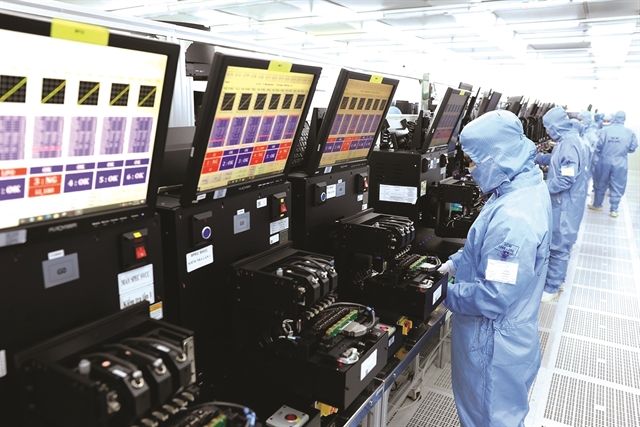
According to Nguyễn Bích Lâm, former director of the National Statistics Office, setting ambitious growth targets is not merely an expression of development aspirations but a strategic necessity to achieve breakthroughs in economic scale, capacity and global standing.
Global shifts such as value chain restructuring, digital transformation, the green transition and rapid advances in science and technology are creating new opportunities which, if effectively leveraged, could help Việt Nam generate more sustainable growth drivers.
“The new growth model must decisively shift away from reliance on capital, labour and resources towards productivity, science and technology, innovation and digital transformation, together with the quality of human capital,” Lâm said.
"Science, technology and innovation are key to improving productivity, growth quality and national competitiveness, enabling Việt Nam to integrate more deeply into regional and global value chains," he stressed.
Economist Đinh Trọng Thịnh said the double-digit growth target was ambitious but achievable, noting that there remains largely untapped potential in industry, agriculture and services, while new drivers from digital, green and innovation-led growth are still underexploited.
"If institutional bottlenecks, infrastructure constraints and weaknesses in implementation are addressed effectively, higher growth is achievable," Thịnh said, adding that well-directed rapid growth could expand production, raise incomes and strengthen the foundation for long-term development.
Việt Nam still has ample room to achieve high economic growth, even exceeding 10 per cent a year over the next five-year period, provided reforms are implemented decisively and growth drivers are renewed, according to Nguyễn Thường Lạng of the National Economics University.
Lạng said traditional growth engines must not be neglected.
Public investment, foreign direct investment, private investment and trade must also be accelerated.
Enterprise development would be critical as well.
“Adding around two million new firms, building 20 private conglomerates integrated into global value chains, and placing one to three state-owned enterprises among the world’s top 500 companies will create added value for the economy,” he said.
Importantly, new growth momentum must come from science and technology, innovation and digital transformation, Lạng said.
“Việt Nam must undertake a fundamental shift in its development model, placing science and technology, innovation and digital transformation at the core, while removing institutional bottlenecks and strengthening integrity, accountability and the people-centred approach,” he said.
Notably, he pointed out that total factor productivity had been placed at the centre of the 2026-30 growth strategy, with a target contribution of more than 55 per cent to economic growth, highlighting the increasingly decisive role of science, technology and innovation in value creation.
Priority must be given to research and development, including upgrading R&D infrastructure and accelerating the mastery of strategic technologies and products, alongside faster commercialisation of research outcomes, Lạng said.
He also stressed the need to build and empower a high-quality workforce for science, technology, innovation and digital transformation, particularly leading scientists, top-tier experts and highly skilled workers, supported by policies to attract both domestic and overseas resources.
Another key solution is the development of an integrated innovation ecosystem that brings together the Government, research institutes, universities, businesses, households and individuals to foster a new industrial structure driven by innovation. — VNS