HCM City tightens grip on e-commerce as year-end shopping risks mount
As the Lunar New Year approaches, online shopping demand in HCM City is surging, bringing with it heightened risks of trade fraud, counterfeit goods and substandard products circulating on digital platforms.
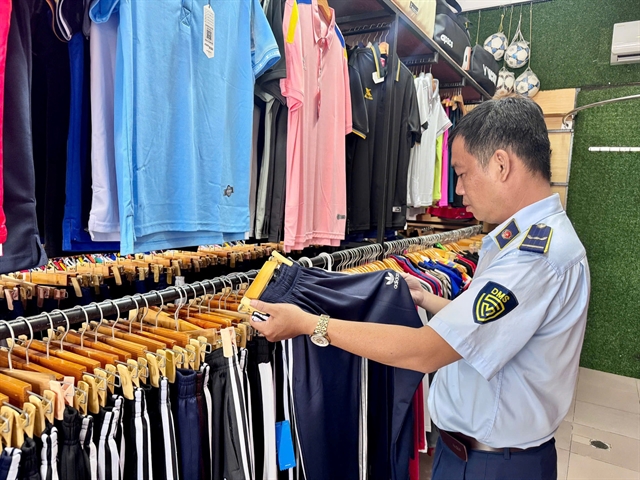
HCM CITY — As the Lunar New Year approaches, online shopping demand in HCM City is surging, bringing with it heightened risks of trade fraud, counterfeit goods and substandard products circulating on digital platforms.
In response, city authorities are stepping up inspections and tightening oversight of e-commerce activities to safeguard consumer rights and stabilise the year-end market.
According to the municipal Market Surveillance Agency, more than 1,200 violations were detected in 2025, with total fines and confiscations contributing over VNĐ26 billion (US$1 million) to the State budget.
A significant share of these cases involved online trading, including the sale of goods with unclear origins and the operation of websites or mobile applications without proper registration.
Hundreds of thousands of product units were temporarily seized for investigation.
In the run-up to Tết, violations tend to intensify, particularly among fast-moving consumer goods, food items and health-related products that are heavily promoted with deep discounts on social media and e-commerce platforms.
With just a few clicks, consumers can browse hundreds of online storefronts offering unusually low prices, often accompanied by exaggerated claims of “miraculous” effects.
While product images and descriptions appear professional, the goods delivered frequently fall short of advertised quality, blurring the line between genuine and counterfeit products during the peak shopping season.
Việt Nam Chamber of Commerce and Industry Vice Chairman Võ Tân Thành noted that the anonymity and rapid dissemination inherent in the online environment have been exploited by some sellers to distribute products of dubious origin.
The damage extends beyond legitimate businesses to consumers themselves, especially when it comes to health-sensitive goods such as dietary supplements, cosmetics and non-prescription pharmaceuticals.
From the regulatory side, Lê Thị Hà, head of the Department of E-commerce Management under the Ministry of Industry and Trade, said tens of thousands of products suspected of infringing intellectual property rights or being counterfeit were identified on online platforms over the past year.
Authorities have ordered the removal of thousands of violating online shops and links. However, enforcement remains challenging, as many sellers reappear under new identities shortly after being taken down.
One of the most problematic categories in online trade is food. Phạm Khánh Phong Lan, director of the city Food Safety Authority, stressed that factory standards at the time of inspection alone are insufficient to guarantee product safety.
Continuous post-market surveillance is essential, as popular products are quickly targeted by counterfeiters. Online sales channels make these goods more accessible to consumers while complicating control efforts.
Responsibility also lies with e-commerce platforms.
Tạ Dịu Hương, head of the Legal Affairs Committee at the Việt Nam Direct Selling Association, called for stricter conditions for listing products, particularly for sensitive categories such as supplements, cosmetics and healthcare items.
Requiring legal distribution authorisation, proof of origin and quality documentation at the onboarding stage would significantly reduce violations and better protect consumers.
From the business community, Nguyễn Phương Sơn, director of External Affairs at Amway Việt Nam, said the company had requested the removal of hundreds of unauthorised or suspected counterfeit product links in 2025.
The challenge, he noted, lies not only in detecting violations but also in the time lag in handling them, during which infringing goods continue to reach consumers.
Nguyễn Thuận Đạt, chief executive Officer of DAFC, warned that online trade fraud damages not only brand owners but also Việt Nam’s market reputation, making global brands more cautious about investment and expansion.
Looking ahead to the peak shopping period, Nguyễn Quang Huy, deputy head of the city’s Market Surveillance Agency, said inspection campaigns would be maintained, focusing on warehouses, transit hubs, e-commerce platforms and social media sales channels.
Coordination with police, customs and tax authorities is being intensified to track goods from import and production through to distribution.
In the longer term, Nguyễn Thành Nam, deputy director of the Domestic Market Management and Development Authority, emphasised that controlling digital trade fraud requires an integrated monitoring mechanism linking regulators and e-commerce platforms.
Alongside technological solutions, effective complaint handling, enforcement follow-up and post-penalty supervision remain crucial to protecting consumers during the year-end shopping rush. — VNS