Strong policy framework needed to develop biotech-driven economy
Policy stability is the core of a strong biofuel ecosystem. Policy stability brings market predictability, and a predictable market will attract investments across the value chain.

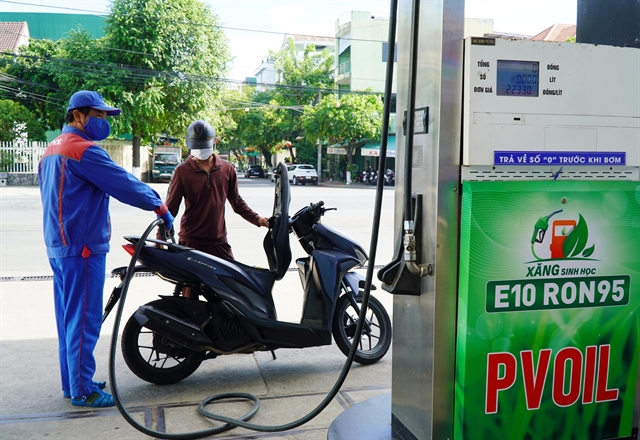
As Việt Nam rolls out E10 gasoline nationwide, the country is entering a new phase of biofuel development. Việt Nam News reporter Mai Linh speaks with Lakshmi Narasimhan, Novonesis’ Southeast Asia business director and country manager, about opportunities for Việt Nam to build a competitive and sustainable ethanol industry and develop a broader bio-based economy while enhancing energy security and promoting rural development.
With ethanol demand expected to reach 90,000–100,000cu.m per month and domestic production meeting only 20 per cent of demand, how does Novonesis view the market’s long-term potential?
Viêt Nam has strong long-term potential to become a bioethanol leader in Southeast Asia. The move to E10 gasoline is a clear signal that demand will continue to grow, and the fact that domestic production currently covers only around 20 per cent of market demand shows there is still significant room for expansion.
Việt Nam can build a more resilient, locally rooted and lower-carbon fuel industry. The country has the agricultural base, the industrial ambition, and the market needs to support this transition.
What will determine success is whether the sector can improve efficiency, reliability, and competitiveness over time. That means producing more ethanol from the same amount of feedstock, reducing production costs, and making production processes more stable under changing raw material conditions. It also means strengthening local capabilities so the industry can grow in a way that supports both energy security and rural development.
What are the key factors for Việt Nam to build a competitive and sustainable ethanol industry and reduce its reliance on imports?
Policy stability is the core of a strong biofuel ecosystem. Policy stability brings market predictability, and a predictable market will attract investments across the value chain.
We see this in countries like the United States, Brazil, and India for bioethanol, as well as recently in Indonesia with biodiesel, just to name a few. Strong and stable policy support attracts investors to build factories, farmers to allocate their land to relevant crops and technology providers to bring the best technologies and resources into the country, as there is a strong need to maximise biofuel production.
How can advanced biotechnology help Việt Nam diversify feedstock sources, improve production efficiency and reduce the lifecycle carbon footprint of ethanol?
One of the biggest advantages of advanced biotechnology is that it helps producers work with a broader range of raw materials more effectively, being able to use more of what is locally available. This includes, as mentioned, cassava and corn, but also lower-value and underutilised biomass materials.
For conventional materials such as cassava and corn, advanced biotechnology can help improve the efficiency and yield of ethanol and high value co-products from the same amount of raw materials. This is one of the most direct ways to improve economics, as producers can increase output without necessarily increasing feedstock use at the same rate.
This also contributes to the reduction of carbon intensity of ethanol. When you produce more ethanol from the same feedstock, you’re making the production process more efficient and less resource intensive. You’re practically reducing the amount of land, raw material, energy, and process input needed per litre.
For biomass, the cost of conversion into cellulosic or second-generation bioethanol has decreased significantly over the last 20 years through biotechnology advancements. This makes the economics to produce cellulosic bioethanol more viable today. This gets very relevant especially in the context of sustainable aviation fuel (SAF) in Việt Nam in the future.
Do you see Việt Nam having the potential to become a regional hub for biofuel production and biotechnology-driven solutions in Southeast Asia? What capabilities would Việt Nam need to develop to capture this opportunity?
Việt Nam is in a strong position because it has abundant agricultural resources, and a clear need for more sustainable energy solutions, as the fastest growing economy in ASEAN.
The key for Việt Nam will be making sure producers have access to the right technology, knowledge, and infrastructure to turn these vast resources into high-quality biofuels efficiently. This would require that there’s the right support and collaboration across the ecosystem, and the right policy support enabling domestic production.
Việt Nam has the potential to become a strong regional biofuel player in the future. However, Việt Nam is a relatively latecomer to the biofuel sector in Southeast Asia, with Thailand and the Philippines entering the ethanol market earlier, and Indonesia and Malaysia entering the biodiesel market earlier.
This gives Việt Nam the second-mover advantage with access to latest technologies and policy learnings from other countries. As the existing ethanol plants gets retrofitted to restart, Việt Nam also has the opportunity to build new ethanol plants in addition with the most efficient technologies available.
The ethanol development is closely connected with agriculture, rural development and the circular economy. How can Việt Nam maximise the broader economic value of ethanol development and build a more integrated circular bioeconomy?
We believe that the maximum benefit of ethanol development is gained when production happens domestically.
Farmers can benefit from higher volume and more secure offtake of their corn and cassava. Feed millers can reduce foreign exchange risks by sourcing locally produced animal feed ingredients such as corn DDGS, a co-product of ethanol production. Domestic ethanol production helps direct creation of high-skill jobs as well as indirect jobs. A growing ethanol industry can also attract foreign direct investment, but Việt Nam will directly benefit only when the production happens in Việt Nam.
We believe that we are well positioned to support biofuel players in Việt Nam with our strong and experienced regional commercial footprint. Through our presence in the country, we are also able to explore new technologies that could fit the dynamic market needs of biofuel industry in Việt Nam as we leverage our innovation capabilities. Our Vietnamese partners can also leverage our world-class production scale to ensure uninterrupted production of biofuel in Việt Nam at a competitive cost.
Our partnership with Nhà Xanh Vietnam is a good example of that. Together, we're exploring ways to help producers get more ethanol from the same amount of raw materials, reduce production costs, and make bioethanol production more efficient. By sharing our experience with corn- and cassava-based biofuel technology, we hope to support the continued growth of Việt Nam's biofuels sector.
What are your recommendations for Việt Nam to accelerate the development of its ethanol ecosystem and biotechnology-driven green economy?
The foundation is already built, with growing recognition of the role biofuels can play in strengthening energy security and supporting economic growth. Now, the focus should be on creating a stable and predictable environment that gives producers and investors the confidence to commit for the long term for the country to further accelerate the development of the ethanol ecosystem.
To develop competitive domestic biofuels industry, there needs to be strong policy framework to enable private players to invest in new capacity and access latest innovations.
From our experience, two areas are particularly important; feedstock supply security and ethanol offtake security. On one hand, feedstock cost typically accounts for around 70 per cent of the total cost of ethanol production, so having policies aimed to boost supply security and price stability of cassava and corn for fuel ethanol production is important.
Offtake security and price stability of fuel ethanol is also critical for the viability of the ethanol plants. India, for example, adopted variable ethanol price formulas for different feedstocks to account for different feedstock prices and cost structures. Philippines adopted a model where use of domestically produced ethanol is mandated and imports are allowed only where there is insufficient ethanol or feedstock. — VNS