Việt Nam needs bankable infrastructure projects to attract long-term capital
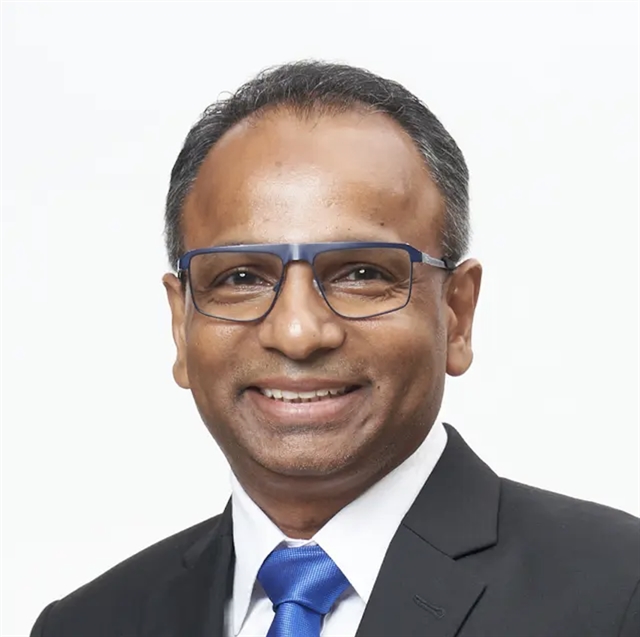
Việt Nam needs a stronger pipeline of bankable projects and deeper public-private cooperation to attract long-term infrastructure investment, according to Executive Director of Infrastructure Asia Lavan Thiru.
Việt Nam’s ambitious infrastructure plans offer significant opportunities to attract long-term private investment, but the country needs a stronger pipeline of well-prepared, commercially viable projects.
In an interview with Việt Nam News, Lavan Thiru, executive director of Infrastructure Asia, a Singapore government-led platform supporting infrastructure investment across Asia, said reliable power, efficient transport, modern urban transit and resilient logistics infrastructure would be critical to Việt Nam’s next phase of growth.
Việt Nam is undertaking an ambitious infrastructure expansion programme. What are the biggest opportunities over the next decade, and where does the country have the greatest competitive advantage?
Việt Nam’s biggest infrastructure opportunities lie in the sectors most critical to its next phase of growth. Reliable power systems, stronger transmission networks, efficient ports and logistics corridors, and modern urban transit will be essential to support growth and industrialisation while strengthening Việt Nam’s competitiveness as a destination for investment and manufacturing.
Việt Nam has demonstrated a strong commitment to infrastructure development. The Government increased its 2025 infrastructure investment target by nearly 40 per cent to US$36 billion, with more than 80 per cent earmarked for electricity generation and transport.
Across Asia, the focus is shifting beyond simply building more infrastructure towards delivering infrastructure that is resilient, sustainable and capable of supporting long-term economic growth.
Việt Nam’s competitive advantage lies in its strong growth fundamentals, strategic position within regional supply chains and long-term approach to development planning. A stronger pipeline of bankable, investment-ready projects will further enhance investor confidence.
Governments across Asia are competing for international capital. What can Việt Nam do to distinguish itself in attracting long-term private investment?
Private sector participation in infrastructure remains relatively nascent across much of developing Asia. To attract long-term capital, markets need regulatory certainty, predictable project delivery, clear risk-sharing frameworks and commercially viable opportunities for private sector participation.
Việt Nam has made meaningful progress in this area. Amendments to its PPP Law have introduced clearer risk-sharing mechanisms and streamlined approval processes, sending a positive signal to investors.
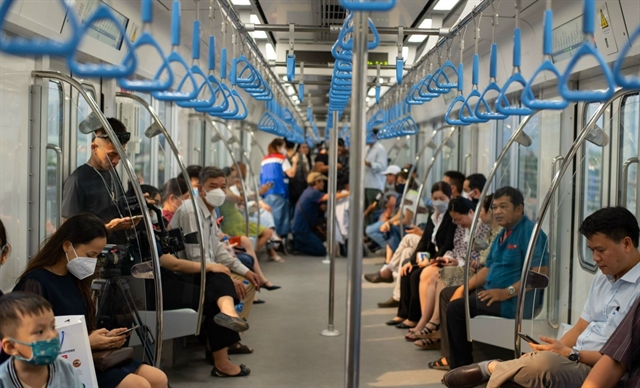
Sector-specific reforms are also important. In transport, the revised Railway Law provides greater clarity for private and foreign participation in urban rail projects. As Hà Nội and HCM City develop their metro systems, the opportunity lies in building integrated rail networks connected to surrounding urban developments. This can create platforms for innovative financing and delivery models.
A consistent pipeline of well-prepared projects, backed by clear policies and effective public-private collaboration, will help position Việt Nam as a preferred destination for long-term capital in Asia.
What are the biggest barriers preventing infrastructure projects in Asia, including Việt Nam, from moving from planning to implementation?
There is significant capital seeking sustainable infrastructure opportunities across Asia. Often, the challenge is whether projects are prepared and structured in a way that enables investment to flow.
A 2024 World Bank Group report found that 43 per cent of 480 infrastructure projects analysed experienced delays beyond their original schedules. This points to a broader challenge we see consistently across markets – project readiness.
When feasibility studies are not sufficiently robust or aligned with international standards, risks are not clearly allocated or procurement timelines are uncertain, projects can face delays even when investor interest exists. These issues become more important as projects grow in scale and complexity.
Infrastructure Asia works with governments to facilitate early market-sounding exercises that bring together developers, financiers and solution providers. This helps identify bottlenecks and ensure projects are commercially viable, bankable and structured to attract competitive bids.
For example, we worked with the Philippines’ Department of Transportation ahead of the North-South Commuter Railway tender, conducting a market sounding exercise in Singapore to test project parameters with private sector players before tender documents were finalised. This helped strengthen project structuring and market confidence.
Beyond technical assistance, what makes international partnerships successful in accelerating project delivery and attracting investor confidence?
Việt Nam and Singapore have a strong foundation to build on. Singapore has consistently been one of Việt Nam’s largest foreign investors, with cooperation expanding across investment, transport, energy and sustainable development.
Successful partnerships are built on strong governance, shared objectives and a commitment to developing local capabilities. They allow governments to leverage international private sector expertise while allocating risks to the parties best equipped to manage them.
In growing sectors such as urban rail, this means strengthening local institutional capabilities while drawing on international experience. Singapore has developed a strong track record in designing, constructing and operating urban rail systems. We are happy to share these experiences and work alongside Việt Nam to support the institutional capabilities and project delivery expertise needed for its urban rail ambitions.
More recently, the Hanoi Metropolitan Railway Management Board and Singapore Cooperation Enterprise signed a memorandum of understanding to advance urban transport development. Infrastructure Asia is supporting the collaboration through project development, technical advisory and capacity-building initiatives.
Infrastructure is increasingly expected to deliver more than economic growth. How are climate resilience, energy security and supply chain connectivity reshaping infrastructure investment across Southeast Asia, and where does Việt Nam fit in?
Infrastructure investment is increasingly shaped by priorities beyond economic growth, including climate resilience, energy security, supply chain connectivity and long-term affordability.
The energy sector illustrates this shift. Power systems must integrate more renewable energy while supporting new sources of demand, such as data centres and advanced manufacturing. The challenge is not simply generating enough capacity, but delivering low-carbon power reliably and affordably at the required pace and scale.
These priorities require more integrated planning among governments, utilities, investors, developers and technology providers. Regional initiatives involving power interconnection, transport corridors and cross-border supply chains are also becoming increasingly important.
Việt Nam is well positioned in this evolving landscape. Its growing manufacturing base makes reliable energy and logistics essential for both the domestic economy and regional supply chains. Priorities include strengthening electricity transmission networks, developing resilient ports and transport corridors, expanding sustainable urban mobility and improving infrastructure resilience in areas vulnerable to climate-related risks such as flooding.
Together, these efforts can support more resilient and sustainable growth for Việt Nam. — VNS