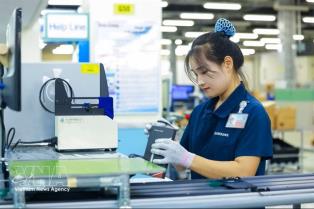
Simplifying planting area codes for farmers and exporters: Deputy Minister
Shifting from a regulatory mindset to a service-oriented approach is at the heart of the Ministry of Agriculture and Environment's proposed overhaul of the planting area code system. Deputy Minister Nguyễn Hoàng Hiệp shares te reforms aim to simplify procedures, accelerate digitalisation and strengthen the credibility of Vietnamese agricultural exports.
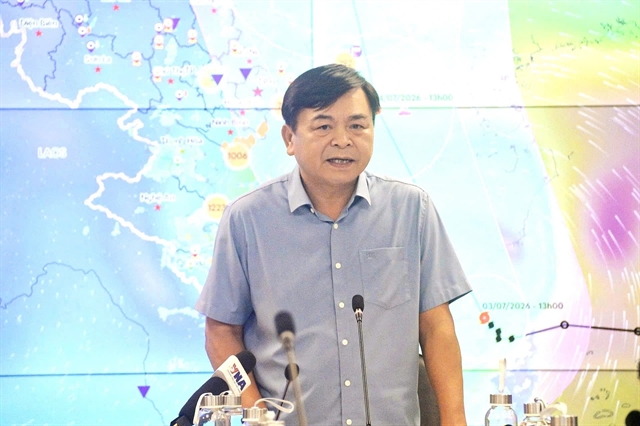
The Ministry of Agriculture and Environment is preparing amendments to Decree No. 38/2026/NĐ-CP governing the issuance and management of planting areas and packing facility codes, with a focus on simplifying administrative procedures, accelerating digitalisation and strengthening traceability for agricultural exports.
Deputy Minister Nguyễn Hoàng Hiệp discusses the proposed reforms, measures to support the 2026 durian crop and the importance of building trust in Vietnamese agricultural products in international markets.
Decree No. 38 only came into effect earlier this year. Why does it already need to be revised and what are the most significant changes being proposed?
Decree No. 38, issued by the Government on January 24, 2026, and effective immediately upon signing, is the first legal document establishing a unified framework for planting area codes. While it has laid an important legal foundation, implementation has shown that some provisions do not fully reflect production realities.
Recognising this, the Prime Minister directed the ministry to review and revise the decree to better support agricultural production and exports.
The first major change concerns our overall approach to issuing planting area codes. We will review the current principles, documentation requirements and eligibility criteria. Rigid requirements – such as the minimum area of 10 hectares currently required for a single planting area code – will be reconsidered and may be removed or made more flexible.
Secondly, we will clarify the rules for specialised growing areas and intercropping areas. Farming practices differ widely across localities, and without clear guidance, different interpretations of the regulations are likely to arise during implementation.
Most importantly, the entire process for issuing planting area and packing facility codes will be redesigned to simplify procedures and minimise compliance costs for farmers and businesses, while still meeting all import market requirements.
We also aim to establish a stable system. In other words, when importing countries update their technical requirements, farmers and businesses should not have to go through additional administrative procedures.
Another breakthrough will be the full digitalisation of the process. Farmers and businesses will simply access an online portal and submit their applications electronically instead of relying on paper-based procedures. This will be a significant administrative reform that shortens the time required to obtain planting area codes.
How will this new management approach benefit farmers, businesses and regulators and what challenges must be overcome for the new system to operate effectively?
The guiding principle of this revision is to shift decisively from a 'management' mindset to a 'service' mindset.
Instead of focusing heavily on pre-approval inspections, regulatory authorities will strengthen post-inspection. Farmers and businesses will first make truthful declarations, while authorities will monitor and inspect compliance throughout the production process.
This approach both facilitates production and increases the accountability of all participants in the value chain.
At the same time, the role of government agencies will be more clearly defined.
Beyond issuing approvals, they must provide technical guidance, help farmers comply with production standards, support the development of large-scale production areas, and strengthen linkages with businesses to improve export capacity.
However, making this model work effectively will require overcoming several challenges.
These include building a comprehensive and transparent database, improving farmers' digital skills, strengthening coordination among localities, and, above all, enhancing compliance by both businesses and producers.
While creating more favourable conditions, the ministry will also clearly define responsibilities and sanctions for violations.
If a business or producer fails to comply with regulations and damages the reputation of the entire production chain, appropriate penalties must be applied. This will both encourage good practices and protect the overall interests of the sector.
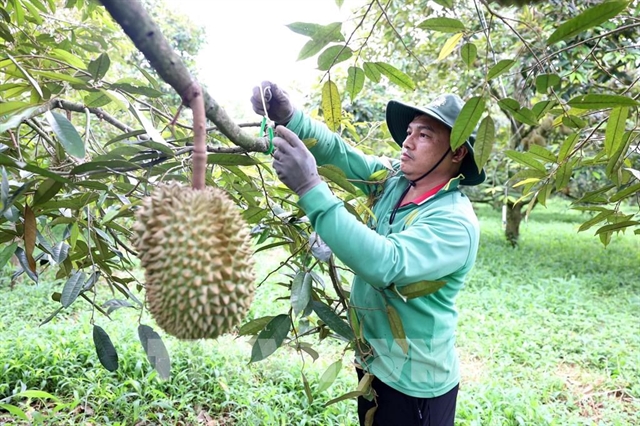
Đắk Lắk has the country's largest durian growing area. What should the province do to ensure smooth sales this season while building long-term confidence among importing markets?
Đắk Lắk currently has around 41,000 hectares of durian, of which nearly 30,000 hectares are in production, with an estimated output of around 500,000 tonnes this season.
Harvesting will begin in about two weeks, while the peak season lasts little more than two months. This means marketing pressure will be considerable unless preparations are made well in advance.
First, the ministry will continue working with the Chinese authorities to expedite approval of additional planting area and packing facility codes based on applications submitted by Đắk Lắk.
If all are approved, more than 50 per cent of the province's durian growing area will become eligible for export.
At the same time, the province should intensify trade promotion, strengthen business linkages, expand fresh fruit exports and accelerate processing and frozen durian exports to reduce pressure during the peak harvest period.
Market diversification is also essential.
A packing facility we've visited exports around 70–80 per cent of its products to markets outside China, with only around 20 per cent shipped to China. This demonstrates that businesses with diversified export markets are far more resilient to fluctuations in global trade.
In the long term, however, the most important objective is building trust.
Trust can only be earned through responsible production, safe products and compliance with food safety and plant quarantine requirements.
When every product can be traced back to its origin, when it is clear who produces it and under what production process and when responsibility can be clearly assigned in the event of violations, the reputation of Vietnamese agricultural products will be genuinely strengthened.
That trust is important not only for export markets but also for domestic consumers.
Đắk Lắk has launched a 30-day campaign to complete the issuance of planting area codes. How will the ministry support the province, and could this model be expanded nationwide?
We highly appreciate Đắk Lắk's determination.
This is not only about durian. It also concerns coffee, pepper and many other economically important crops. If successful, this model could serve as a valuable experience for other provinces.
However, Đắk Lắk cannot achieve this alone without support from the ministry and other stakeholders.
The ministry has targeted to complete an online administrative system on the national information portal, allowing farmers to submit applications electronically. This is a critical prerequisite for accelerating the campaign.
Đắk Lắk also has an advantage as one of the country's leading localities in developing land databases and digital land identification. Linking this data with the growing area code management system would make verification faster, more accurate and more transparent.
I believe the campaign also needs broad support. Many farmers still lack the digital skills needed for online registration, so youth volunteers and university students can play a vital role by helping them complete their applications. — VNS