How China's beauty brands are winning fans in Asia-Pacific and beyond
Chinese brands such as Florasis and Flower Knows have entered mainstream overseas retail channels, including Ulta Beauty in the United States.
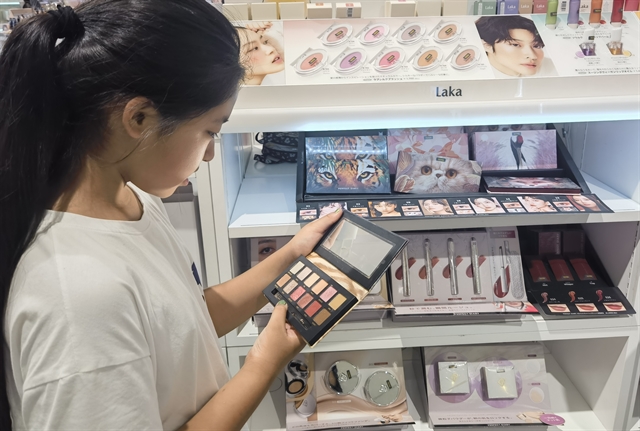
Amid the sleek displays of Florasis' Ginza counter in Tokyo, Japanese social media influencer Kaho Ishii greeted her fans with a cordial smile, handing them the cosmetic products she had long recommended.
"Compared with domestic cosmetics, these products really stand out," she said, praising their long-lasting wear and bold colors that "don't smudge or fade easily," as well as the Chinese-inspired aesthetics and "natural ingredients within."
"Using them really opens up more possibilities for makeup looks," Ishii said, her enthusiasm mirroring the growing appeal of Chinese beauty brands across Asia-Pacific markets, where consumers are increasingly embracing products that combine quality, affordability and distinctive cultural appeal.
GOING MAINSTREAM
Chinese brands such as Florasis and Flower Knows have entered mainstream overseas retail channels, including Ulta Beauty in the United States, while others have expanded into Watsons outlets including Southeast Asia and opened standalone stores abroad.
Such an expanding retail footprint reflects a broader shift in the industry's international ambitions. According to China's General Administration of Customs, cosmetics exports rose 11.7 percent year on year to 36.68 billion yuan (about 5.5 billion U.S. dollars) in the first eight months of 2025, marking a third consecutive year of double-digit growth. More than 50 Chinese brands have expanded overseas.
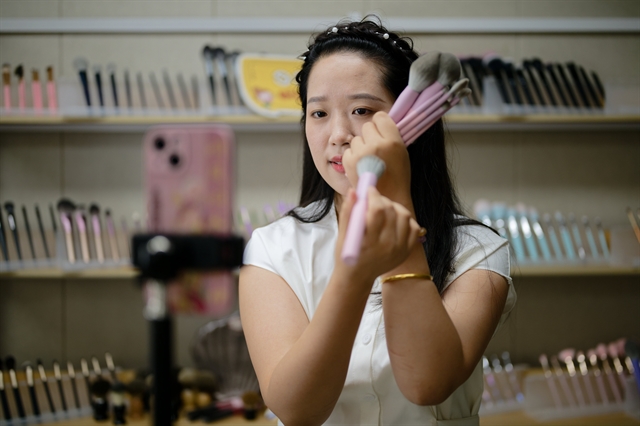
Platform data also highlight the global reach. Alibaba.com data show that while North America remains the largest destination, demand for Chinese beauty products is also growing rapidly in Asia-Pacific markets, particularly Southeast Asia. Chinese beauty products now reach more than 180 countries and regions.
"In global competition, China's supply-chain depth, speed and cost efficiency give it a structural advantage. The question now is not whether Chinese cosmetics have a place overseas, but how large that place will be," said Zhang Yan, president of Zhejiang Health Products and Cosmetics Industry Association.
As Chinese brands move beyond cross-border e-commerce and build overseas retail networks, the question is: What is driving their momentum?
COMPETITIVE FOUNDATIONS
The answer lies not in marketing alone, but in a complete industrial system honed at home. China's cosmetics market surpassed 1.1 trillion yuan (about 164.9 billion dollars) in 2025, with domestic brands capturing 57.37 percent of sales. Fierce competition at home has pushed companies to improve quality and competitiveness before expanding overseas, while the scale and diversity of the domestic market provide a solid foundation for sustained growth.
As Professor Zhuang Rui of the University of International Business and Economics notes, "This competition mechanism has a distinct Chinese character -- market-driven, shaped by a broader institutional framework. It creates the conditions for brands to strengthen quality and competitiveness before shifting overseas."
As domestic capabilities advance, firms are seeking growth abroad through localized production, distribution and branding strategies.

One key advantage is speed. Chinese brands can move from spotting trends to launching products within a month, using real-time consumer data to adjust formulas, colors and packaging. This rapid iteration has become a competitive advantage overseas.
Technical innovation is another pillar. By mid-2025, Chinese companies had filed 80 new cosmetic ingredient patents, 70 percent of them domestically sourced, a year-on-year leap of around 80 percent. R&D investment has also grown rapidly.
Proya Cosmetics' relevant spending nearly tripled in four years, rising from 77 million yuan (about 12 million dollars) in 2020 to 210 million yuan (about 32 million dollars) in 2024. Yatsen Group has invested more than 700 million yuan (about 105 million dollars) in research, strengthening its scientific capabilities through dedicated R&D centers.
"The real export is not just products, but technology and brand power," said Huang Jinfeng, founder of Yatsen Group.
Beyond product capabilities, digital platforms have reshaped how Chinese beauty brands enter overseas markets. Cosmetics brand Colorkey, for example, began its expansion through e-commerce platforms such as Shopee, using online channels to test consumer demand before committing significant resources. As its overseas presence grew, the brand leveraged TikTok-driven social commerce to engage local consumers and later expanded into warehouses and offline retail, turning digital visibility into a more sustainable market presence.
FROM MAKER TO BRAND
The transformation goes beyond manufacturing. C-Beauty is increasingly building an end-to-end brand experience, from formulation and packaging to storytelling and retail design.
According to Gabby Chen, president of global expansion at Florasis, "Quality is the foundation, and culture is the soul." For four years, their approach to international expansion has blended technological rigor with cultural storytelling, demonstrating that China's beauty exports represent not just manufacturing, but creation, innovation and identity.
Duan Yuwan, professor of the School of International Economics and Trade at the Central University of Finance and Economics, said the sector's shift from cost reliance to value creation reflects a broader transformation in the Chinese economy. Rather than competing mainly through low prices, leading Chinese brands are increasingly investing in innovation, design and consumer experience.
Zhang, president of Zhejiang Health Products and Cosmetics Industry Association, added, "C-Beauty is now delivering an exceptional customer experience from product performance through to brand identity. Many leading Chinese beauty brands are setting new benchmarks in visual language, art direction and retail design, creating a distinctly modern Chinese aesthetic that feels sophisticated and highly appealing to Western consumers."
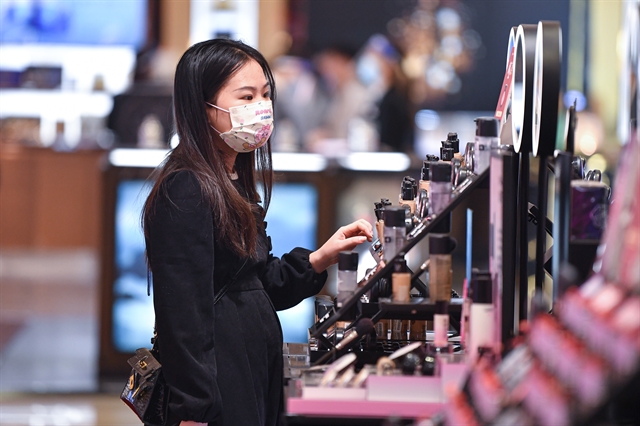
Together, these elements are allowing Chinese cosmetics to occupy a new space in global markets. Consumers are finding products that rival premium brands in design, ingredients and aesthetic appeal, yet remain accessible in price. As quality, innovation and cultural identity reinforce one another, C-Beauty is gaining recognition not only as a manufacturing success, but also as a trusted and increasingly influential global brand.
Its growing presence across Asia-Pacific markets also highlights the potential of regional economic cooperation, with cross-border e-commerce, retail networks and closer market connections creating new opportunities for businesses and consumers alike.
The rise of C-Beauty therefore represents more than an export boom: It marks China's growing ability to compete not only through manufacturing excellence, but also through brand value, cultural appeal and long-term consumer trust. (Xinhua)