Policy package for rental housing to be submitted to NA in October
For the first time, the rental housing segment has been identified as a pillar of the market, instead of just playing a supporting role.
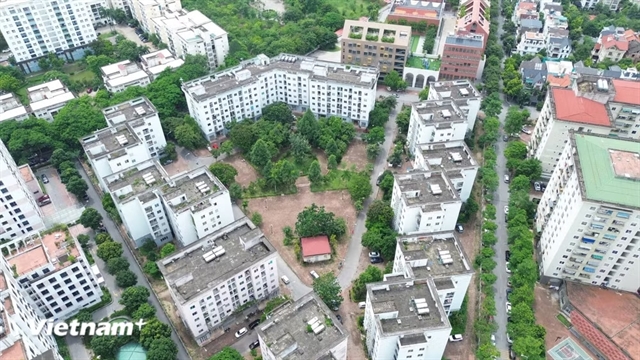
HÀ NỘI — The Ministry of Construction (MoC) is finalising a large policy package to promote the development of rental housing due for submission to the National Assembly (NA) for consideration at a meeting in October.
Amid continuously rising housing prices that far exceed the ability of most people to afford homes, the move is considered a significant shift in authorities' property development mindset. For the first time, the rental housing segment has been identified as a pillar of the market, instead of just playing a supporting role.
According to Hà Quang Hưng, deputy director of the MoC’s Department of Housing and Real Estate Market Management, though the real estate market has shown positive signs of recovery, the imbalance between supply and demand remains evident.
The supply of high-end housing has continued to increase, while the supply of affordable housing has remained severely lacking.
In particular, the current housing development structure still mainly focuses on the sales segment, while long-term rental housing has not developed proportionally to the actual needs of workers, labourers, officials, civil servants and middle-income households.
Current housing prices are many times higher than average incomes, making access to housing increasingly difficult, Hưng noted.
To deal with this shortcoming, the MoC has planned a fundamental change in housing development policy through 2030, according to Hưng.
Instead of focusing mainly on commercial housing, three segments — commercial housing, social housing and rental housing — will be developed simultaneously. Of these, rental housing is identified as a long-term strategic segment, serving the needs of a large number of people.
To build more rental housing, the MoC is currently conducting a comprehensive review and assessment of existing policies, while also studying amendments to the Housing Law, the Real Estate Business Law and related legal regulations.
According to the ministry, long-term rental housing projects will be considered for preferential mechanisms regarding land, taxes, credit and finance to attract socialised capital to participate in the market.
MoC Chief of Office Lâm Văn Hoàng said that the main goal of this policy revision is to shift from a housing development model primarily focused on sales to a more balanced development of various housing types, with rental housing playing a crucial role.
The MoC is currently finalising the policy package to submit to the NA ahead of their October meeting.
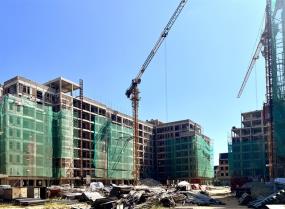
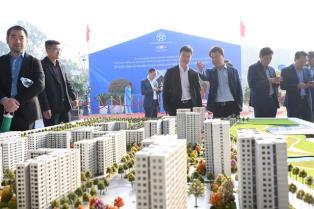
Meanwhile, Hà Nội this week started construction on three rental housing projects in Yên Sở, Việt Hưng and Long Biên, comprising over 8,000 apartments with a total investment of over VNĐ30 trillion (US$1.1 billion). These projects are expected to contribute to the formation of a professional rental housing market with more affordable prices, reducing housing cost pressures for residents.
Speaking at the groundbreaking ceremony, chairman of the Hanoi People's Committee Vũ Đại Thắng said: “The city's goal is to gradually establish a professional, high-quality and affordable rental housing market, while simultaneously contributing to reducing the pressure of home ownership at all costs, building a healthy, sustainable real estate market that aligns with international trends.”
According to experts, amid continuously escalating housing prices in major cities, expanding the supply of rental housing at reasonable prices will contribute to addressing housing needs, build labour and creating a foundation for sustainable growth.
Chairman of the Vietnam Real Estate Association Dr Nguyễn Văn Khôi said that developing the rental housing market will create conditions for more flexible labour mobility, reduce pressure on home ownership and enhance the competitiveness of the economy.
According to Khôi, when institutional, planning and investment resource barriers are removed, this segment can become a new growth engine, meeting the housing needs of the people while supporting urbanisation and sustainable economic development.
Aside from developing rental housing, the Government is also promoting its social housing programme.
MoC data shows that nationwide, more than 103,000 social housing projects were completed last year, exceeding the plan by 3 per cent.
In the first five months of 2026, construction started on an additional 40 projects with 34,383 apartments.
To date, the country has built approximately 720,000 social housing projects, equivalent to 72 per cent of the target of one million projects. More than 180,000 units have already been completed and put into use. — BIZHUB/VNS