Businesses pitch for policy support to promote rental housing in HCM City
Businesses and industry experts are calling for stronger incentives, easier access to capital and land, and streamlined procedures to accelerate rental housing development in HCM City as home prices rise and demand from urban workers grows.
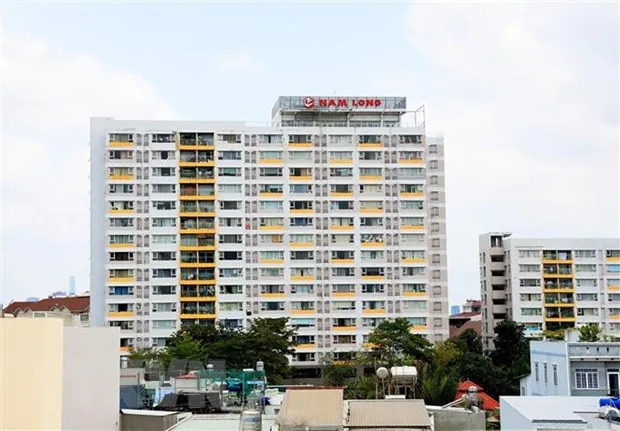
HCM CITY — Businesses and industry experts are calling for stronger incentives, easier access to capital and land, and streamlined procedures to accelerate rental housing development in HCM City as home prices rise and demand from urban workers grows.
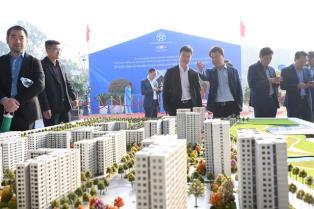
The issues were discussed at the 89th HUBA Business Café programme on “Social Housing and Rental Housing: Housing Solutions for Workers” held in HCM City last week.
Nguyễn Ngọc Hòa, chairman of the HCM City Union of Business Associations (HUBA), said housing is not only a fundamental need for residents but also a key factor in helping businesses attract and retain skilled workers.
But buying a home often creates a heavy financial burden on young families, he said.
On the other hand, rental housing offers a more flexible and affordable option, reducing the need for large upfront payments and allowing workers greater mobility in cities, he said.
“However, the transition from a homeownership-driven market to a rental-based one presents new challenges for developers. Instead of recovering capital quickly through property sales, investors must rely on rental income over many years, requiring a different approach to financial planning, cash flow management and capital recovery.”
Lê Hữu Nghĩa, deputy chairman of HUBA and general director of Lê Thành Trading and Construction Co Ltd, said the city currently has around one million people in need of rental housing, but the supply of rental social housing is extremely limited.
He said the market remains heavily skewed towards high-end housing, which accounts for around 70 per cent of supply, and mid-range housing makes up 25 per cent, with only the rest available to low- and middle-income earners.
HCM City aims to build 181,000 social housing units for sale and 100,000 rental units by 2030. However, only about 18,000 social housing units were completed during the 2021–25 period.

More incentives needed
Developers said one of the biggest obstacles to expanding rental housing is the low returns compared to other property segments.
Nghĩa said selling prices at social housing projects are fixed at cost plus 10 per cent profit at the time of licensing and developers take a hit as construction costs rise, as they invariably during the long time it takes for most developments.
In addition, large rental housing developments usually require investment worth trillions of đồng, while returns are recovered gradually through rental income over many years.
To encourage investment, Nghĩa suggested raising the profit margin cap for rental social housing projects to 15 per cent, extending loan tenors to 15–20 years at preferential interest rates and cutting corporate income tax and value-added tax by 70 per cent.
He added that the Vietnamese people’s strong preference for owning a home remains a major challenge to the rental housing market, and so more flexible models such as rent-to-own schemes should be explored, allowing tenants to eventually buy out their house once they become financially capable.
Võ Văn Thân, chairman of the HCM City Industrial Park Enterprises Association and the Vĩnh Lộc Industrial Park One Member Co Ltd members’ council, said the biggest challenges remain land availability and investment capital.
He proposed allocating land specifically for social housing and worker housing in urban areas adjacent to industrial parks.
He also said that the current subsidised loan limit of VNĐ200 billion (US$7.6 million) per project is insufficient for large-scale developments.
He called for raising the amount of subsidised loan limit and extending the interest subsidy from the current seven years to between 10 and 15 years to ease the pressure on developers.
Nguyễn Quang Thanh, deputy general director of the HCM City Finance and Investment State-owned Company, said the city is currently implementing an interest rate support programme for social housing projects, worker accommodation and student dormitories under Resolution No 09 issued by the HCM City People's Council.
Under the programme, each project is eligible for loans of up to VNĐ200 billion ($7.6 million), with interest support covering almost all borrowing costs. In practice, participating developers pay only around one per cent interest per year.
Given the substantial capital requirements of social housing projects, HFIC is proposing to raise the support ceiling to VNĐ300 billion per project and extend the interest support period from seven years to 10 years.
Many business executives at the event said dedicated financing packages with loan tenors of 15-20 years and interest rates of around 4-5 per cent should be established specifically for rental housing projects to help attract private investment and the development of the rental housing market. — VNS