Hà Nội targets two, billion-dollar start-ups by 2030
The capital aims to lead Việt Nam in the Provincial Innovation Index (PII) and rank among the top five provinces and cities nationwide in AI research and development.
HÀ NỘI — Hà Nội aims to develop innovative start-ups valued at US$1 billion or more as it seeks to build an ecosystem driven by strategic technologies under a five-year plan.
The Municipal People's Committee issued Plan No. 370/KH-UBND on September 28 outlining the city's science, technology and innovation development targets for 2026-30 period.
It aims to position the capital city as a leading science, technology and innovation hub in Việt Nam and eventually become a leading group in Southeast Asia, supported by improved institutions, infrastructure and a high-quality workforce.
The city targets total factor productivity (TFP) contributing more than 57 per cent of economic growth, high-tech products accounting for at least 50 per cent of total goods exports, and total social investment in research and development (R&D) reaching at least 2 per cent of gross regional domestic product (GRDP) with non-state investment accounting for more than 60 per cent.
For 2026, Hà Nội will allocate 4 per cent of its total balanced local budget expenditure to science, technology and innovation.
The capital aims to lead Việt Nam in the Provincial Innovation Index (PII) and rank among the top five provinces and cities nationwide in AI research and development.
The city will establish 10 innovation centres and support the development three to five technology companies in strategic technology sectors reaching reasonal sclae.
More than half of businesses in the city are expected to engage in innovation.
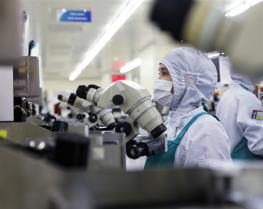
Priority technology areas include digital technologies, artificial intelligence (AI), big data, digital twins, cloud computing, the Internet of Things, blockchain, 5G and 6G, robotics, semiconductors, cybersecurity, biotechnology and biomedicine, as well as urban railway technologies.
At least 30 per cent of research results produced by universities and research institutes will be commercialised through successful transfers to businesses.
The city also aims to attract more than 200 prominent overseas Vietnamese experts and scientists to participate in research, training and technology transfer, while developing eight to 10 science and technology organisations with regional or global rankings.
A shift in thinking
To meet the targets, Hà Nội plans to shift from managing individual research projects to programmes, products and outcomes measured through Objectives and Key Results and Key Performance Indicators (OKR/KPI).
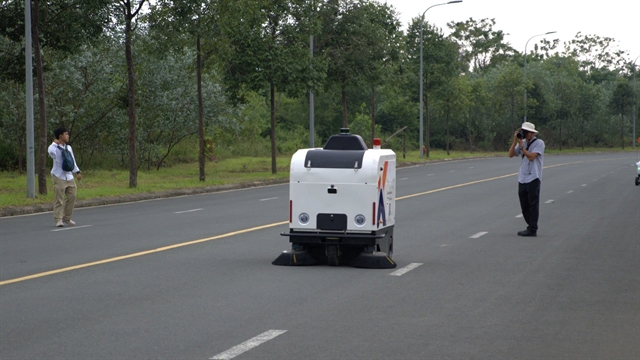
The city will develop controlled testing, or sandbox, mechanisms for new technologies, products and business models for priority areas including AI, big data, blockchain, robotics, digital assets, drones, fintech, autonomous vehicles, agricultural and forestry drone applications, biotechnology and new materials.
The focus will also be on attracting investment in establishing research centres, key laboratories, and infrastructure for strategic technologies.
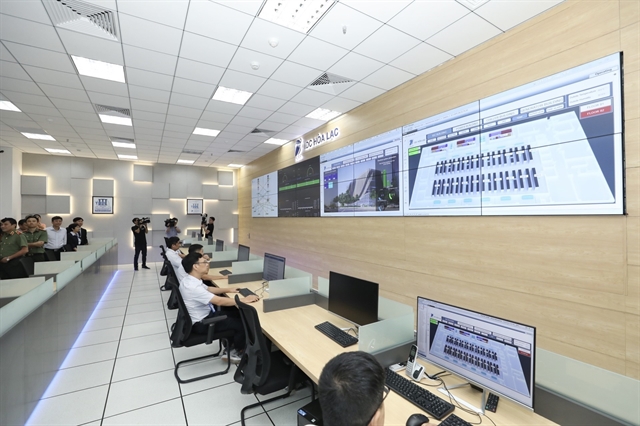
The Hòa Lạc Hi-Tech Park will be operated and developed as a centre for testing science and technology mechanisms and policies.
The city also accelerates development of its Biotechnology High-Tech Park, bring the Hanoi Software Technology Park into operation, while developing specialised digital technology parks and encouraging investment high-tech and industrial zones, AI clusters and community innovation spaces.
The city also wants to attract scientists, highly talented individuals, engineers, architects, strategic technology experts, overseas Vietnamese and international specialists to major city programmes and promote high-tech workforce training programmes.
Multinational technology groups are encouraged to establish R&D centres the capital city and expand strategic cooperation in AI, quantum technology, semiconductors and biotechnology.
Hà Nội also plans to study preferential public procurement and public ordering mechanisms for technology products 'Make in Hanoi' and 'Make in Vietnam'.
The capital city aims to expand innovation initiatives to address social challenges including population ageing, community healthcare, education, sustainable poverty reduction and environmental protection. — VNS