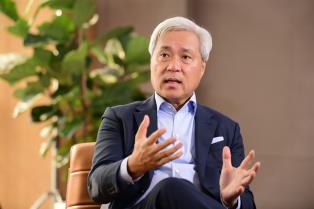
Forbes 30 Under 30 investor: AI will reshape industries, economies and national competitiveness
Bùi Đức Anh, a Vietnamese venture capitalist recognised in the Forbes 30 Under 30 Asia 2026 list, has backed startups across Southeast Asia and the United States, with a particular focus on artificial intelligence and cybersecurity. In an interview with Việt Nam News, he discusses the technologies shaping the next decade, the risks accompanying the AI revolution, and what Việt Nam needs to build globally competitive technology companies.
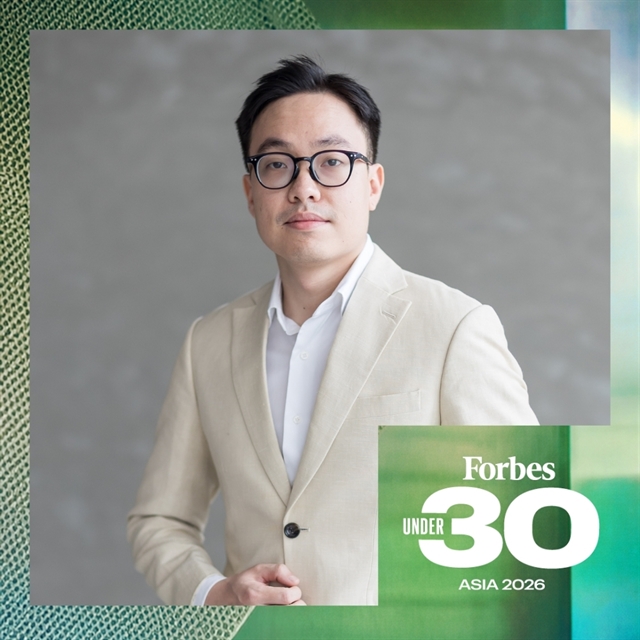
Bùi Đức Anh, a Vietnamese venture capitalist recognised in the Forbes 30 Under 30 Asia 2026 list, has backed start-ups across Southeast Asia and the United States, with a particular focus on artificial intelligence and cybersecurity. In an interview with Việt Nam News, he discusses the technologies shaping the next decade, the risks accompanying the AI revolution, and what Việt Nam needs to build globally competitive technology companies.
First of all, congratulations on being named to the Forbes 30 Under 30 Asia 2026 list. How did you feel when you received the news, and what does this recognition mean to you personally?
I would be lying if I said it wasn't important to me. Being included in Forbes 30 Under 30 Asia has been a source of inspiration for me. I remember reading about the founders, innovators and investors on the list and thinking about the kind of impact I hoped to create one day. I still remember being woken up by my wife telling me the list had been released. When I saw my name, I felt a mixture of excitement, gratitude and disbelief.
While the recognition is a meaningful personal milestone, what it really represents to me is the collective support of many people who shaped my journey, including mentors, colleagues, founders, friends and family. No one reaches a milestone like this alone.
Before entering the world of venture capital, you were a student at the Foreign Trade University. Looking back on your journey, what were the key milestones that led you to pursue a career in technology investing?
Technology investing sits at the intersection of three things I enjoy most: business, technology and people. My early years in banking taught me how capital flows through an economy. Working in corporate strategy exposed me to how technology can transform industries. Venture capital then gave me the opportunity to work alongside founders who are building the future from day one.
At the same time, I became increasingly excited by the opportunity to see how technology could improve people's lives across Việt Nam and Southeast Asia. Whether it is expanding access to financial services, enabling small businesses to participate in the digital economy, or helping enterprises operate more efficiently, technology has the ability to create impact at a scale that few other industries can match.
Looking back, the transition wasn't a single decision. It was a gradual realisation that I was more excited by helping create the future than by simply analysing the present.
What motivated you to focus on sectors such as artificial intelligence (AI) and cybersecurity, rather than other areas of technology investment?
I often describe AI and cybersecurity as two sides of the same coin. AI is the engine driving the next wave of innovation and productivity, while cybersecurity is both the enabler and the guardian.
It is the enabler because businesses will only adopt AI at scale if they trust that their data, systems, and intellectual property are secure. It is the guard because the same technology is also empowering new forms of cyberattacks, fraud, and identity manipulation. Throughout history, every major technological revolution has required a trust layer to achieve mass adoption. In the AI era, cybersecurity is that trust layer.
AI is advancing at an extraordinary pace and is widely regarded as one of the most transformative technological revolutions of our time. From an investor’s perspective, what AI trends do you believe will have the greatest impact over the next five years?
First, vertical AI applications. The biggest opportunities will not necessarily come from building new foundation models, but from applying AI to solve deep, industry-specific problems in sectors such as healthcare, finance, manufacturing and education.
Second, Physical AI. As AI moves beyond software and into the physical world through robotics, autonomous systems and intelligent machines, it has the potential to transform industries facing labour shortages, productivity challenges and increasingly complex operations.
Third, Sovereign AI. More countries and enterprises are beginning to view AI as strategic infrastructure. As a result, we are seeing growing investment in local AI capabilities, including data infrastructure, computing resources, and models that better reflect local languages, cultures and regulatory requirements.
Together, these trends represent the next phase of AI adoption: AI becoming deeply integrated into industries, the physical economy and national competitiveness
You have been involved in investments in companies developing deepfake detection technologies and AI-powered cybersecurity solutions. What are the most significant risks that AI currently poses to businesses and society?
The first point to mention is that synthetic media has evolved from a reputational risk into a direct enterprise fraud vector. Deepfakes can now be used for CEO voice cloning, identity impersonation and even bypassing KYC and verification processes. The cost of launching these attacks is approaching zero, while detection technologies are constantly trying to catch up.
AI is dramatically increasing the effectiveness of social engineering attacks. Phishing used to be easier to spot because it was often generic and poorly written. Today, AI enables highly personalised spearphishing campaigns at scale, using realistic text, voice and video. The human layer has always been the weakest link in security, and AI is making it easier than ever to exploit.
Beyond deepfakes and social engineering, I think one of the biggest long-term challenges is the rise of non-human identities. As AI agents become more autonomous, the number of machine identities may eventually exceed human identities by a large margin. Our current trust and security systems were largely built for humans, not AI agents. Managing, verifying and governing these non-human identities will become a critical challenge for businesses and society.
When evaluating an AI start-up, what factors matter most to you? Is it the strength of the idea, the founding team, the product, or the ability to commercialise and scale the business?
Of course, we look at all of these factors: the problem, the product, the technology and the ability to commercialise. But if I had to choose the single most important factor, it would be the founders.
Especially in AI, markets evolve incredibly quickly. Technologies change, products pivot, customer needs shift, and business models adapt. What looks like the right strategy today may not be the right strategy twelve months from now.
That's why we spend a lot of time evaluating the founders themselves: their vision, resilience, ability to learn, and ability to adapt. In venture capital, we are often investing in a team’s capacity to navigate uncertainty as much as we are investing in the product they have today.
The best founders are not necessarily the ones who get everything right from day one. They are the ones who can continuously learn, adapt, and execute as the market evolves.
Through your work with start-ups across Southeast Asia and the US, what strengths and weaknesses have you observed among Vietnamese founders when competing in the global market?
Vietnamese founders have many strengths. They are resilient, resourceful, and often able to achieve a great deal with limited resources. Many of the founders I meet are highly ambitious, technically capable, and willing to learn very quickly. Those qualities are especially valuable in the early stages of building a company.
The main challenge, in my view, is that many startups still begin with a local or regional mindset. Building a globally competitive company requires thinking about international markets, customers and talent from a much earlier stage. It also requires stronger storytelling, fundraising capabilities, and the ability to build networks beyond Việt Nam.
I don't think the issue is talent. Việt Nam has exceptional founders and engineers. The bigger opportunity is helping them gain greater access to global capital, global customers, and global best practices. As more Vietnamese founders successfully build companies on the global stage, I believe that experience and knowledge will compound and strengthen the ecosystem for the next generation
Việt Nam has set ambitious goals to become a regional hub for innovation and technology. In your view, what is currently missing from the country’s start-up ecosystem to enable the creation of more globally competitive technology companies?
Việt Nam has many of the fundamental ingredients needed to build globally competitive technology companies: strong technical talent, a large and growing domestic market, and a young, ambitious generation of entrepreneurs.
To unlock the next stage of growth, we need a stronger support system around founders. That includes more experienced mentors, more early-stage risk capital, stronger links between universities and industry, and better access to international markets and global networks.
At the same time, I am very excited by the direction of policy and regulatory support in recent years. There is a growing recognition that innovation, technology, and entrepreneurship are important drivers of economic growth and national competitiveness. We are seeing increasing efforts to support digital transformation, innovation, startup development, and emerging technologies, which are all positive signals for the ecosystem.
Perhaps most importantly, we need more success stories, particularly successful exits and IPOs. Capital tends to follow success. The more globally recognised companies that Việt Nam produces, the more international investors will pay attention to the market. Successful exits not only attract more global capital but also create experienced founders, operators, and angel investors who can reinvest their knowledge, networks, and capital into the next generation of startups.
Alongside your international investment activities, you have also supported initiatives aimed at promoting digital transformation and strengthening Việt Nam’s start-up ecosystem. What motivates you to dedicate time and effort to these initiatives?
At the end of the day, I'm Vietnamese, and I genuinely want to contribute to the development of Việt Nam's technology and innovation ecosystem.
Throughout my career, I have been fortunate to learn from many founders, investors, operators and mentors, both in Southeast Asia and internationally. I believe it is important to give back and help create opportunities for the next generation of entrepreneurs.
For me, venture capital is not only about investing in companies. It is also about helping build the environment where great companies can emerge. Whether through supporting startup programs, promoting digital transformation initiatives, connecting founders with global networks, or sharing knowledge and experience, I see these efforts as investments in the long-term future of the ecosystem.
Việt Nam is still at a relatively early stage of its innovation journey, but the potential is enormous. If each of us contributes in our own way, I believe we can help create an ecosystem that enables more Vietnamese founders to build world-class companies and compete successfully on the global stage.
Finally, what advice would you give to young Vietnamese who aspire to build careers in technology, innovation or venture capital?
I am still learning every day myself, but there are a few lessons that have been particularly valuable in my own career.
First, stay curious and keep learning. We are living through a period of extraordinary technological change, and many of the opportunities available today simply did not exist a decade ago. A young person in Việt Nam can now learn from the world's best resources, work with global teams, and build products for international markets from almost anywhere.
Second, focus on building real skills and creating value. Technology, industries, and business models will continue to evolve, but the ability to solve problems, work with people, communicate effectively, and execute well will remain valuable regardless of how the world changes.
Third, learn how to tell your story. Vietnamese founders are often exceptional builders because our culture tends to reward action more than words. That is a strength. However, building a successful company is also about attracting talented people, winning customers, forming partnerships, and convincing investors to believe in a vision that has not yet become reality. Execution gets a start-up started, but storytelling helps it scale.
For those interested in venture capital, spend as much time as possible with founders and startups. Venture capital is not just about finance; it is about understanding people, technology and how great companies are built. VNS