EPR needs transparent financing mechanism to boost waste collection
A lack of clear financial mechanisms is emerging as a key bottleneck in the implementation of extended producer responsibility (EPR), despite significant progress in collecting agricultural waste such as pesticide packaging.
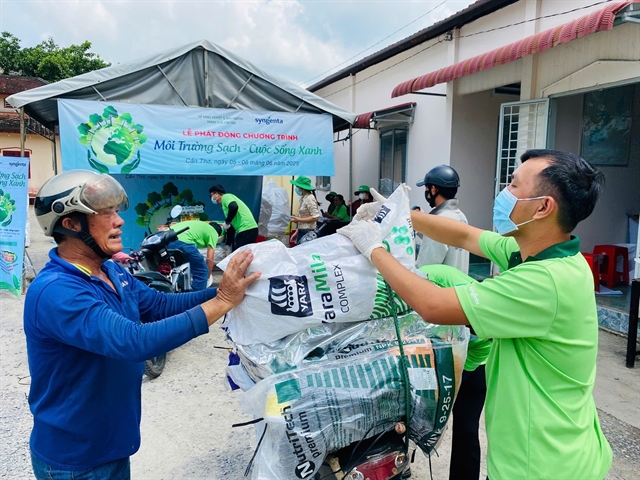
ĐẮK LẮK — A lack of clear financial mechanisms is emerging as a key bottleneck in the implementation of extended producer responsibility (EPR), despite significant progress in collecting agricultural waste such as pesticide packaging.
The issue was highlighted at a forum held on Tuesday in Đắk Lắk Province, focusing on the dissemination of EPR regulations and support mechanisms for the collection and treatment of pesticide and fertiliser packaging.
The event was jointly organised by the Plant Production and Protection Department under the Ministry of Agriculture and Environment, the provincial Department of Agriculture and Environment, and Nông nghiệp và Môi trường Newspaper.
Under the EPR framework, producers and importers are responsible for the entire lifecycle of their products, including post-consumption waste. The mechanism is expected to drive more sustainable production and consumption, particularly in agriculture, where hazardous waste from pesticide packaging poses significant environmental risks.
However, implementation has revealed persistent gaps.
According to Lương Ngọc Quang, deputy head of the Food Safety and Environment Division, nearly 2,500 tonnes of used pesticide packaging were collected nationwide between 2022 and 2024. Of this, more than 550 tonnes remain untreated.
Only around 1,400 tonnes were processed in accordance with regulations, while the remainder was either improperly disposed of by farmers or left untreated, highlighting weaknesses in the waste management chain.
Pesticide packaging is classified as hazardous waste due to chemical residues, requiring strict handling procedures from collection to disposal. Meanwhile, fertiliser packaging can be treated as ordinary solid waste and recycled.
Although regulations based on the 'polluter pays' principle are in place, requiring waste to be collected, stored and transported to certified facilities within 12 months, enforcement remains uneven.
Infrastructure and funding constraints
Progress has been made in raising awareness and expanding infrastructure. Over the past three years, more than 11,700 training sessions have been conducted nationwide, attracting over 600,000 participants. More than 450,000 collection tanks have also been installed.
Despite this, treatment efficiency remains low. Around 20 per cent of collected waste has yet to be processed.
Experts attribute this partly to entrenched habits, as many farmers still discard packaging in fields or waterways, posing risks to soil and water quality.
Infrastructure is another constraint, with many localities lacking adequate or standardised collection facilities. In addition, financial resources for transportation and treatment remain limited, while support mechanisms are not yet clearly defined.
Local challenges highlight systemic issues
The situation in Đắk Lắk illustrates these challenges.
With more than 845,000 hectares of agricultural land and over 3,100 pesticide retailers, the province generates more than 200 tonnes of pesticide packaging waste annually.
Despite various initiatives, collection remains limited due to inconsistent infrastructure, deteriorating storage facilities and irregular collection activities, according to local authorities.
Business representatives also pointed to a lack of designated collection points, which discourages proper disposal even among farmers who are aware of environmental risks.
Experts at the forum stressed the need for comprehensive and coordinated measures to ensure EPR is effectively implemented.
They called for more practical and accessible communication campaigns to change behaviour, alongside hands-on training on safe collection and disposal practices.
At the same time, promoting integrated pest management (IPM), increasing the use of biological pesticides and developing clean agriculture models could help reduce hazardous waste at the source.
Stronger inspection and enforcement mechanisms are also needed, along with clearer responsibilities for pesticide distributors in collecting post-use packaging.
A key recommendation is the establishment of a transparent and well-defined financial mechanism under EPR.
Nguyễn Văn Sơn, chairman of the Vietnam Pesticide Producers and Traders Association, said many companies had launched collection programmes in 22 provinces, but effectiveness remained limited due to unclear cost allocation and responsibilities.
International experience suggests that financial contributions should be proportional to the volume of packaging placed on the market, with funds used directly for collection and treatment activities.
Andrew Ward, a representative from CropLife, noted that countries with clear legal frameworks had achieved collection rates of up to 90 per cent.
Local authorities emphasised the need for detailed guidance, particularly on financial mechanisms and implementation roadmaps, to ensure consistency across all levels.
They also highlighted the importance of shared responsibility among the State, businesses and farmers, as well as the role of environmentally friendly packaging design.
While EPR is still in its early stages in Việt Nam, it is widely seen as an inevitable step towards a circular economy and sustainable agriculture.
If effectively implemented, the mechanism is expected to deliver both environmental and economic benefits, helping to address one of the most pressing waste management challenges in the agricultural sector. — VNS