Decree 46 pause offers relief, but highlights need for policy predictability
Policies should be developed and implemented in a way that avoids sudden shocks to companies and prevents overload for authorities.
Compiled by Mai Linh
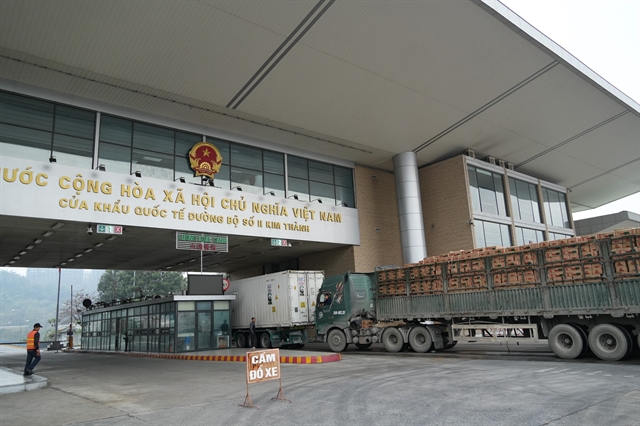
HÀ NỘI — Food importers have gained temporary relief as customs clearance returns to normal after the Government on February 5 issued Resolution 09 to pause newly issued decrees on food safety that had caused widespread disruptions at ports and border crossings in the lead-up to Tết (Lunar New Year).
Decree 46 detailing enforcement of the Law on Food Safety, along with Resolution 66.13 on food product declaration and registration, and they both took effect in late January, will be suspended until April 15. The Government asked relevant ministries, agencies and local authorities to complete all necessary preparations before the regulations come back into force.
Until then, the previous rules under Decree 15, which have governed food safety procedures since 2018, will continue to be applied.
The move follows mounting complaints from importers after Decree 46 came into force immediately on January 26 without a transition period or clear guidance on how new inspection requirements would apply to imported goods, leading to a backlog of goods and piled up costs for businesses just as the Tết peak shopping season was approaching.
Following the Government’s move, Việt Nam Customs under the Ministry of Finance issued an urgent document requiring local customs departments to operate around the clock to speed up clearance with priority given to imported food shipments.
The pause and adjustment of the implementation time of Decree 46 has helped businesses resolve immediate difficulties as the Tết holiday approaches, according to President of Hà Nội Logistics Association Trần Đức Nghĩa.
Lương Ngọc Quang from the Department of Plant and Production Protection under the Ministry of Agriculture and Environment said food safety inspections and customs clearance for imported agricultural shipments at major entry points such as Hà Nội, HCM City, Hải Phòng, Lào Cai and Lạng Sơn have returned to normal in the past few days.
Amendments proposed
The episode highlighted deeper problems with Decree 46 that need to be addressed before it is reinstated.
The pause is an emergency fix but in the long run, regulations must strike a balance between effective State management, consumer protection and a favourable business environment, according to Phạm Thị Ngọc Thuỷ, Director of the Office of the Private Economic Development Research Board (Board IV) under the Prime Minister’s Administrative Procedure Reform Advisory Council.
Thuỷ said Decree 46 should be reviewed for adjustments to introduce a clear transition period so businesses and regulators can adjust smoothly.
“Policies should be developed and implemented in a way that avoids sudden shocks to companies and prevents overload for authorities,” she said.
Post-clearance inspections should be prioritised rather than pre-clearance checks, Thuỷ said, adding that coordination among agencies involved in food safety should be enhanced, along with a shared database to support risk-based management.
At a conference on new food safety regulations held by the Vietnam Chamber of Commerce and Industry (VCCI) on February 6, VCCI Deputy Secretary General Đậu Anh Tuấn said that the Government’s response showed its willingness to listen to businesses and helped ease congestion while keeping supply chains intact during the peak Tết period.
Stressing that the pause was only a temporary measure, Tuấn said fundamental problems related to Decree 46 and Resolution 66 must be tackled to prevent overlapping procedures and strengthen post-clearance inspections.
The core issue is not simply time for guidance, but the need to redesign the regulations so that they are more practical, Bùi Quang Tuấn from the American Chamber of Commerce in Việt Nam said.
Tuấn also pointed out problems related to requirements for conformity declarations and inspections of imported inputs used solely for internal production, the lack of uniform implementation in different localities and overlapping regulations in product declarations.
President of the HCM City Food and Foodstuff Association Lý Kim Chi called for a thorough revision of both Decree 46 and Resolution 66 toward a stronger risk-based system with more substantive post-clearance checks. She said that the new regulations should be implemented only after local authorities are fully prepared.
According to Nguyễn Hồng Uy from the European Chamber of Commerce in Việt Nam (EuroCham), the Law on Food Safety is due for amendment and submission to the National Assembly in May 2026, meaning Decree 46 and Resolution 66 could soon be replaced, which would create further regulatory instability.
He urged the Government to first amend the Law on Food Safety, then issue a new decree. During the transition, Decree 15 should continue to be applied, alongside stronger post-clearance inspections.
Eurocham said regulations should focus on risk-based management and shift from pre-clearance to post-clearance checks based on risk levels, along with streamlining administrative procedures.
“New requirements should only be introduced if they are proven to improve food safety without disrupting production and business, and after full impact assessments and consultations,” he said.
In addition, food safety management should follow international practice by adopting a systems-based approach with clear standards covering the entire chain, from farm to table.
He added that Việt Nam should expand the use of advanced international quality standards such as HACCP, ISO and GMP for processed foods, along with the development of a digital database to improve inspection efficiency and traceability.
Predictability needed
Đặng Thảo Quyên from RMIT University Việt Nam said the disruptions caused by Decree 46 offered important lessons for policymakers in designing future regulations.
Policy stability and predictability are fundamental to national competitiveness and investor confidence, especially as global supply chains remain fragile and domestic businesses operate on thin margins, Quyên said.
At the Government’s meeting on February 4, Prime Minister Phạm Minh Chính said that new legal documents must include specific transitional provisions.
The Government is facing a heavy workload in issuing hundreds of documents to guide the implementation of recently passed laws and regulations.
The 15th National Assembly adopted 46 laws and six resolutions at its 10th session, requiring the issuance of 252 documents to guide implementation.
Deputy Prime Minister Hồ Quốc Dũng on January 16 asked ministries and ministerial-level agencies to speed up the drafting and issuance of detailed regulations to implement laws, ordinances and resolutions.
To date, about 100 documents detailing the implementation of laws and resolutions that are currently in effect have not been issued.
The deputy PM stressed that relevant ministries must prepare detailed regulations quickly, with a focus on quality, so that they can take effect at the same time as the laws or resolutions they are meant to guide. — VNS