Connecting the dots in Việt Nam's technology ambitions
As Việt Nam pursues its technology ambitions under Resolution 57, success will depend not only on talent but also on stronger connections between researchers, businesses, universities and overseas Vietnamese experts.
Mai Hương
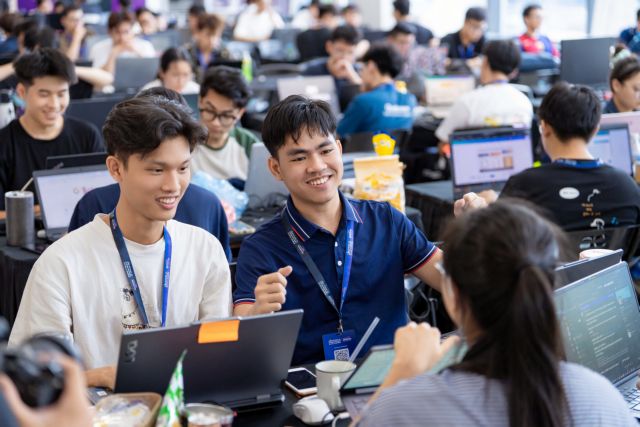
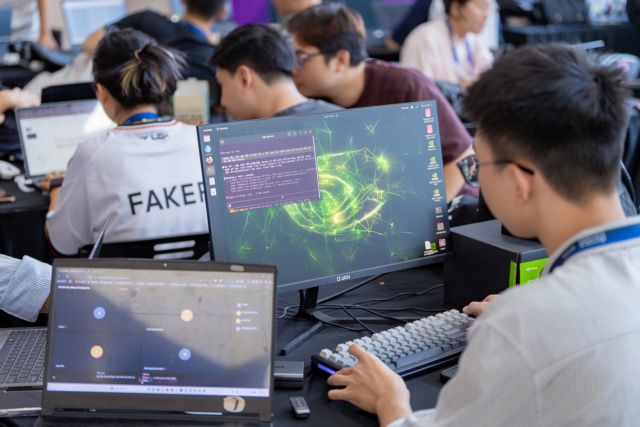
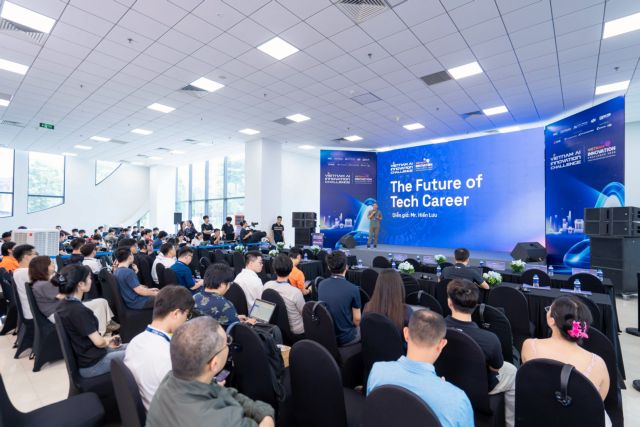
HÀ NỘI — With just 48 hours to develop solutions for real business challenges, thousands of young engineers worked over the weekend at the Vietnam AI Innovation Challenge 2026, which finished on Sunday.
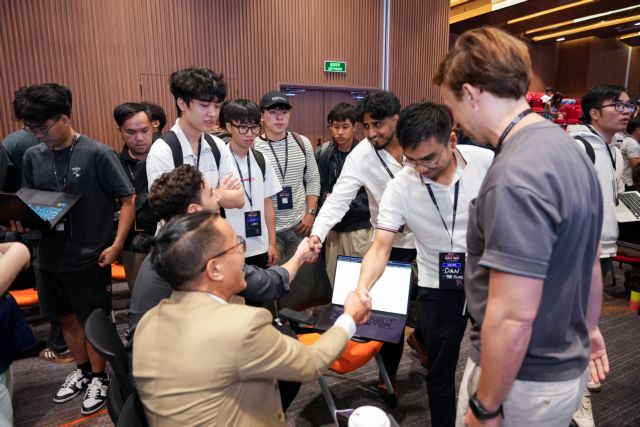
Mentors from Việt Nam and overseas countries such as Singapore, the US, China and Sweden moved between teams, questioning assumptions, testing ideas and pushing participants to think beyond prototypes.
The 48-hour deadline mirrored the technology race itself. New AI models appear almost every week, products evolve within months and no country can afford to innovate alone.
For Việt Nam, keeping pace will require more than training engineers or investing in new technologies. It will depend on whether the country can become part of the global networks where ideas, talent and investment come together to create new products and businesses.
That challenge sits at the heart of Resolution 57.
Much of the attention surrounding the Politburo's landmark resolution has focused on familiar priorities: attracting talent, strengthening research, developing strategic technologies and encouraging innovation.
Those goals remain essential. But as competition for technology leadership intensifies, another question is coming into focus.
How can Việt Nam move from being a promising market for technology to becoming a place where new ideas are created, tested and commercialised alongside partners from around the world?
The answer lies not in a single laboratory or university, but in the strength of the connections between them.
Silicon Valley is not defined by Stanford University alone, nor Singapore by one research institute or one government agency. Their strength lies in the dense web of relationships linking academia, industry, investors, policymakers and entrepreneurs, allowing ideas to circulate rapidly and opportunities to emerge from collaboration.
Around the world, the most successful innovation hubs share one characteristic.
Universities work closely with businesses. Researchers move easily between academia and industry. Investors back promising ideas long before they become profitable. Governments create policies that encourage experimentation rather than simply funding projects.
That is the kind of network Việt Nam should be heading for.
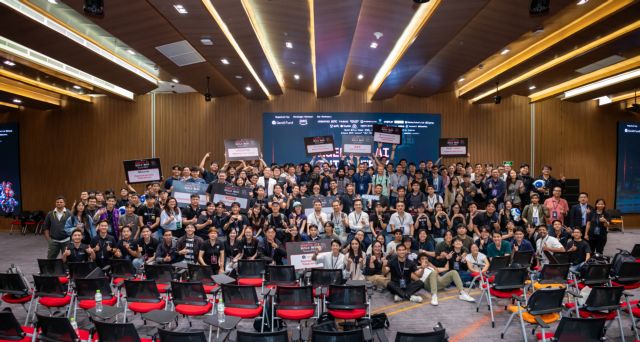
William Tjhi, head of AI Products at AI Singapore and one of the judges at the Vietnam AI Innovation Challenges 2026, told Việt Nam News that he came away impressed by the participants' drive.
Thousands of young engineers had chosen to spend an entire weekend tackling difficult business problems under intense time pressure. That level of commitment, he said, revealed a strong appetite to learn and compete in one of the world's fastest-moving fields.
Just as importantly, many participants were already comfortable using AI tools. They were not starting from scratch.
"Every few weeks, there's something new. Everybody's learning at the same time," Tjhi told Việt Nam News.
"That gives us an opportunity to be on a level playing field with everybody else in the world."
Tjhi said that potential should be matched with more opportunities to work on complex, real-world problems.
He sees hackathons as one way to expose young engineers to that kind of challenge while connecting them with mentors from different countries and industries.
The bigger task, he said, is to build longer-term collaboration between institutions.
"If we don't make things formal, if the collaboration is a little bit ad hoc, things move very, very slowly," he said.
Tjhi said Singapore and Việt Nam bring different strengths to the table.
Singapore's smaller size has made it easier to coordinate its AI ecosystem and develop approaches to governance. Việt Nam, by contrast, has a much larger and more dynamic innovation landscape.
"That's something we can learn from Việt Nam," he said, describing the relationship as complementary rather than competitive.
While Singapore has gained an early lead in building a trusted environment for AI development and governance, Tjhi stressed that no country has all the answers. As AI continues to evolve at unprecedented speed, he said, both sides have much to learn from each other.
From brain gain to brain circulation
Partnerships between institutions are only one part of the equation. Behind every research project, startup or investment is a network of people.
For many years, discussions about technology talent in Việt Nam centred on one objective: bringing overseas Vietnamese professionals home.
That thinking is gradually changing.
Dr Trần Việt Hùng, CEO and co-founder of AI for Vietnam Foundation, argues that overseas experts often create the greatest value by remaining inside the world's leading innovation ecosystems while maintaining strong links with Việt Nam.
"The overseas experts should stay where they are because being part of those ecosystems is what makes them strong," he said.
"The important thing is for them to spend part of their time working with experts in Việt Nam."
His point reflects a broader shift taking place around the world.
Knowledge no longer moves only when people move. Rather than asking how many overseas Vietnamese return home permanently, policymakers are beginning to look at how they can contribute from wherever they are.
As Resolution 57 moves into implementation, international cooperation has become one of central pillars rather than a supporting activity.
The Ministry of Science and Technology has expanded partnerships with Germany on semiconductor development and workforce training.
Discussions with the World Bank have focused on strengthening research infrastructure, supporting technology commercialisation, developing venture capital mechanisms and attracting leading scientists from both within and outside Việt Nam.
The Government has also placed greater emphasis on building strong research groups and strengthening links with the global network of Vietnamese intellectuals.
The Vietnam AI Innovation Challenge is only one example. Dr Trần Việt Hùng believes Việt Nam needs many more programmes that bring together universities, businesses, investors and technology experts at home and abroad to tackle real-world problems.
Events such as hackathons, he said, offer more than a chance to compete. They create opportunities for in-depth exchanges, allowing participants in Việt Nam to learn from experts abroad while giving overseas Vietnamese a better understanding of the country's technology landscape.
"When experts from overseas spend part of their time in Việt Nam interacting with researchers and engineers here, that's the best way to collaborate," he said.
Ultimately, technology ecosystems are built by people rather than policies alone. Laboratories, investment and infrastructure all matter, but lasting innovation depends on researchers, entrepreneurs and experts who are willing to share ideas, challenge one another and work across borders.
Creating more opportunities for those connections may be one of the most important foundations for Việt Nam's technology ambitions. — VNS