Bắc Ninh ranks second nationwide in foreign investment attraction in 2025
Last year, Bắc Ninh attracted around US$20 billion in total investment capital, with FDI reaching $5.73 billion.
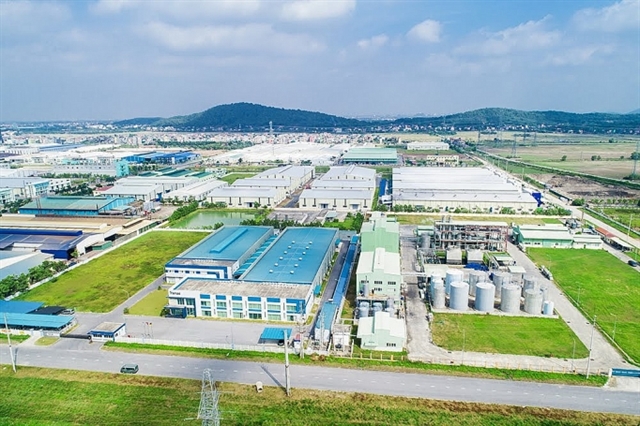
BẮC NINH — The northern province of Bắc Ninh ranked second nationwide in foreign direct investment (FDI) attraction in 2025, only after HCM City, underscoring its position as one of Việt Nam’s leading industrial and investment hubs.
Last year, Bắc Ninh attracted around US$20 billion in total investment capital, with FDI reaching $5.73 billion. The province also saw 7,686 newly established enterprises, bringing the total number of businesses to nearly 50,000.
To date, the province hosts 3,403 domestic investment projects with registered capital of VNĐ838.8 trillion ($32.02 billion), and 3,396 FDI projects worth over $46.8 billion, involving investors from 42 countries and territories, mainly in electronics, garments, logistics, and real estate.
According to Vice Chairman of the Bắc Ninh provincial People’s Committee Ngô Tân Phượng, the locality will continue to step up efforts to attract investment, foster business development, and promote all economic sectors in 2026.
The province has set a target of reaching VNĐ598.81 trillion in gross regional domestic product (GRDP), with total realised investment at VNĐ224.5 trillion, equivalent to 37.5 per cent of GRDP.
Bắc Ninh plans to intensify the attraction of FDI linked with high-tech transfer, while creating favourable conditions for domestic enterprises and improving the competitiveness of small- and medium-sized enterprises (SMEs). It also aims to raise industrial land occupancy rates and secure $5.5 billion in FDI in 2026.
Administrative procedure simplification combined with digital transformation will remain a key priority, helping facilitate transactions for citizens and businesses. At the same time, the province is committed to building a safe, transparent, and attractive investment and business environment to draw strategic investors, large-scale and high-tech projects, and promising start-ups aligned with its development planning.
Bắc Ninh is also focusing on ensuring fair and favourable access for domestic private enterprises to capital, land, incentives, and other resources. The private sector is expected to become a pioneering force in industrialisation, modernisation, scientific and technological development, innovation, and digital transformation. To this end, the province is developing a private economic development programme and researching mechanisms to support SMEs, cooperatives, and collective economic models.
Strengthening linkages among state-owned, private, and FDI enterprises to form regional and global supply chains is another priority. Authorities are also closely monitoring business performance and providing support in investment procedures and production activities.
Looking ahead to the 2026–30 period, Bắc Ninh aims to mobilise around VNĐ1.6 quadrillion in total social investment capital. The province will continue to review and refine regulations and policies to remove bottlenecks, particularly in administrative reform, infrastructure development, site clearance, and human resource quality, while improving policy implementation effectiveness and avoiding short-term, term-based thinking. — VNA/VNS