Wood industry pushes for regional sustainable supply chains to boost competitiveness
It becomes pressing for the ASEAN’s furniture industry to strengthen regional cooperation to build transparent and sustainable timber supply chains as export markets impose stricter environmental, traceability and sustainability standards, experts said on June 26.
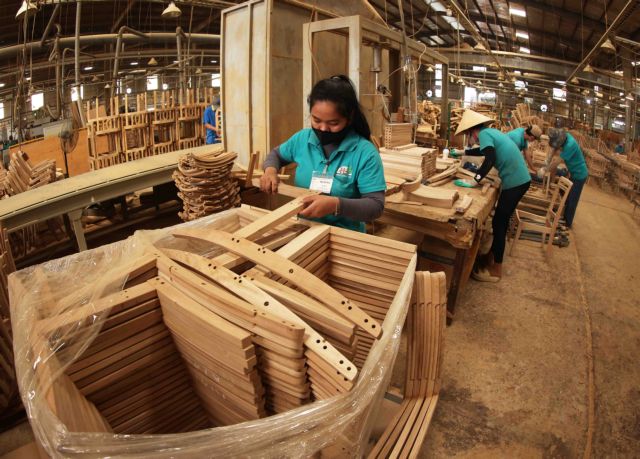
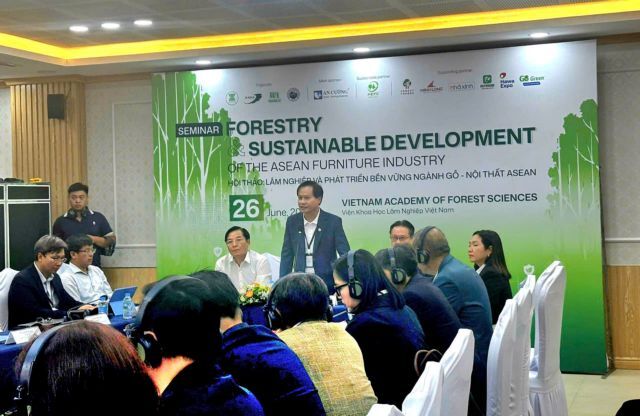
HÀ NỘI — It becomes pressing for the ASEAN’s furniture industry to strengthen regional cooperation to build transparent and sustainable timber supply chains as export markets impose stricter environmental, traceability and sustainability standards, experts said on June 26.
Speaking at the seminar jointly organised by the Handicraft and Wood Industry Association of HCM City (HAWA), the Vietnam Timber and Forest Products Association (VIFOREST) and the Vietnamese Academy of Forest Sciences held as part of the ASEAN Furniture Industries Council (AFIC) Leadership Conference, Phùng Quốc Mẫn, chairman of HAWA, said the industry was entering a new phase of competition in which low production costs and manufacturing capacity alone were no longer sufficient.
Importers are increasingly paying attention to the legality of timber, traceable supply chains, sustainable forest management certification and stronger environmental and social responsibility throughout the value chain, he said.
“ASEAN countries should work together to build the region into a globally reputable furniture manufacturing and supply hub based on four pillars: legality, transparency, sustainability and responsibility,” he said.
Nguyễn Văn Diện, deputy director of the Vietnam Forestry Administration under the Ministry of Agriculture and Environment, said competitiveness in the wood industry now depends on transparency across the entire supply chain, from raw materials to finished products.
He urged ASEAN countries to strengthen cooperation on sustainable forest management, forest certification, digital traceability systems, legal timber data sharing and carbon footprint requirements, particularly as the European Union’s deforestation regulation (EUDR) and other green standards take effect.
Enhance linkage
According to Forest Trends expert Tô Xuân Phúc, trade within ASEAN in timber and forest products remains below US$1 billion annually, reflecting limited regional supply chain integration despite strong economic and political ties.
The region’s supply chains remain fragmented even though ASEAN countries have complementary strengths in raw materials, processing, design and exports, he said.
Strengthening regional linkages would help optimise legal timber sources, increase value-added production and improve compliance with environmental requirements in major markets such as the European Union (EU) and the United States (US), experts said.
During the process, Việt Nam was highlighted as a regional leader in legal timber governance.
The country has implemented the Voluntary Partnership Agreement on Forest Law Enforcement, Governance and Trade (VPA/FLEGT) with the EU, agreements with the US on illegal logging control and preparations for EUDR compliance.
Việt Nam’s experience in traceability and legal timber assurance systems could serve as a reference for other ASEAN countries in developing a more integrated regional framework, experts said, highlighting the need for ASEAN countries to focus on cooperation rather than competing individually.
“No single country holds all advantages in the value chain,” Nguyễn Quốc Khánh, AFIC’s president, said, stressing that ASEAN already has complementary strengths across raw materials, design and manufacturing.
He urged stronger regional coordination to build a globally competitive supply chain.
The conference also saw the signing of two memoranda of understanding among AFIC members.
One of the agreements focuses on developing an ASEAN wood and furniture supply chain platform to digitalise forestry data, enhance information sharing and promote circular economy practices and sustainable raw material sourcing.
The other agreement is signed among furniture fairs, including HawaExpo in Việt Nam, EFE in Malaysia, IFFINA+ in Indonesia and PIFS in the Philippines, which agree to work together to improve trade promotion and facilitate access for international buyers.
Participants said the agreements would strengthen regional trade links and lay the foundation for a more transparent and sustainable ASEAN wood and furniture supply chain as well as helping the sector adapt to rising green trade barriers and reinforce its position in global markets. — VNS