Việt Nam aims to build advanced materials industry in push for technological self-reliance
The Government is drafting a national strategy for the materials industry through 2030, seeking to shift the country's competitive advantage from abundant natural resources to technological capability and high-value manufacturing.
HÀ NỘI — As global powers race to secure the minerals and materials that will shape the next generation of semiconductors, batteries and clean-energy technologies, Việt Nam is trying to move beyond simply extracting what lies beneath its soil. The country is now preparing a strategy to build an advanced materials industry that could underpin its next phase of industrialisation.
The Government is drafting a national strategy for the materials industry through 2030 and with a longer-term vision extending to 2045, seeking to shift the country's competitive advantage from abundant natural resources to technological capability and high-value manufacturing.
Experts say the strategy represents a broader change in industrial policy, as advanced materials are viewed not just as industrial inputs, but as strategic assets that determine competitiveness in sectors ranging from semiconductors and artificial intelligence (AI) to renewable energy, the defence industry and biotechnology.
"Competition is no longer confined to finished products. It increasingly revolves around raw materials, deep-processing technologies, standards, data and supply chains," said Đỗ Nam Bình, head of the Minerals and Metallurgy Division at the Industry Agency under the Ministry of Industry and Trade (MoIT).
"The level of materials industry development directly reflects a country's level of industrialisation, scientific and technological capacity, and ability to achieve self-reliance," he said.
"Industries such as semiconductors, AI, batteries and energy storage, offshore wind power, electric vehicles, the defence industry, biomedicine and pharmaceuticals are all heavily dependent on advanced materials," Bình said.
“Against a backdrop of growing global geopolitical uncertainty, mastering strategic materials has become critical for Việt Nam to strengthen national power, safeguard economic independence and create momentum for a breakthrough in the digital era,” he said.
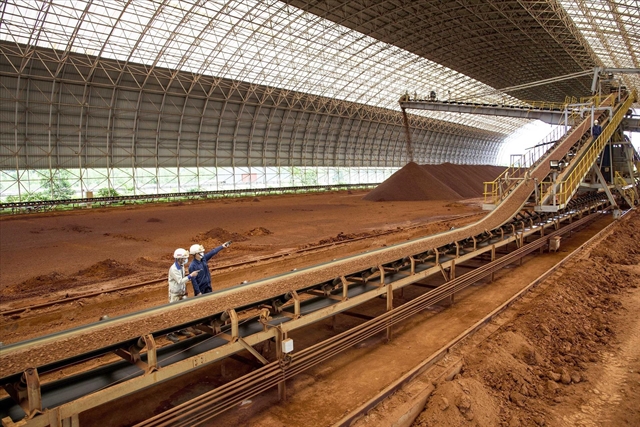
For Việt Nam, the challenge is not a lack of resources. The country has significant reserves of bauxite, rare earths, titanium, tungsten, graphite and other minerals that could provide the foundation for a range of strategic industries, according to a report by the MoIT.
The bigger challenge is turning those resources into industrial capability.
Policy push
The 14th National Congress of the Communist Party of Việt Nam in January 2026 identified strengthening production capacity in strategic industries and moving towards greater self-reliance in industrial inputs, workforce development and science and technology as key priorities.
Its agenda also calls for the gradual mastery of production technologies in emerging sectors, including semiconductors, robotics and automation, AI, advanced materials, biotechnology, environmental industries and renewable and new energy.
A conclusion issued by the Party Central Office in May following a meeting chaired by Party General Secretary and President Tô Lâm also identified the materials industry as a foundational sector for industrialisation and modernisation, and as a prerequisite for developing strategic technology products and building an independent and resilient economy.
The message marks a broader shift in industrial policy to use materials as assets that can determine whether a country controls its own industrial future.
Throughout human history, every industrial revolution has been accompanied by a revolution in materials. The 19th century was defined by coal and steel, the 20th century by oil, polymers and advanced alloys, while the 21st century is increasingly being shaped by advanced materials such as nanomaterials, semiconductor materials and biomaterials.
Nguyễn Thanh Hải, chairwoman of the National Assembly's Committee on Science, Technology and Environment, has stressed the strategic importance of materials alongside the mechanical engineering and manufacturing industries as Việt Nam enters a new stage of development.
She said these industries would form the backbone needed to achieve the country's development goals for 2030 and 2045, while underpinning national priorities, including the North-South high-speed railway, nuclear power, semiconductor manufacturing, defence industry, national data centres, digital infrastructure, renewable energy and other emerging technologies.
Yet for all its ambitions, Việt Nam had faced a fundamental industrial dilemma: it has abundant raw materials to build strategic industries, but lacks the technological depth and industrial scale to fully convert those resources into high-value products.
Hải said that after four decades of economic reform, Việt Nam had built a relatively broad materials industry, covering construction materials, metals, chemicals, plastics and some high-tech materials, but had yet to turn it into a foundational industry as expected.
This shift was being held back by fragmented policies, the lack of a comprehensive national strategy, shortages of skilled workers and weak links between research, innovation and commercialisation, she said.
Now, the main challenge was to move beyond resource extraction and basic manufacturing towards deeper processing, technological self-reliance and higher-value industrial production.
New approach
Experts say that Việt Nam needs a new approach to developing its materials industry, which should be repositioned as a core industrial pillar of the economy rather than a supporting industry.
"Việt Nam has abundant natural resources, but if we only mine and export them as raw materials, we are merely relying on what lies beneath our land rather than building real industrial and technological strength," Trần Đại Lâm, director of the Institute of Materials Science under the Việt Nam Academy of Science and Technology, told Một Thế Giới magazine.
He said materials sovereignty should be built on three levels: control over natural resources, mastery of processing and materials technologies, and the ability to participate in high-value segments of global supply chains.
“Strategic materials have become a tool of geopolitical competition,” Đại Lâm said, adding that trade conflicts and technology wars are reshaping global supply chains and making materials for semiconductors, energy storage and other strategic industries increasingly important to national security.
He pointed out that Việt Nam still relied heavily on imports for key materials used in semiconductors and electronics, batteries and electric vehicles, as well as specialised alloys and advanced composites for the defence industry, aerospace and precision engineering. This would create risks to economic security and technological self-reliance.
“Without mastering foundational materials, it is difficult to master core technologies,” he said, urging a shift from a resource-extraction mindset towards building an integrated materials industry covering mining, refining, deep processing and the production of high-value end products.
Đại Lâm called for stronger state support, strategic public procurement and the emergence of private deep-tech companies capable of turning research results into commercially viable products.
He said Việt Nam should prioritise strategic materials for semiconductors, new energy, defence and low-carbon industries, while investing in pilot production centres, deep-processing complexes, long-term State procurement programmes and specialised investment funds.
However, strategic autonomy would not mean making everything ourselves, Đại Lâm noted.
“It means mastering critical parts of the value chain, having the capacity to respond when supply chains are disrupted and retaining the freedom to choose our strategic partners,” he said.
Mechanical engineering
The materials industry cannot develop in isolation from mechanical engineering and manufacturing, which together are pillars of industrial self-reliance, according to the MoIT.
New materials only create value when they are incorporated into the design and manufacture of actual products, while advanced mechanical engineering requires reliable, high-quality materials that meet international technical standards.
According to deputy director of the ministry's Industry Agency Nguyễn Ngọc Thành, the ministry's draft national strategy for the materials industry aims to shift Việt Nam from relying on its resource base to building materials capabilities.
It also aims to move from exporting raw materials to deep processing, and from fragmented production to integrated value chains.
The ministry has proposed shifting from developing individual industries to building integrated industrial capability chains that extend from raw materials and deep processing to research, design, testing, standardisation, production, commercialisation and recycling.
Under the draft strategy, materials are grouped into three categories: basic materials that need to be upgraded, strategic materials requiring breakthroughs and future materials requiring long-term research and preparation.
By 2030, Việt Nam aims to establish a relatively comprehensive national materials industry capable of researching, designing, developing, producing and commercialising key materials, while gradually mastering selected strategic materials and core technologies.
Longer-term goals are also outlined in the draft. By 2045, the country aims for its materials industry to reach an advanced level in the region in areas where it has competitive advantages, master selected strategic materials value chains and develop Vietnamese materials firms capable of competing globally.
Priority chains under consideration include rare earths and advanced magnets, bauxite-alumina-aluminium and aluminium alloys, titanium and titanium alloys, battery materials, semiconductor materials, high-quality steel, chemicals, polymers, composites and recycled materials.
The strategy also envisages building at least three to five national materials research centres by 2030, alongside stronger domestic companies capable of leading supply chains. — VNS