VN imports over 15,000 vehicles in January
Imports of completely built-up (CBU) cars from China surged at the start of 2026, overtaking Thailand and Indonesia to become Việt Nam’s largest source of imported vehicles in January.
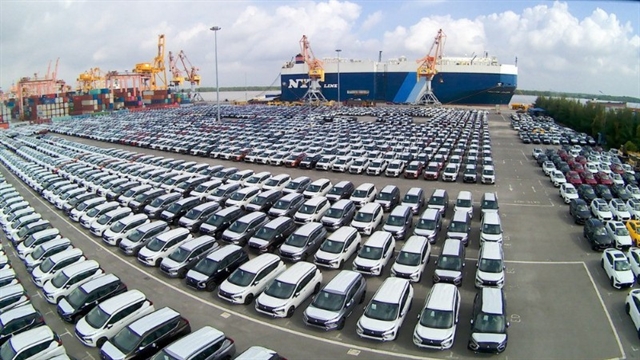
HÀ NỘI — Preliminary data from the General Department of Customs show that Việt Nam imported 15,042 completely built-up (CBU) vehicles in January worth more than US$385 million, with shipments surging year on year and Chinese manufacturers becoming the country’s largest source of imported cars for the first time in a single month.
The figure edged up 2.3 per cent compared with December and was 110 per cent higher than the same period last year.
Imports from China reached 6,661 vehicles with a total value of over US$221 million. This marked the first time Chinese-made cars ranked as the largest source of imported vehicles for Việt Nam in a single month. Indonesia was the second-largest supplier with 4,141 vehicles followed by Thailand with 3,015.
Together the three markets, China, Indonesia and Thailand, supplied 13,817 vehicles to Việt Nam in January, accounting for about 92 per cent of the country’s total automobile imports.
Chinese vehicles alone made up around 44.3 per cent of total imports during the month, showing how quickly their presence in the market has expanded. The surge was driven mainly by commercial and specialised vehicles, segments where Chinese manufacturers hold a strong advantage.
In January, Việt Nam imported 3,669 transport vehicles worth about $96 million, up 26.7 per cent from the previous month. China supplied 2,138 of these vehicles while Thailand accounted for 1,022. The two countries together represented about 86 per cent of transport vehicle imports.
The dominance was even clearer in the specialised vehicle segment. Vietnamese companies imported 3,093 specialised vehicles in January of which 3,043 came from China, accounting for roughly 98 per cent of the total.
Passenger cars with fewer than nine seats still made up the largest share of imports overall although their volume fell compared with the previous month. Imports in this category reached 8,275 vehicles worth $156.9 million, accounting for about 55 per cent of total imports but declining 17.6 per cent month on month.
Despite leading overall imports, China did not dominate the passenger car segment. Indonesia remained the main supplier with 4,141 units followed by Thailand with 1,993 while China ranked third with 1,480. Market observers say the strong rise in Chinese vehicle imports reflects shifting demand rather than a short-term surge.
Specialised vehicles were a major factor. With almost all specialised vehicles imported in January coming from China, this segment alone significantly boosted the country’s overall share.
Demand for commercial vehicles has increased alongside stronger domestic trade, logistics activity and infrastructure development. The rollout of expressways, industrial parks and logistics hubs has created higher demand for dump trucks, tractor trucks, concrete mixers and other specialised vehicles.
Many businesses also tend to expand their fleets before or shortly after the Lunar New Year, preparing for a new business cycle. This seasonal pattern often pushes imports higher at the beginning of the year.
Price competitiveness is another reason Chinese vehicles are gaining ground. Commercial vehicles from China are typically cheaper than those from Japan or South Korea, making them attractive to transport companies where upfront investment costs are a key concern. For logistics firms, trucks and specialised vehicles are income-generating assets so a lower purchase price can shorten the time needed to recover the investment.
Changing perceptions have also played a role. In the past, Chinese vehicles were sometimes viewed cautiously in terms of quality. However, many manufacturers have improved engine technology, chassis standards and equipment levels in recent years.
Longer warranty policies and better design have helped build confidence among buyers. For commercial vehicles in particular easy maintenance and affordable spare parts are often more important to businesses than brand reputation. — VNS