Vietnamese firms sharpen production standards to secure RCEP orders
The Regional Comprehensive Economic Partnership (RCEP) is opening up new export opportunities for Vietnamese businesses, but meeting stringent market requirements, ensuring product quality and maintaining reliable supply chains remain critical to securing long-term orders.
HÀ NỘI — The Regional Comprehensive Economic Partnership (RCEP) is opening up new export opportunities for Vietnamese businesses, but meeting stringent market requirements, ensuring product quality and maintaining reliable supply chains remain critical to securing long-term orders.
Bringing together the 10 ASEAN member states, Australia, China, Japan, the Republic of Korea and New Zealand, the RCEP has created a major trading bloc accounting for around 30 per cent of global GDP, nearly 30 per cent of the world's population and about 30 per cent of global trade.
The bloc's scale offers considerable export potential for Việt Nam, as businesses seek to diversify markets, expand their customer base and become more deeply involved in regional supply chains.
Speaking to Công Thương (Industry and Trade) Newspaper about opportunities arising from the agreement, Nguyễn Thị Huyền, CEO of Vietnam Cinnamon and Star Anise Production and Export JSC (Vinasamex), said the company was stepping up efforts to tap markets in Japan, the Republic of Korea and Australia, alongside its traditional markets in Europe and the US.
Since the RCEP took effect, the company has seen positive impacts from the agreement, including greater opportunities to work with Japanese partners, supported by tariff preferences, optimised shipping costs and the quality of Vietnamese agricultural products, she said.
In the coffee sector, Nguyễn Hữu Đại, director of Vinafood Import-Export Joint Stock Company, identified China as a key RCEP market, citing its proximity to Việt Nam and large population.
Vinafood's coffee products are already available at several supermarket chains and on online retail platforms in China.
Beyond China, the company also sees ASEAN markets as promising destinations for deeply processed regional speciality agricultural products. Access to these markets not only helps expand sales outlets, but also creates opportunities to increase the value of Vietnamese agricultural products and develop goods that better match consumer demand, Đại said.
Keeping abreast of trade commitments and individual market regulations is essential for businesses seeking to develop effective export strategies and make the most of RCEP opportunities.
"The Ministry of Industry and Trade has provided the business community with thorough and timely information on RCEP preferences and commitments," Đại said.
Addressing bottlenecks
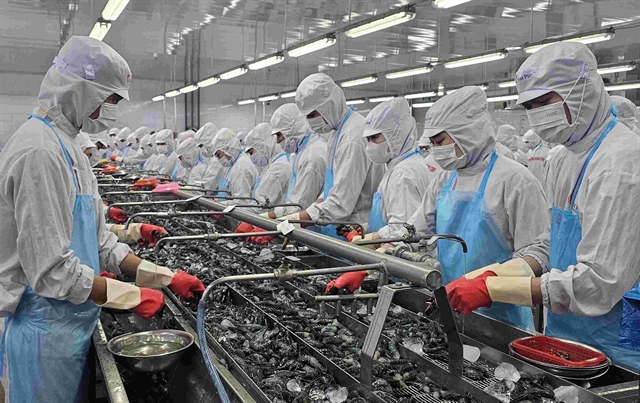
Experience in export markets shows that meeting the standards of demanding destinations such as Japan and the Republic of Korea requires businesses to make fundamental changes to their production and business operations.
Huyền said these markets imposed stringent requirements on documentation, paperwork and transparency throughout the entire value chain. While this presents challenges for exporters, it also gives businesses with well-established supply chains and reliable traceability systems a competitive advantage.
Successfully entering the Japanese and Korean markets also provides Vinasamex with a stepping stone to expand into other demanding markets, including Europe and the US, she said.
To meet buyers' requirements, the company has shifted away from sourcing products for resale in less demanding and lower-priced markets towards a more structured production model tailored to the standards of individual markets.
Vinasamex maintains traceability records by keeping detailed logs for each shipment, covering every stage from raw material sourcing and processing to production and export.
"Alongside this, Vinasamex has invested in machinery and factory infrastructure, standardised its processes and invited international experts to directly assess the entire value chain for international certification," Huyền said.
In China, businesses face numerous trade barriers and strict regulatory requirements to bring goods into the market, Đại said. Vinafood is gradually strengthening its capacity to meet these requirements.
To improve businesses' ability to benefit from the RCEP and address export challenges, Đại called for additional support policies, including access to credit, investment in factory infrastructure and more flexible tax policies. Such measures would help businesses strengthen production capacity and gain access to potential export markets.
He also proposed expanding direct trade promotion programmes through foreign embassies, facilitating introductions to potential partners and helping businesses establish permanent product display spaces to promote their brands.
Businesses also need specialised training on FTAs, supported by information channels and detailed guidance on commitments under the FTAs, including the RCEP. This would help them better understand the agreements and apply their provisions effectively in business operations.
Assessing the capacity of the small and medium-sized enterprise (SME) community, Dr Tô Hoài Nam, permanent vice chairman and secretary-general of the Việt Nam Association of Small and Medium Enterprises, said businesses had made significant progress in shifting their approach from "selling what they have" to "organising production and business activities to sell what the market needs".
However, a substantial gap remains between businesses' ability to access markets and their actual capacity to meet standards and traceability requirements, he said.
Nam noted that certification, inspection, logistics and specialised export personnel costs were placing considerable pressure on businesses. Given their limited scale and resources, many SMEs can secure their first export orders, but struggle to maintain the capacity to fulfil commitments and secure a steady flow of new orders.
To address these challenges and strengthen SMEs' participation in supply chains, Nam proposed establishing networks in which larger businesses lead smaller enterprises within specific industry value chains.
He said economic incentives, including tax preferences and infrastructure support, should be introduced to encourage larger companies to take on this role. However, support should aim to help businesses gradually increase added value and become self-reliant through innovation, rather than remain dependent subcontractors in the long term, Nam said. VNS