Agriculture steps up production to secure food supplies ahead of Tết
The fourth quarter is traditionally a peak consumption period for agricultural products and food on the domestic market. Rising demand offers opportunities for producers, but also puts greater pressure on production planning, supply-demand management and food safety.
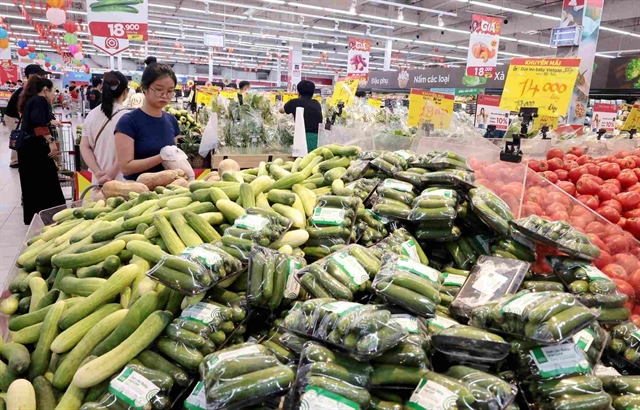
HÀ NỘI — The agriculture and environment sector is stepping up agricultural production, livestock replenishing and supply chain coordination to ensure adequate food supplies and curb price volatility, as demand is expected to rise during the year-end shopping season ahead of Tết (Lunar New Year) in 2027.
The fourth quarter is traditionally a peak consumption period for agricultural products and food on the domestic market. Rising demand offers opportunities for producers, but also puts greater pressure on production planning, supply-demand management and food safety.
Deputy Minister of Agriculture and Environment Võ Văn Hưng said growth in the fourth quarter was forecast at around 4.3-4.4 per cent, bringing full-year growth to an estimated 4 per cent.
In the first 10 months of 2026, pork production was estimated at 4.7 million tonnes, up 4.4 per cent year on year, while poultry meat output reached nearly 2.3 million tonnes, up 5.5 per cent. Fisheries production totalled 8.8 million tonnes, an increase of 3.8 per cent.
However, with purchasing power expected to rise sharply, the agricultural sector needs to manage the entire supply chain, from production and livestock to harvesting, preservation and distribution, to prevent supply-demand imbalances and price volatility.
In Hà Nội, demand for agricultural products and food during the year-end peak season could rise by up to 15 per cent compared with normal months, said Tạ Văn Tường, deputy director of the municipal Department of Agriculture and Environment.
The capital aims to achieve agricultural growth of at least 3.6 per cent and has encouraged localities to expand winter crop cultivation to around 28,400 hectares, including 14,000 hectares of vegetables and 2,780 hectares of flowers.
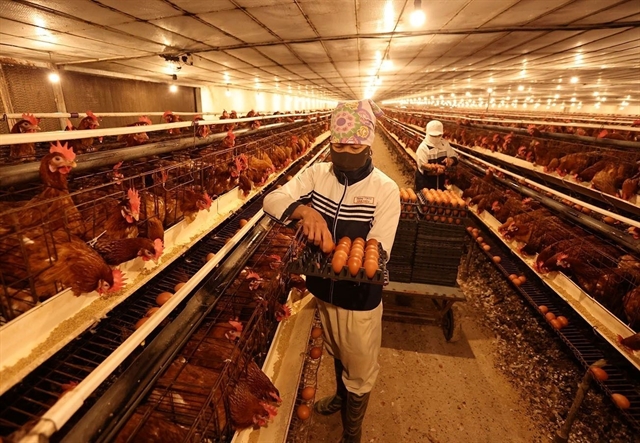
Hà Nội is prioritising high-value crops with stable markets while encouraging biosecure livestock farming, the application of science and technology, and stronger disease prevention measures to ensure supplies of pork, poultry and eggs for Tết.
According to the department, Hà Nội has mostly ensured the supply of pork, poultry, eggs and freshwater fish. Supplies of other products meet anywhere from 20 to 70 per cent of local demand, with the shortfall covered by shipments from other provinces and cities as well as imports.
Ngô Hồng Phong, director of the Department of Quality, Processing and Market Development under the Ministry of Agriculture and Environment, said the ministry would work with other ministries, sectors and local authorities in the remaining months of 2026 to closely monitor supply, demand and prices across commodity groups, secure supplies and help control inflation.
Production, livestock farming and herd restocking would continue to be monitored to ensure adequate supplies of essential food products, particularly pork and rice, he said.
The ministry will also prepare production, harvesting, preservation and transportation plans to cope with adverse weather conditions and reduce the risk of localised shortages that could trigger sharp price increases.
It will provide more information on supply, prices and market forecasts, while outlining difficulties related to capital, input costs and agricultural product sales to propose appropriate support measures.
Strengthening distribution
Alongside measures to secure supplies, trade promotion is also being viewed as an important channel for expanding markets and boosting agricultural sales during the year-end period.
Nguyễn Minh Tiến, director of the agriculture ministry's Trade Promotion Centre, said the ministry would organise a series of trade promotion events, fairs and exhibitions through the end of 2026 and into early 2027 to connect suppliers with buyers, promote products and stimulate domestic consumption.
Through these events, the ministry aims to provide businesses, cooperatives, OCOP producers and farmers with more opportunities to introduce new products and regional specialities, connect with distribution networks and retailers, and seek business partners.
To meet demand during the Lunar New Year, the ministry will also organise a Spring Fair at the Agricultural Exhibition Centre in Hà Nội. The fair will showcase OCOP-certified goods, regional specialities and high-quality agricultural products for consumers buying goods for personal use and gifts.
Tiến said trade promotion activities are expected to stimulate purchasing power, boost domestic agricultural sales and encourage producers to improve quality, diversify products, build brands and increase the value of Vietnamese agricultural products.
Meanwhile, the Ministry of Industry and Trade has instructed local authorities to expand market stabilisation programmes and organise mobile sales outlets. Hà Nội now has nearly 10,700 outlets participating in its market stabilisation programme. In HCM City, goods with stabilised prices account for around 23-43 per cent of the market share in essential commodity categories. VNS