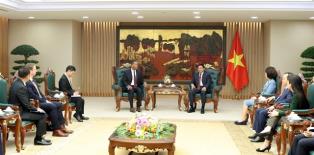
Việt Nam's Prime Minister calls for deeper ASEAN-Russia cooperation in supply chains, energy and technology
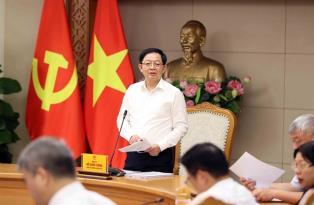
PM Hưng said the gathering provided an opportunity for both sides to discuss strategic directions for broader, more substantive and more resilient cooperation amid global economic and geopolitical volatility.
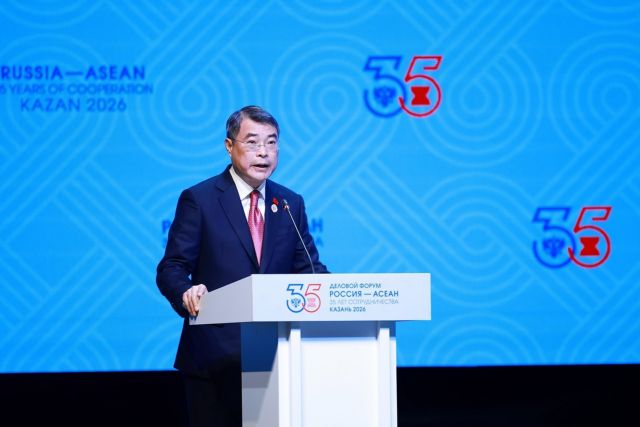
KAZAN, Russia — Vietnamese Prime Minister Lê Minh Hưng on Wednesday called for closer cooperation between ASEAN and Russia in supply chains, energy and technology, saying stronger ties would help both sides navigate growing global uncertainties.
Speaking at an ASEAN-Russia business forum, Hưng said the gathering provided an opportunity for both sides to discuss strategic directions for broader, more substantive and more resilient cooperation amid global economic and geopolitical volatility.
The PM proposed three priority areas for cooperation. First, he urged ASEAN and Russia to strengthen coordination in building stable and flexible supply chains that can better withstand external shocks, while developing transportation links between Russia's Far East and Southeast Asia to facilitate trade and investment.
Energy should also become a key pillar of ASEAN-Russia cooperation, he said, citing opportunities in clean energy, liquefied natural gas, hydrogen, offshore wind power and energy-efficiency technologies to help support regional energy security.
Finally, Hưng highlighted technology, innovation and digital transformation as new drivers of economic growth, calling for expanded cooperation programmes, support for technology firms and start-ups, and the development of a more integrated innovation ecosystem linking businesses across ASEAN and Russia.
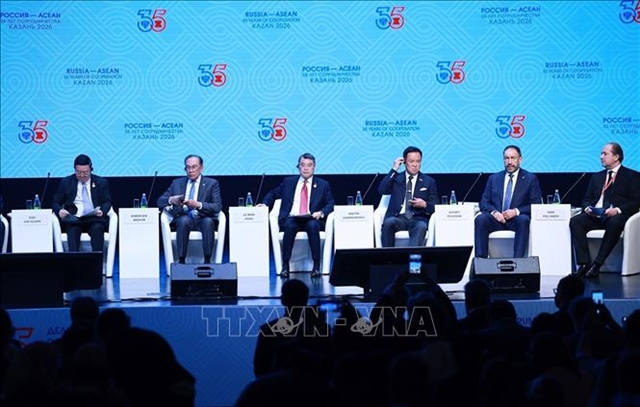
The PM said Việt Nam was prepared to serve as a bridge between ASEAN and the Eurasian Economic Union, more particularly with Russia, and encouraged businesses on both sides to pursue long-term investments and build new value chains.
He added that while governments were responsible for ensuring a stable and transparent business environment, companies would play the leading role in translating cooperation into concrete projects and economic opportunities.
Malaysian Prime Minister Anwar Ibrahim said rising geopolitical tensions underscored the need for greater cooperation between ASEAN and Russia, arguing that no country, regardless of its size, could address global challenges alone.
In his speech at the forum, he called for deeper dialogue, trust-building, policy coordination and the removal of trade barriers, while supporting a rules-based multilateral trading system as a foundation for expanding ASEAN-Russia cooperation.
Meanwhile, Thai Prime Minister Anutin Charnvirakul said rapid advances in science and technology coupled with disruptions to global supply chains were creating both opportunities and challenges for the region and the wider world, requiring ASEAN and Russia to adapt.
The Thai PM identified connectivity, trade and investment, and people-to-people exchanges as three priority areas for cooperation between ASEAN and Russia. He said stronger connectivity would underpin economic activity, while energy cooperation and food security should remain key areas of focus.
He also called for expanded people-to-people ties, particularly in tourism, healthcare and wellness services, as well as in the creative economy.
At the event, ASEAN Secretary-General Kao Kim Hourn called on ASEAN and Russian businesses to focus on four key areas of cooperation: energy security, food security, supply chain connectivity and emerging sectors linked to the digital economy and technological innovation.
Kao said regional initiatives such as the ASEAN Power Grid and the ASEAN Digital Economy Framework Agreement would provide important platforms for businesses from both sides to deepen cooperation and pursue new investment opportunities.
Business representatives from ASEAN and Russia said there is an urgent need to expand trade, investment and participation in stable and reliable international supply chains, particularly amid ongoing disruptions to global energy and food networks.
With a combined population of about 850 million people, ASEAN and Russia have significant potential to broaden economic cooperation across multiple sectors, delegates and industry experts said. They noted that energy and food security have emerged as particularly relevant areas for collaboration, as both regions seek to strengthen resilience against supply chain disruptions.
Participants also highlighted ASEAN's growing digital economy, pointing to a population of roughly 220 million people aged between 15 and 34 and widespread internet penetration across the region as factors supporting greater cooperation in information technology, digital transformation and artificial intelligence.
Several delegates said the longstanding economic relationship between ASEAN and Russia, built over decades of trade and investment cooperation, provided a solid foundation for businesses to expand partnerships, strengthen connectivity and pursue new growth opportunities in the years ahead. — VNS