Ministry rolls out Resolution 36 to simplify growing area and packing facility codes
The Ministry of Agriculture and Environment has begun nationwide implementation of Resolution 36, which simplifies growing area and packing facility code procedures to improve traceability and facilitate agricultural exports.
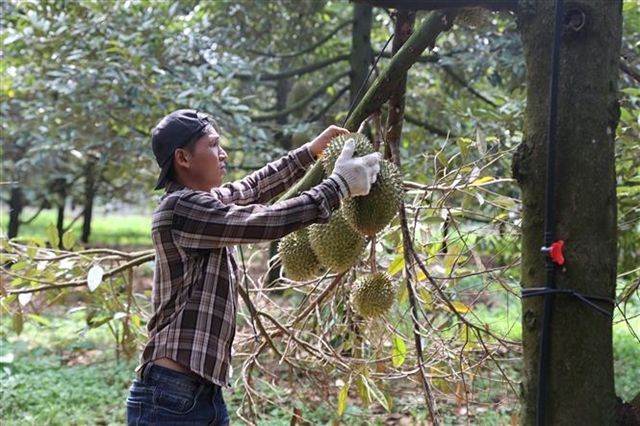
HÀ NỘI — Procedures for issuing growing area and packing facility codes have been simplified under a new Government resolution aimed at cutting administrative burdens and supporting agricultural exports.
The changes, introduced under Government Resolution No. 36/2026/NQ-CP which took effect on August 1, aim to cut administrative procedures and help farmers, cooperatives and exporters meet traceability requirements in export markets.
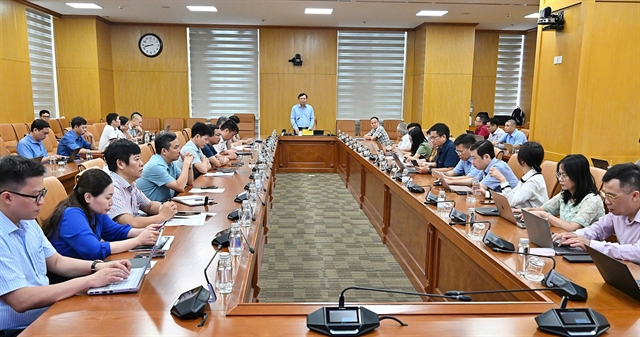
The Ministry of Agriculture and Environment on Tuesday launched the nationwide implementation of the resolution at an online conference attended by local authorities, businesses, cooperatives and industry associations across the country.
According to the ministry, growing area and packing facility codes have become mandatory for exports to many markets, but the previous approval process was cumbersome and time-consuming, creating unnecessary costs for producers and exporters.
Deputy Minister of Agriculture and Environment Nguyễn Hoàng Hiệp said the resolution was developed under an expedited legislative process after the ministry gathered feedback from local authorities and industry stakeholders and identified bottlenecks in the current system.
The broader goal, he added, would be to enhance the competitiveness of Vietnamese agricultural products, strengthen their branding in international markets and establish a more transparent and efficient regulatory framework.
The Government has also tasked the ministry with amending Decree No. 38/2026/NĐ-CP to complete the legal framework governing the management of growing area and packing facility codes. The revised decree is expected to be submitted to the Government in September.
According to Huỳnh Tấn Đạt, director general of the Department of Plant Production and Protection, one of the most significant changes under the resolution is that all applications will be processed electronically through the National Public Service Portal.
Applicants will self-declare information and assume responsibility for its accuracy, replacing a paperwork-heavy process with a digital system designed to improve transparency while reducing both processing time and compliance costs.
The resolution also replaces the previous pre-approval model with a risk-based post-inspection approach.
Exports to markets that do not require official approval of growing area or packing facility codes will be subject to post-inspection, while pre-inspections will only apply to exports destined for markets that require such approval.
Another major reform is the decentralisation of authority to commune-level People's Committees, which will receive applications, issue codes and conduct post-inspections under a unified national management system. Provincial authorities and the ministry will provide technical guidance, training and oversight.
Documentation requirements have also been cut by around half. Applicants will now only need to submit a registration form, while information already available in shared government databases will no longer have to be provided again.
Processing times have been significantly reduced. Applications for products not subject to export code requirements will now be completed within three working days, down from 14 days previously.
Applications for exports to markets requiring official codes will be processed within 10 days, four days faster than under previous regulations.
The resolution also removes minimum area requirements for growing area codes. A single code may now cover multiple land plots and participating farming households, provided they comply with traceability and management requirements.
Đạt said the change would encourage the development of larger production zones, reduce the number of codes required and make quality management more efficient, ultimately supporting agricultural exports.
However, Hiệp stressed that obtaining a growing area code would not automatically qualify products for export. Exporters must still comply with quarantine, food safety and market-specific technical requirements imposed by importing countries.
Several major markets, including mainland China, the United States, Malaysia, Taiwan (China) and the Republic of Korea, continue to require their own authorities to approve growing area and packing facility codes before imports are allowed.
By contrast, markets such as the European Union, Australia, New Zealand, Japan and Chile, as well as some products exported to Thailand, accept code lists approved by Vietnamese authorities.
To improve transparency, the ministry will publish all growing area and packing facility code data on its digital management system, including information on code holders, locations, production areas, products, export destinations and the operational status of each code.
Following the conference, the ministry will establish task forces to work with key producing localities over the next 30 days to clear the backlog of pending applications. — VNS