Resolution 10-NQ/TW changes "measure" of FDI success: HSBC
Success will increasingly be measured by whether foreign investment brings technology, develops local talent, establishes research and development (R&D) capability, and integrates Vietnamese enterprises more deeply into global value chains, according to HSBC.
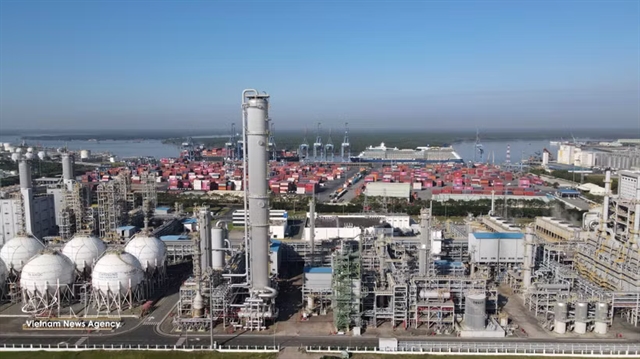
HCM CITY — Việt Nam needs to shift from an export-driven foreign direct investment (FDI) attraction model to one that generates and retains greater value from foreign capital, with the Politburo's Resolution No 10-NQ/TW marking a significant step in advancing the country's investment attraction strategy.
The assessment was made by Richard Barnsley, director, head of Global Network Banking at HSBC Vietnam, in the bank's newly released report on FDI in Việt Nam.
The birds came
For nearly four decades, since the launch of Đổi mới (Renewal), Việt Nam has embodied the old Vietnamese proverb “Đất lành chim đậu” (Good land attracts the birds), Barnsley stated. Competitive labour costs, political stability, an expanding network of free trade agreements and an increasingly open investment environment have made Việt Nam one of the world’s most attractive destinations for FDI.
Today, the foreign-invested sector accounts for around three-quarters of Việt Nam’s export value. In the first half of this year alone, newly registered FDI reached approximately US$17.39 billion, an increase of almost 87.2 per cent compared with the same period a year earlier, reflecting foreign investors' confidence in the economy's growth prospects.
“Yet Việt Nam’s leadership also recognises that the original FDI-for-export model has limits. The next stage of development requires more than attracting investment, it requires capturing greater value from it,” he said.
That ambition is clearly reflected in Resolution No. 10-NQ/TW, issued on June 8 this year, which sets out a new vision for FDI in the era of what many describe as Đổi mới 2.0. If the first chapter was about attracting birds, the next chapter is about encouraging them to build their nests.
The HSBC expert viewed Resolution No. 10-NQ/TW as a significant evolution in Việt Nam’s investment strategy. The objective is no longer simply to attract capital, but to attract capability.
Success will increasingly be measured by whether foreign investment brings technology, develops local talent, establishes research and development (R&D) capability, and integrates Vietnamese enterprises more deeply into global value chains.
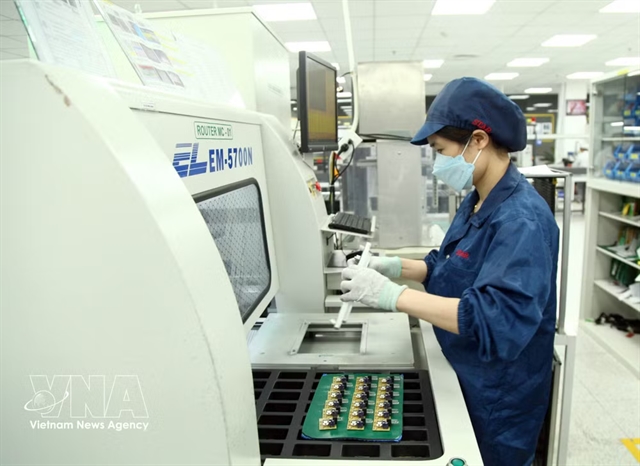
The resolution sets ambitious but measurable objectives. Between 2025 and 2030, Việt Nam aims to attract $200–300 billion in newly registered FDI while disbursing $150–200 billion, with about three-quarters of investment originating from developed economies. It also seeks to integrate 10,000 Vietnamese enterprises into FDI supply chains and attract at least three of the world’s leading technology companies to establish regional headquarters or R&D centres in Việt Nam.
Building a strong investment ecosystem
Around the world, traditional financial incentives are becoming less effective as countries compete for increasingly sophisticated investment. Việt Nam cannot and should not expect to compete indefinitely on traditional advantages, especially labour costs alone, according to Barnsley.
Today’s strategic investors place growing importance on institutional quality, regulatory predictability, workforce capability and the speed with which governments can implement reform. Productivity, automation and innovation increasingly matter more than hourly wage rates.
In many respects, Resolution No. 10-NQ/TW represents a shift from incentives to institutions.
That shift is especially relevant at a time of geopolitical uncertainty, evolving global trade patterns and the rapid acceleration of artificial intelligence. Companies restructuring global supply chains are seeking resilient, predictable and innovation-driven investment destinations. Strong institutions have become one of the most valuable competitive advantages a country can offer.
Although there is still significant potential for attracting FDI, HSBC also believes that Việt Nam faces numerous challenges in realising the goals of Resolution No. 10-NQ/TW. Improving the investment and business environment remains a key requirement, while the number of domestic private enterprises deeply involved in global supply chains remains limited.
Furthermore, expanding R&D activities requires high-quality human resources, including engineers, technicians, and researchers, in a context where many countries in the region are also fiercely competing to attract strategic investors.
According to the HSBC expert, a positive aspect is that Resolution No. 10-NQ/TW clearly identifies these challenges and provides direction for addressing them. Instead of focusing on traditional incentives, the resolution prioritises institutional reform and promotes performance-based support that rewards R&D activity, technology transfer, and enterprise capacity building.
At the same time, the resolution emphasises enhancing the capacity of domestic suppliers through training, quality systems and management improvement. These are key factors that help Vietnamese businesses meet the demanding standards of multinational corporations and participate more deeply in global value chains.
Việt Nam’s success over the past four decades has been built on openness, pragmatism and an unwavering commitment to reform. Resolution No. 10-NQ/TW demonstrates that those qualities remain firmly intact, Barnsley said.
“The objective is no longer simply to attract more birds. It is to build an ecosystem where they choose to stay, innovate and grow, creating a stronger forest in which both international investors and Vietnamese enterprises can thrive together," he added. VNA/VNS