Việt Nam should prioritise chip manufacturing, packaging: Japanese expert
Việt Nam should give priority to areas where it has potential to build strengths, particularly manufacturing and packaging.
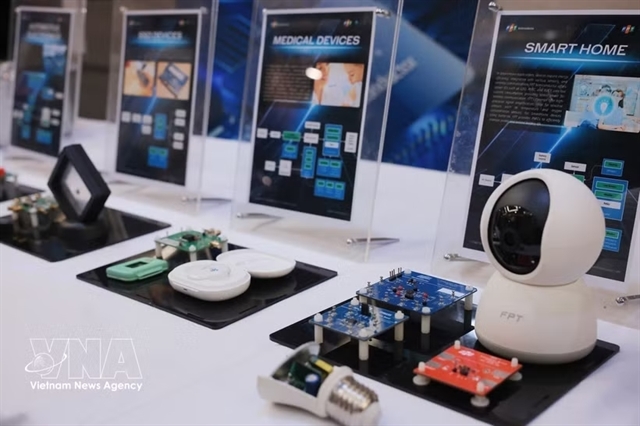
Smart products, chips, and semiconductor materials are displayed at the launch ceremony of the national centre for semiconductor chip pilot production support on June 26, 2026. — VNA/VNS Photo
TOKYO — As countries around the world step up efforts to build semiconductor capabilities to meet growing demand driven by artificial intelligence (AI), Việt Nam should identify areas where it can develop competitive advantages in the value chain, with an initial focus on chip manufacturing and packaging, according to Japanese technology expert Tsuda Kenji.
In an interview with the Vietnam News Agency in Tokyo, Tsuda, Editor-in-Chief of News & Chips and a veteran technology journalist, said the semiconductor industry covers a wide range of stages, from chip design and manufacturing to packaging and testing.
Việt Nam should give priority to areas where it has potential to build strengths, particularly manufacturing and packaging, he said.
At the same time, Việt Nam should encourage the development of domestic companies producing equipment and materials for the semiconductor industry. This would provide a foundation for building a domestic semiconductor ecosystem rather than limiting the country to a few stages of the supply chain, he suggested.
Tsuda said Việt Nam has favourable conditions for developing semiconductor manufacturing, including its ability to meet high cleanliness requirements in production environments.
Strict production processes and tightly controlled environments are essential to semiconductor manufacturing, he explained.
Touching upon Japan's experience, Tsuda said the country is working to develop advanced semiconductor technologies to narrow the gap with leading countries and companies.
The Japanese Government has significantly increased support for the semiconductor industry, while attracting Taiwan Semiconductor Manufacturing Company (TSMC) to invest in Japan and supporting the establishment of Rapidus, a Japanese company developing advanced-generation chips.
Japan is currently placing strong emphasis on manufacturing capacity, while it has long-standing strengths in semiconductor materials and equipment. However, it still has limitations in chip design, he said.
The country is also facing a serious shortage of engineers in both chip design and manufacturing, as well as personnel who can combine technical knowledge with business skills to find customers and develop markets. Given this, Japan is stepping up efforts to train engineers at universities and technical education institutions.
For Việt Nam, the expert recommended a phased development strategy, with manufacturing and packaging at the centre while building capabilities in chip design, testing, semiconductor materials and equipment in parallel.
Such an approach would allow Việt Nam to gradually strengthen its position in the global semiconductor supply chain, he said. — VNA/VNS