Việt Nam shields economy from oil shocks
Việt Nam’s swift and coordinated policy response, from flexible fuel price management to efforts to diversify supply sources, has highlighted the country’s capacity for strategic adaptation in an increasingly volatile global economic landscape.
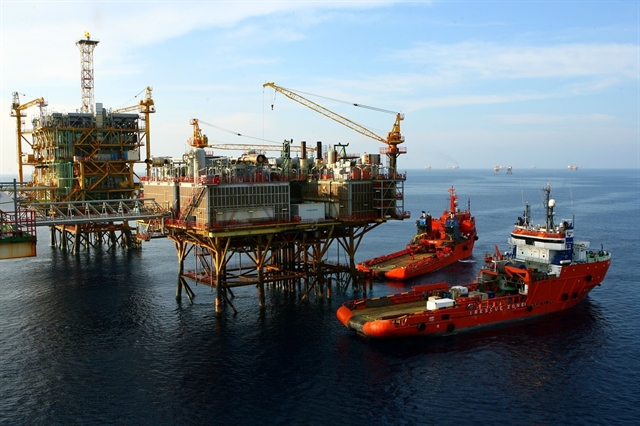
HÀ NỘI — Việt Nam’s swift and coordinated policy response to the Middle East conflict, from flexible fuel pricing to efforts to diversify supply sources and energy diplomacy, has highlighted the country’s capacity for strategic adaptation in an increasingly volatile global economic landscape.
As the Middle East crisis sends shockwaves through global energy markets, disrupting tanker traffic through the Strait of Hormuz and keeping crude oil prices hovering around US$100 per barrel, many countries have begun introducing emergency measures like fuel price controls, export restrictions and energy-saving campaigns.
Through a series of rapid moves Việt Nam has managed to stabilise the domestic fuel market, keeping supply uninterrupted while minimising negative impacts on economic growth, business operations and consumption.
According to the Ministry of Industry and Trade, domestic fuel supplies remain largely secure, to date.
The ministry reported that output at the Dung Quất refinery has risen by 10.5 per cent and has sufficient feedstock to sustain production through early May, while the Nghi Sơn refinery has enough input materials to maintain operations through the end of April.
These two refineries currently cover about 68 per cent of the domestic demand.
After the latest adjustment on March 25 with the price stabilisation fund tapped, the domestic gasoline prices are now around the regional average and remain lower than those in several neighbouring countries.
Without having to apply strict administrative measures such as purchase limits or widespread hard price caps, this reflects the effectiveness of Việt Nam’s flexible policy approach, combining market-based mechanisms with targeted stabilisation tools to navigate external shocks, according to the ministry.
Responding to new developments of Middle East tensions, the Government has stepped up energy diplomacy, holding phone talks with leaders of several countries while also meeting with ambassadors from countries including Japan, Kuwait, Qatar, Angola and the United Arab Emirates to secure stable energy supplies.
The recent visit of PM Chính to Russia also placed strong emphasis on enhancing cooperation in energy, and oil and gas.
The preferential import tariffs for gasoline have also been slashed to zero under a resolution issued on March 9, allowing Vietnamese importers to seek additional suppliers from markets that do not yet have free trade agreements with Việt Nam.
Flexible approach
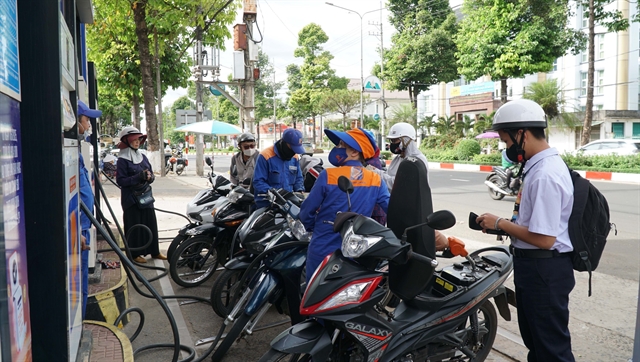
Amid volatile global oil prices, Việt Nam in March adopted a more flexible approach to domestic fuel price management which allows immediate adjustments if the base price rises by 7 per cent, instead of awaiting a seven-day cycle. The thresholds for fuel price adjustments on March 19 were lifted to 15 per cent increase or more and 10 per cent fall or more of the base price.
Another key policy tool is the reactivation of the fuel price stabilisation fund from March 10, which has remained idle since 2023.
Trần Hữu Linh, director of the Domestic Markets Management under the Ministry of Industry and Trade, said the flexible pricing mechanism combined with the use of the fuel price stabilisation fund had helped maintain market stability.
However, Linh noted that with the balance currently standing at just over VNĐ5.6 trillion (US$212.5 million), the fuel price stabilisation fund could only be used to support the market for about 15 days at the current spending rate.
The Ministry of Finance has recently proposed the environmental protection tax be halved to VNĐ1,000 for gasoline and VNĐ500 for diesel, which would, if approved, allow retail prices to drop correspondingly.
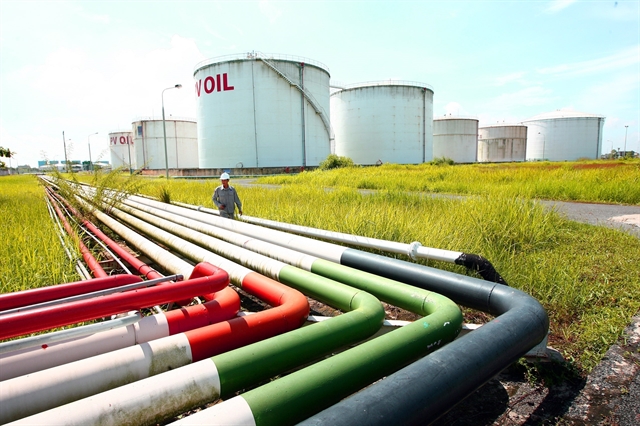
The crisis has highlighted deeper structural vulnerabilities in Việt Nam’s energy system as a net importer of fuels.
Data from the Department of Customs shows Việt Nam imported about 9.9 million tonnes of refined petroleum products last year, worth more than $6.8 billion. Imports of liquefied petroleum gas totalled $2.2 billion and crude oil $7.7 billion.
The reliance on imports highlights the urgency of boosting national strategic oil reserves and building a long-term energy self-reliance strategy, especially as Việt Nam aims for double-digit growth.
Việt Nam’s energy reserves currently consist of three layers: national strategic reserves, commercial inventories maintained by enterprises and operational reserves held by domestic refineries. Together, these are estimated to cover about 65 days of net imports, while the national reserve alone covers around 5-7 days of net imports.
Under the national plan for petroleum and gas infrastructure through 2030, the Government aims to increase total crude oil and fuel reserves to cover 75-80 days of net imports, with a long-term target of reaching 90 days in line with International Energy Agency recommendations.
In the long run, the Ministry of Industry and Trade said Việt Nam needed to expand its strategic reserves, improve energy efficiency and accelerate the development of renewable energy sources.
Safeguarding growth

The International Energy Agency has warned that the crisis is likely to affect not only fuel prices but also inflation, import costs and global economic growth.
Since the outbreak of the Middle East conflict four weeks ago, domestic fuel prices have increased by about 40-80 per cent.
Việt Nam’s highly open and globally integrated economy is exposed to both direct and indirect impacts from global oil price fluctuations, according to BIDV chief economist Cấn Văn Lực.
Energy-intensive sectors like aviation, logistics and tourism face rising operating costs, while manufacturing industries including chemicals, steel, electronics and plastics are also under pressure.
Lực outlined three scenarios for Việt Nam’s economic growth and inflation in 2026. Under the baseline scenario, consumer price inflation could increase by 0.5 percentage points, remaining within the Government’s target maximum of 4.5 per cent. However, if global oil prices stay between $95 and $100 per barrel for a prolonged period, inflation could rise to 5 per cent under a more adverse scenario.
Economic growth could also face pressure as higher costs weigh on consumption, investment and net exports. In this case, GDP growth could decline by about 0.8 percentage points compared with projections that ignore geopolitical conflict.
The largest inflationary pressure now comes from rising fuel prices. Fuel accounts for about 4 per cent of the consumer price index, meaning fluctuations in petrol prices have a direct impact on inflation.
“Inflation should not be traded for economic growth,” former director of the Central Institute for Economic Management Lê Xuân Bá said, warning that prolonged inflation could have serious consequences for macroeconomic stability. “Controlling inflation should remain a top policy priority amid rising fuel prices.”
Inflation in the second quarter of 2026 would be a key test of Việt Nam’s economic management capacity, said Hoàng Văn Cường, former Vice President of the National Economics University.
“If Việt Nam can keep inflation around 4 per cent, achieving double-digit economic growth is entirely feasible,” Cường said, stressing the importance of closely monitoring fluctuations in global crude oil prices and ensuring that supply chains for essential goods remain uninterrupted under any circumstances.
Nguyễn Đình Thọ, Deputy Director of the Institute of Strategy and Policy for Agriculture and Environment under the Ministry of Agriculture and Environment, in a study wrote that to mitigate the impact of external energy-driven inflation, Việt Nam would need to accelerate the transition of its energy system in line with the revised National Power Development Plan VIII.
This would include expanding domestic capacity in wind and solar power and considering nuclear power development.
Economists said keeping inflation within the government’s target of below 4.5 per cent for 2026 would require a combination of policy measures.
First, monetary policy must remain flexible with stable exchange-rate stability to reduce imported inflation pressures, particularly as fuel and key production inputs are largely priced in US dollars.
Second, fiscal policy support could include further reductions in the environmental protection tax on gasoline if global prices spike sharply.
Finally, authorities should carefully manage state-controlled prices. Any increases in electricity tariffs or public service fees such as healthcare and education should be staggered rather than implemented simultaneously during the second quarter. — VNS