Petroleum business rules eased under new resolution
Resolution No 19/2026/NQ-CP, issued on April 29, targets the simplification of licensing and regulatory requirements across 10 sectors managed by the Ministry of Industry and Trade.
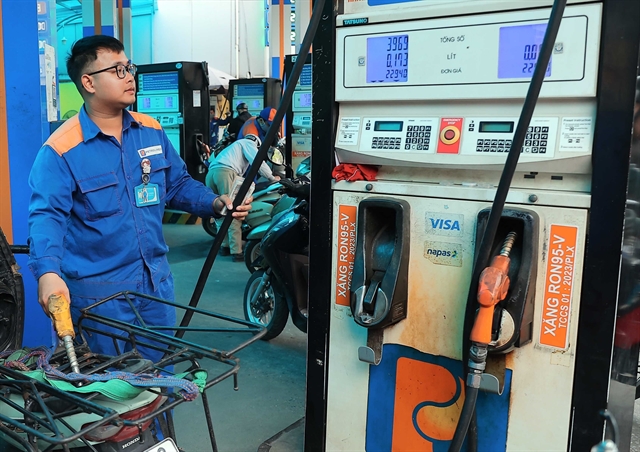
HÀ NỘI — Administrative procedures will be cut sharply and business conditions eased in the petroleum sector from 2026 under a new Government resolution aimed at improving the business climate.
Resolution No 19/2026/NQ-CP, issued on April 29, targets the simplification of licensing and regulatory requirements across 10 sectors managed by the Ministry of Industry and Trade, including petroleum, electricity, tobacco, international trade, import and export, trade promotion, commodity exchange operations and local industries.
The petroleum sector will see the most extensive changes, with several licensing procedures for general petroleum agents scrapped entirely. Authorities will no longer require reissuance or amendments of eligibility certificates for general agents operating across multiple centrally governed provinces and cities.
The Government will also streamline procedures related to licensing primary traders, distributors, retail outlets and petroleum agents, reducing paperwork and compliance time for businesses.
The resolution also relaxes business conditions for petroleum traders. Wholesale traders will still need to meet infrastructure requirements, including a dedicated port with a minimum capacity of 7,000 tonnes, a storage facility of at least 15,000 cubic metres, and a distribution network comprising at least 10 retail outlets (including at least five owned) and 40 general agents or dealers.
For distributors, the rules require a distribution system of at least five retail outlets, either owned or leased (with at least three owned), and a further 10 outlets operated by agents or franchisees.
Retail outlets must continue to comply with national standards on construction, fire safety and environmental protection.
Notably, the Government has abolished business conditions related to leasing ports, storage facilities and petroleum transport services.
The resolution took effect upon issuance, although some provisions will be implemented after a 30-day transition period. It is scheduled to expire on March 1, 2027.
Experts say the reforms could reduce compliance costs and improve market flexibility but stressed the need for stronger post-inspection mechanisms, given petroleum’s status as a strategic commodity linked to safety, environmental protection and industrial activity.
Relaxing input requirements does not mean loosening management, but shifting supervision to the operational stage, they say, calling for tighter monitoring of compliance during business operations. — VNS