Việt Nam to roll out special mechanisms for national energy centres
Việt Nam needs breakthrough policy mechanisms beyond tax incentives to accelerate plans for a national refining and energy hub at Dung Quất in the central province of Quảng Ngãi, as the country seeks to strengthen energy security amid global volatility.
HÀ NỘI — Việt Nam will introduce breakthrough policies to develop national energy centres, aiming to strengthen energy security and sustain high economic growth, Nguyễn Thanh Nghị, chairman of the Central Policy and Strategy Commission, said.
Speaking at a national conference on implementing recent resolutions of the Communist Party of Việt Nam, Nghị said energy development would be a key pillar of building a modern, integrated infrastructure system over the next five years.
The country aims to develop its energy industry towards clean energy while becoming a regional exporter of renewable energy, according to a revised national energy plan approved earlier this year.
By 2030, several clean energy centres are expected to be established in the Red River Delta, the south-central coast, the Central Highlands and the southeast.
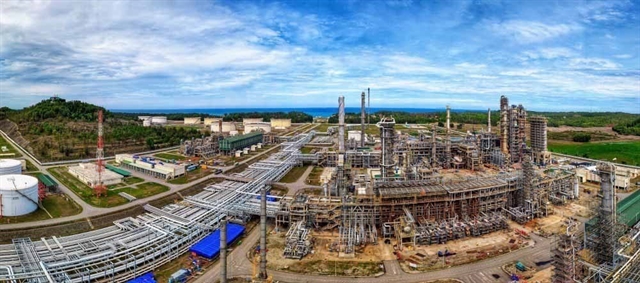
The Ministry of Industry and Trade (MIT) has also proposed developing a national refining and energy centre at the Dung Quất Economic Zone in the central province of Quảng Ngãi, with total investment estimated at around US$16 –20 billion by 2045.
Once completed, the project is expected to meet at least 30 per cent of the country’s fuel demand, provide strategic reserves equivalent to 30 days of production and consumption and create around 30,000 jobs.
The development of national energy centres would help enhance energy security, reduce dependence on imports and attract both domestic and foreign investment while supporting the growth of supporting industries, Nghị stressed.
The push comes as Việt Nam targets annual economic growth of at least 10 per cent in the 2026–30 period amid an increasingly volatile global energy market.
National energy drive
The development of the national refining and energy centre at the Dung Quất Economic Zone is an urgent and strategic task amid intensifying competition and instability in global energy markets, according to Lê Xuân Huyên, deputy director general of Vietnam National Industry – Energy Group (PetroVietnam).
Đặng Hải Anh, deputy director of the Oil, Gas and Coal Department under the MIT, said the project must be viewed within the broader context of national energy security, as Việt Nam’s rapidly growing economy continues to drive up demand for electricity, fuel and overall energy consumption.
The centre, therefore, is expected to be an integrated development space combining refining and petrochemicals with gas, LNG, power generation and renewable energy, with the existing Dung Quất refinery at its core, connecting with major projects including the Cá Voi Xanh gas field, LNG infrastructure, offshore wind power, deep-water ports and related value chains, Anh said.
“The national refining and energy centre will help ensure energy security, enhance domestic production capacity and reduce dependence on imported petroleum and petrochemical products,” he said.
“It will also support Việt Nam’s commitment to net-zero emissions by 2050 through the development of new energy sources such as green hydrogen and green ammonia.”
Nguyễn Văn Tư, deputy general director of the Vietnam Petroleum Institute, said a breakthrough approach was needed, stressing the role of PetroVietnam as the master developer to coordinate the entire ecosystem.
He also proposed a range of foundational policy mechanisms, including a one-stop approach to investment approval and land allocation, as well as allowing the direct appointment of PetroVietnam and its subsidiaries to implement core projects such as renewable energy, hydrogen, ammonia and carbon capture and storage instead of a bidding process.
He called for the pilot implementation of a sandbox to establish an internal energy market within the centre to enable direct electricity trading and exchanges of steam, by-products and secondary energy among enterprises, alongside initial support policies for emerging energy products.
Investment bottlenecks
According to Nguyễn Hải Trường, deputy head of the Dung Quất Economic Zone’s Management Board, a key bottleneck is the lack of sufficiently strong mechanisms to attract large-scale investment.
Trường proposed that the central government allocate Quảng Ngãi Province up to 30 per cent of import-export revenues generated in the zone to support infrastructure development. He also called for special investment procedures and exemptions from land auctions for projects within the centre.
A representative of the Bình Sơn Refining and Petrochemical JSC (BSR), which operates the Dung Quất refinery, said the centre would require a flexible and tailored policy package given its large capital requirements, complex technologies and long investment cycles as well as exposure to market and policy fluctuations.
The BSR proposed prioritising the attraction of strategic investors, offering higher corporate income tax incentives, exemptions on land and water surface rental fees and import duty exemptions for input materials. It also called for special investment procedures to shorten project preparation timelines.
Additional recommendations included allowing the sale of surplus electricity within the zone, easing credit limits, developing carbon credit mechanisms, establishing venture capital funds and creating a dedicated master plan to ensure coordinated implementation.
Đỗ Tâm Hiển, deputy chairman of the Quảng Ngãi People’s Committee, said the province would continue coordinating closely with the MIT and relevant agencies to finalise the development model, policy framework and implementation roadmap in line with government direction.
At a recent Government meeting, the Prime Minister called for accelerated progress on the Dung Quất project — a test case for whether Việt Nam can translate bold policy ambitions into a coherent, future-ready energy system. — VNS