Dairy sector pushes for sustainable growth amid headwinds
Amid the challenging environment, the sector should tap into niche markets, driven by demand for premium and specialised dairy products as well as nutritional foods for the elderly and children.
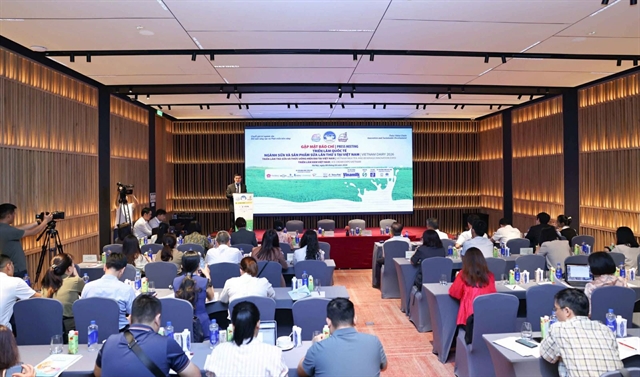
HÀ NỘI — The dairy processing industry is striving to ensure sustainable expansion in a challenging environment, a senior official said at a press conference in Hà Nội on Wednesday.
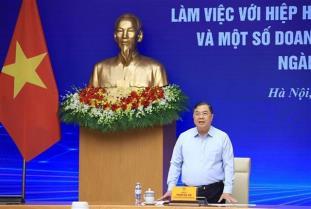
The conflict in the Middles East has delivered a short-term but powerful shock to energy and logistics, while the Russia-Ukraine war has caused a longer-term disruption to agricultural and trade structures, said Tống Xuân Chinh, vice chairman of the Vietnam Dairy Association (VDA).
The combined impact has made Việt Nam’s dairy industry – heavily reliant on imported raw materials – one of the most sensitive food sectors to global geopolitical fluctuations, Chinh said.
He added that the conflicts have driven up prices of imported milk powder and raw materials, increased feed and sourcing costs, raised electricity, refrigeration and processing expenses, and pushed shipping costs higher, adding insurance and delivery risks, while also putting more inflationary pressure and weighing on domestic purchasing power.
The vice chairman also forecast the sector would post modest single-digit growth in 2026.
Amid the challenging environment, the sector should tap into niche markets, driven by demand for premium and specialised dairy products as well as nutritional foods for the elderly and children, he said.
He added that developing dairy herds to support production for both domestic consumption and exports should also be a priority.
Trần Quang Trung, chairman of VDA, said the industry has made significant progress in recent years in market size, production capacity and product quality.
Milk, once targeted at specific consumer groups, has become more widely consumed, meeting a large share of domestic demand and gradually aligning with international standards, Trung said.
Alongside domestic firms, the foreign-invested sector has played a key role in diversifying products and boosting competitiveness. Beyond traditional dairy items, new segments such as ice cream, milk tea and other modern beverages have expanded rapidly, helping to broaden the consumer ecosystem and increase the industry’s value.
However, the sector faces mounting challenges, including stricter requirements on quality, food safety and traceability, as well as pressure to transition toward more sustainable development, Trung said.
Global volatility, particularly in energy and environmental sectors, is forcing dairy producers to adapt quickly to new standards, he added.
The use of renewable energy, reduction of greenhouse gas emissions and pursuit of net-zero targets are no longer optional but essential for long-term growth.
At the same time, the dairy product ecosystem continues to expand, with companies developing new offerings such as nut-based milk and fruit beverages to meet increasingly diverse and modern consumer demand.
The Government has approved a strategy for dairy industry development through 2030, with a vision to 2045, aimed at ensuring sustainable growth
Under the plan, the industry is projected to expand by 12-14 per cent annually by 2030, before slowing to 5-6 per cent annual growth by 2045.
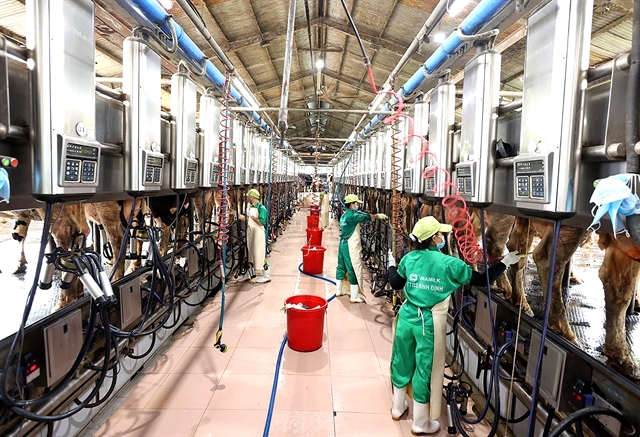
The strategy prioritises building a disease-safe and food-safe dairy farming chain in line with international standards, while expanding the domestic herd to boost raw milk supply and gradually reduce reliance on imports.
Dairy herd development will be promoted through large-scale farms combined with cooperatives and household-based farming, in line with broader agricultural and rural modernisation goals.
Authorities will also strengthen market research and support the development of ingredients and additives to enable new products aligned with consumer preferences and global trends.
Priority will be given to higher value-added products, including formula milk tailored to different life stages and specialised needs.
Enterprises are encouraged to expand herds, increase raw milk output and upgrade processing capacity through investment in modern, highly automated technologies.
In 2025, total revenue of the entire dairy industry reached VNĐ133 trillion (over US$5 billion), compared to VNĐ127.4 trillion in 2024. Milk and dairy product exports topped over $390 million while imports surpassed $1.43 billion. — VNS
In't dairy expo to return to Hà Nội in May HÀ NỘI — The Vietnam International Milk and Dairy Products Exhibition (Vietnam Dairy 2026) will return to the capital, organisers said at the press conference. The fifth edition of the event will take place at the Hanoi International Exhibition Centre from May 28-31, they said, adding that two exhibitions – Vietnam Ice Cream Expo 2026 and Vietnam Milk Tea and Beverage Innovation Expo 2026 – will be held alongside it. Co-organised by the Vietnam Dairy Association and Vietnam Advertisement and Fair Exhibition JSC (VIETFAIR), the exhibition will feature 250 booths from domestic and foreign exhibitors, including participants from Australia, the US, France, New Zealand, Japan, South Korea and China. Participating firms will showcase milk, dairy and ice cream products, as well as milk tea and other beverages, alongside ingredients and technologies for the dairy industry. Exhibits will also include processing and packaging lines, recycling and environmental treatment technologies, digital transformation services and solutions for the sector, and food safety management systems. Chairman of the association Trần Quang Trung said the exhibition is expected to help businesses expand markets, strengthen branding, access new technologies and share experience in sustainable development. He added that the event will also provide an opportunity for regulators to better understand industry conditions, formulate appropriate policies and implement the dairy sector’s development strategy through 2030, with a vision to 2045. For consumers, the exhibition will offer access to safe, high-quality products and provide updates on modern consumption trends, contributing to the development of a transparent, modern and sustainable dairy market centred on consumers. The event will include seminars on the circular economy in the dairy industry, workshops on processing and packaging technologies, an international trade forum and business-matching sessions with distribution networks and import-export partners. These activities are expected to serve as an effective platform for companies to expand markets, enhance competitiveness and access new technologies. — VNS |