Plans discussed to strengthen multimodal transport connectivity
Import-export turnover reached nearly US$930 billion last year, while cargo transport volume exceeded 3 billion tonnes, up 14.1 per cent year-on-year.
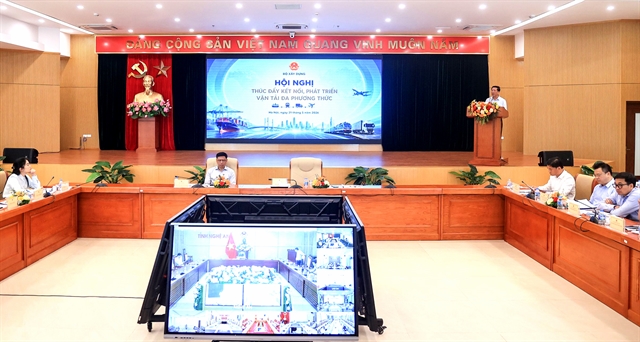
HÀ NỘI — Measures are being introduced to strengthen multimodal transport connectivity as imbalances in the freight transport system continue to hinder logistics efficiency and supply chain competitiveness.
The Ministry of Construction (MoC) held a conference on Thursday to promote connectivity and the development of multimodal transport, identify bottlenecks in integrated transport operations and explore solutions for future development.
Opening the conference, Minister of Construction Trần Hồng Minh said that import-export turnover reached nearly US$930 billion last year, while cargo transport volume exceeded 3 billion tonnes, up 14.1 per cent year-on-year.
Of this figure, road transport recorded the strongest growth, surpassing 2.2 billion tonnes, up 14.7 per cent, while container throughput at seaports reached nearly 34.3 million TEUs, an increase of 12 per cent.
These results made an important contribution to the country’s GDP growth of 8.02 per cent, the highest level during the 2011–2025 period.
However, conflicts in the Middle East and the impact of tariff policies have significantly affected global supply chains, while rising fuel prices have caused strong fluctuations in freight rates and international shipping routes.
Against this backdrop, multimodal transport in Việt Nam still faces many shortcomings.
“The transport market share remains imbalanced, with road transport accounting for a large proportion of freight volume at around 75 per cent, while high-volume transport modes such as railways remain underdeveloped and account for a very small share of just 0.18 per cent,” Minh said.
In addition, Việt Nam’s shipping fleet remains limited, with freight transport volume largely concentrated among foreign shipping lines. Inland waterway transport, despite its advantages in carrying large volumes at low cost, has yet to develop fully due to restrictions involving waterways and bridge clearances.
Connections between rail transport and seaports, inland container depots (ICDs), and major cargo hubs also remain largely absent.
Đỗ Công Thuỷ, deputy director of MoC’s Department of Transport and Traffic Safety, said multimodal transport had become the dominant transport organisation model in global development trends by optimising the integration of transport modes within supply chains rather than operating them separately, thereby maximising the strengths of each mode.
However, multimodal transport in Việt Nam accounts for less than 10 per cent of total transport activities, while the figure in developed countries ranges from 25 to 40 per cent.
The core issue lies not only in building more infrastructure but also in the ability to organise, connect and optimise the existing system, said Thuỷ.
The total value of Việt Nam’s transport infrastructure is currently estimated at around VNĐ5 quadrillion (US$191.1 billion), accounting for nearly 50 per cent of the total value of 19 categories of national infrastructure assets.
Freight transport volume exceeded 3 billion tonnes last year alone, with cargo turnover reaching 612 billion tonne-kilometres. Passenger transport volume reached approximately 6.1 billion passenger trips, with passenger turnover reaching around 312 billion passenger-kilometres.
Despite its huge potential, the transport system is facing imbalances and excess capacity in some sectors.
Leaders of the Department of Transport and Traffic Safety pointed out that road transport currently accounts for 75.1 per cent of transport volume, inland waterways 19.8 per cent, maritime transport 4.9 per cent, railways 0.18 per cent and aviation only 0.02 per cent.
This situation underscores the urgent need to promote multimodal transport development.
Việt Nam’s multimodal transport system is currently organised around four main economic corridors, namely the North-South corridor, the East-West corridor, the northern logistics region and the southern logistics region.
Along these corridors, inland waterways still have limited connections with road and rail transport because most inland ports are located on provincial roads, making connections to national highways difficult.
Limited cargo-handling capacity and inefficient loading and unloading operations have led to low cargo throughput and slow vehicle turnaround times, thereby increasing freight costs.
“Connectivity between railway transport and inland waterways and seaports has not received sufficient investment and synchronised development. The inland container depot system serving as a hub connecting transport modes also remains limited,” Thuỷ stressed.
He added that developing multimodal transport would require comprehensive solutions ranging from policy mechanisms and investment planning to support for transport enterprises, along with stronger digital and green transformation efforts. — VNS