IP experts outline compliance measures for SMEs following Gov’t’s crackdown campaign
The recent campaign launched by the Government to crack down on infringements of intellectual property (IP) may gather evidence that could lift Việt Nam out of the ‘Priority Foreign Country’ category in the United States’ Special 301 Report, but it also creates pressure for businesses to increase IP compliance.

Bảo Hoa
HÀ NỘI — Businesses in Việt Nam are facing numerous challenges as the Government intensifies efforts to crack down on intellectual property (IP) infringements, in response to the country’s designation as a ‘Priority Foreign Country’ in the United States’ Special 301 Report.
The report, which is the US’s annual review of global IP rights protection and enforcement, this year places Việt Nam in the group of countries with the weakest IP-related acts, policies, and practices that have the most adverse impact on relevant US products.
It’s the first time for Việt Nam, and also the first time in 13 years that a new country has been added to this category. The last was Ukraine in 2013.
IP experts have identified some potential risks that small- and medium-sized enterprises (SMEs) are facing due to the Government’s heightened IP enforcement and suggested compliance solutions.
The USTR – the United States Trade Representative (USTR) – said on its website that it would decide within 30 days whether to launch an investigation based on the report’s findings, and would also “request consultations with Vietnam and seek to resolve the issues that led to Vietnam’s identification as a PFC” if an investigation is initiated.
The report put Việt Nam on high alert since its release on April 30. The Ministry of Foreign Affairs released a statement on May 1, calling on the report’s author – the USTR – to provide “an objective and balanced assessment of Việt Nam's efforts and achievements in intellectual property protection”.
On May 5, the Government issued Urgent Dispatch 38, launching an intensive campaign to combat IP infringements across the country, which involves the Supreme People's Court, Supreme People's Procuracy, seven ministries and local people’s committees. The Vietnam Chamber of Commerce and Industry (VCCI) and the Vietnam Association of Seafood Exporters and Producers (VASEP) urged Vietnamese businesses to prepare for potential trade-related risks in statements released on May 8.
The campaign is seen by experts as an effort to gather documentation of Việt Nam’s IP enforcement to prepare for consultations with the US at the end of this month, if requested. While it may gather evidence that could lift Việt Nam out of the ‘Priority Foreign Country’ category, it also creates pressure for businesses to increase compliance with IP protection regulations.
Business problems
Two main reasons might have led to Việt Nam’s designation as a ‘Priority Foreign Country’ despite the demonstrated political will to improve the legal system, said Ngô Phương Trà, a law lecturer at Tôn Đức Thắng University in HCM City.
“The US focuses more on practical effectiveness. Their report acknowledges [Việt Nam’s] legislative efforts, but at the same time, points out that current enforcement measures are not sufficiently deterrent,” she said.
They also seem to be concerned about the overly broad exceptions to copyright and related rights promulgated in Article 7.5 of the 2025 amended Law on Intellectual Property, which allow the use of IP-protected materials to train artificial intelligence (AI).
“For Việt Nam, this regulation is expected to be a pioneering step, demonstrating a desire to promote the digital economy,” said Trà.
“However, for a country with a wealth of intellectual property like the US, this exception poses potential risks for creators.
“The lack of detailed guidance on compensation mechanisms or data control in this regulation may have contributed to the US's concerns.”
As the enforcement campaign is rolled out across the country, SMEs are dealing with some systematic risks, said Nguyễn Hồng Hiếu, deputy director of Monday VietNam, an IP consulting firm based in HCM City.
The first one is the criminalisation of unlicensed software use and the possible disruption of cash flow due to licence purchases. As per instructions in Dispatch 38, the Ministry of Culture, Sports and Tourism must inspect software use in businesses, handle unlicensed uses, and make sure the number of violations it handles increases by at least 20 per cent compared to May 2025.
Hiếu said: “Unlike before, when administrative fines were considered a predictable recurring expense, this wave of stricter copyright enforcement forces businesses using unlicensed software to switch to legally licensed ones, which will result in a large, concentrated, and unavoidable expense.”
On e-commerce platforms, sellers risk having their accounts closed permanently and revenue frozen on electronic payment gateways as these platforms will increase automated screening for counterfeit goods, Hiếu added.
The third area of risk is at border gates, where the ex officio mechanism, which allows customs authorities to suspend customs clearance for suspected counterfeit goods, will be intensified.
While it is a strong tool for controlling imports, the mechanism may inadvertently help ‘trademark squatters’ – those that register trademarks without a real intention of using them, and harm genuine manufacturers who have not registered their trademarks in Việt Nam, said Hiếu.
This is because with a trademark registration certificate, the trademark squatters can make a request for the imports to be temporarily suspended from 10 to 20 days, and file a civil lawsuit against the manufacturers for ill-gotten gains.
“So the legitimate goods will be stuck at ports, incurring storage costs and disrupting the supply chain,” Hiếu said.
“Their genuine manufacturer will be in a dilemma: they either have to pay the trademark squatter to reclaim the trademark, or pursue a time-consuming lawsuit to revoke the registration, while the goods will probably be damaged, or they might miss the peak season.”
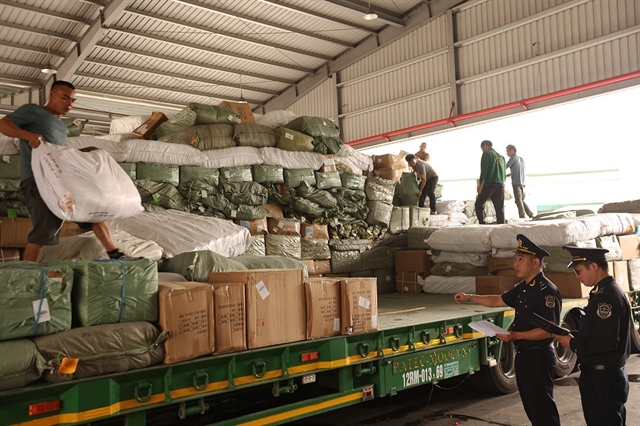
To navigate this complex situation, businesses need to prepare short- and long-term solutions that balance legal compliance and capital preservation, said Phạm Văn Kiện, chief executive officer of the Hà Nội-based IP consulting firm BigPro.
Some immediate measures include purchasing licences for core system software, replacing commercial applications with equivalent open-source solutions, issuing value-added tax invoices and valid certificates of origin for all commercial transactions, and registering industrial property rights as soon as possible to establish the priority date.
“In the long term, software licensing costs need to be standardised as fixed costs within the company’s regular operating structure," said Kiện.
"Clauses for compensation and legal liability should be added to supplier contracts when a product is found to infringe intellectual property rights due to a supplier error.”
Companies should also establish a system for managing their intellectual property portfolios and maintaining a complete set of documentation proving ownership rights, ready to be presented to the authorities or commercial partners.
“For tech companies, establishing strict copyright screening procedures for AI training data is also crucial to address the concerns surrounding Article 7.5,” Kiện added.
Worst-case scenario
While the US has not confirmed whether it will initiate an investigation into Việt Nam’s IP enforcement following the Special 301 Report, experts remain wary of the prospect due to the risk of increased tariffs on Vietnamese exports.
“Investigations under Section 301 of the US Trade Act often lead to retaliatory tariffs on a sectoral basis, harming exporting businesses, including those that fully comply with trade regulations,” said Hiếu.
“This risk is particularly serious when Việt Nam’s exports to the US reached $53.9 billion in the first four months of 2026.”
The wood, textile, leather and footwear, and seafood industries are at the highest risk of being taxed, Hiếu said. An additional tariff of 15-20 per cent might be added on top of the tariffs they are already facing, stripping them of the competitive edge over other markets such as Mexico or Indonesia.
An investigation would also be a bad ‘signal’ to foreign investors, especially those in high-tech fields that Việt Nam is trying to attract, such as semiconductor production, renewable energy, pharmaceuticals and biotechnology, of Việt Nam’s weak patent protection, Hiếu added.
“An ineffective patent protection environment will lead partners to restrict the transfer of strategic technologies and maintain cooperation only in the low-added value processing stages,” he said.
“This will not only slow down the modernisation of production capacity but also reinforce technology dependence, making it difficult for Vietnamese businesses to move up the global value chain.”
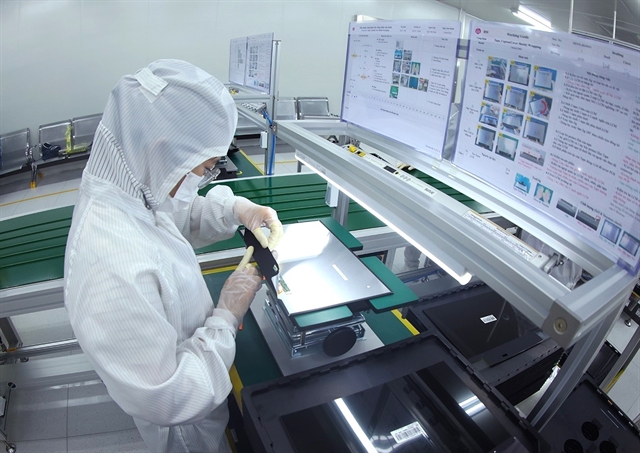
A Section 301 investigation was launched into Ukraine in 2013 following the 'Priority Foreign Country' designation, but no sanctions were imposed. China faced a similar investigation after being put on the 'Priority Watch List' in 2017, which resulted in a 15 per cent increase of American tariffs on approximately $200 billion worth of Chinese imports.
A key measure to prepare for the retaliatory tariffs is to establish a transparent traceability system based on HS codes and create a database that qualifies businesses to submit tariff exemption requests to the US, which will help separate compliant businesses from the possible broad sanctions, said Hiếu.
Businesses can also take this opportunity to transform compliance pressure into a driving force to enhance their competitiveness, said Kiện.
“This is the time for businesses with a long-term vision to standardise processes, invest strategically in intellectual property, and reposition their core values in the international market,” he said.
They have all the necessary factors to do that, since at the macro level, external enforcement pressure is driving the Government to reform the IP legal framework towards greater transparency and strictness, which protects businesses that put a strong focus on IP compliance and gradually eliminates unfair competitive advantages.
“In short, shifting from a mindset of ‘compliance as a burden’ to ‘compliance as a foundation for brand positioning’ is now a prerequisite for Vietnamese businesses if they want to remain sustainable in the global value chain,” Kiện said. — VNS