Việt Nam seeks to unlock sustainable marine economy growth
Việt Nam is seeking an overhaul of its legal framework for marine resource management in a bid to unlock new growth opportunities in the blue economy while ensuring sustainable use of marine ecosystems.
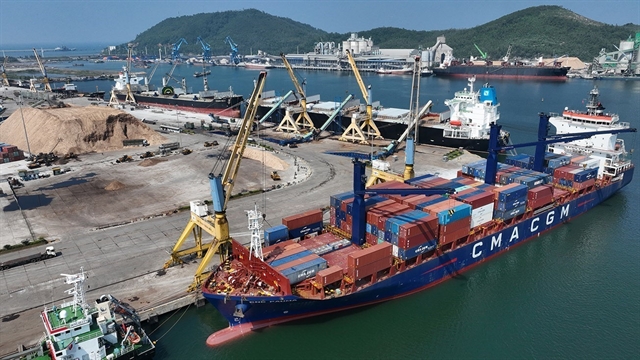
HÀ NỘI — Việt Nam is seeking an overhaul of its legal framework for marine resource management in a bid to unlock new growth opportunities in the blue economy while ensuring the sustainable use of marine ecosystems.
The Ministry of Agriculture and Environment stated that five years of implementing Resolution 36-NQ/TW on the sustainable development of Việt Nam’s marine economy through 2030, with a vision to 2045, has revealed several bottlenecks that must be addressed to lay the foundation for a new phase of development.
Nguyễn Quốc Toản, director of the Việt Nam Agency of Seas and Islands under the ministry, said that the biggest challenge lies in an institutional framework that remains fragmented and lacks consistency.
He said that marine space is currently regulated by different laws, including those governing marine and island resources and the environment, petroleum, geology and minerals, maritime affairs, fisheries and the sea.
"It is pressing to build a synchronised and unified legal framework that supports modern, effective marine governance and meets the country's development needs in the new period," Toản said.
Another bottleneck is that provisions governing the allocation, leasing and use of marine areas have failed to keep pace with the rapid expansion of marine-based industries over the past decade.
As demand for marine space continues to rise, the development of transparent and efficient management tools has become increasingly urgent, he said.
The third challenge is marine environmental pollution, he said, adding that economic development, coastal urbanisation, resource exploitation and the growing impacts of climate change are placing mounting pressure on marine ecosystems and increasing the need for stronger environmental governance.
Toản said the proposed amendments to the Law on Marine and Island Resources and Environment focus on strengthening integrated and unified management of marine and island resources while improving mechanisms for the allocation, leasing, registration and auction of sea-use rights more transparently to increase investor confidence in offshore projects.
The draft law is also expected to create breakthrough mechanisms to support emerging marine industries, including offshore renewable energy and other modern ocean-based economic sectors, while strengthening controls on marine and ocean pollution.
Toản said the draft law is expected to be released for public comment later this month, stressing that the core principle guiding the amendments is that economic growth should not come at the expense of marine ecosystems and biodiversity.
Besides institutional reforms, Toản urged greater participation from businesses, coastal communities and the media in protecting the marine environment and promoting the sustainable use of marine resources.
Expand growth space
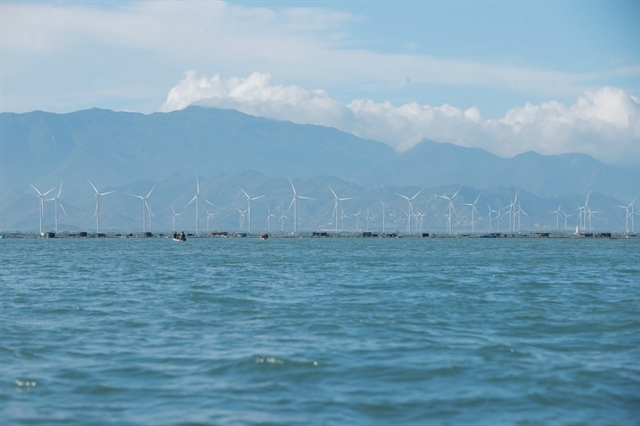
The amendments are also expected to create new opportunities for Việt Nam’s marine economy.
Deputy Minister of Agriculture and Environment Đặng Ngọc Điệp said Party and State leaders have called for more effective utilisation of the country's marine advantages to support economic growth and social development.
Following recent administrative restructuring, Việt Nam now has 21 coastal provinces and cities among its 34 localities, providing significant potential for marine-based development, he said.
The revised law must create a more open mechanism that encourages investment in marine industries while resolving existing overlapping State management, Điệp stressed.
He noted that marine projects have often faced lengthy approval processes because investors were required to obtain permits from multiple ministries and agencies.
The proposed amendments aim to clarify responsibilities under the principle of one task, one lead agency, to reduce overlaps and create a more transparent and favourable investment environment.
Việt Nam has more than one million sq.km of maritime area and a vast network of islands and archipelagos, but much of this potential remains largely untapped.
Điệp identified island economies and high-end tourism as promising areas for future growth, noting that many of Việt Nam’s islands could become leading regional destinations if supported by appropriate investment policies.
Deep-sea economic activities are also emerging as a potential long-term growth driver, he said, adding that preliminary surveys have indicated signs of strategic mineral resources in some offshore oil and gas blocks at depths of around 1,000–1,500m below the seabed, which could provide new opportunities for economic development while contributing to national energy and resource security, officials said. — VNS