Việt Nam plans massive airport network expansion with focus on efficiency and sustainability
The Ministry of Construction is reviewing adjustments to the national airport development plan for 2030 (with a vision to 2050) that would increase the number of airports nationwide from 22 to 32 by 2030 and 35 by 2050.
Compiled by Mai Linh
HÀ NỘI — Việt Nam is embarking on the largest expansion of its aviation infrastructure in decades, as the Government looks to support ambitious economic growth targets, strengthen regional connectivity, enhance national competitiveness and accommodate rising demand for air travel.
The Ministry of Construction is reviewing adjustments to the national airport development plan for 2030 (with a vision to 2050) that would increase the number of airports nationwide from the current 22 to 32 by 2030 and 35 by 2050.
The review comes as Việt Nam seeks to align its transport infrastructure with a new phase of economic development after the historic administrative merger, with aviation increasingly identified as a key enabler of trade, tourism and investment, particularly as the country targets double-digit growth in the next five years.
Việt Nam's airports currently handle more than 100 million passengers annually, but several major gateways, including Tân Sơn Nhất, Đà Nẵng and Cam Ranh, have been operating above their designed capacity for years.
Meanwhile, air transport demand is forecast to continue growing rapidly in the next few years.
According to the ministry, with a double-digit economic growth target, annual passenger traffic is projected to exceed 191 million by 2030, representing average growth of about 9.7 per cent per year through 2030.
Air cargo throughput is forecast to reach around 3.75 million tonnes annually by 2030, with average growth of approximately 19.3 per cent per year.
Seven new airports
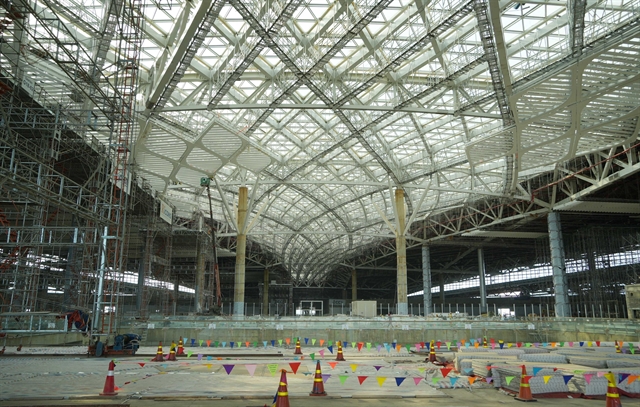
Under the revised plan, seven new airports are expected to be put into operation before 2030.
These include two flagship airports, Long Thành in Đồng Nai Province and Gia Bình in Bắc Ninh Province, along with five others: Quảng Trị, Phan Thiết, Sa Pa, Thổ Chu and Thành Sơn.
Gia Bình International Airport and Thổ Chu Airport have recently been added to the national airport development plan, bringing the total number of airports in the national network to 32 by 2030 and 35 by 2050, including 15 international airports.
Together with upgrades and expansions at existing airports, the airport network is expected to be able to accommodate up to 220 million passengers by 2030.
The ministry said the airport network has been designed under a hub-and-spoke model, with airports located along the country's north-south axis and a high concentration in key economic regions across northern, central and southern Việt Nam.
Air links are also maintained to remote, border and island areas to support national defence and socio-economic development.
Private capital
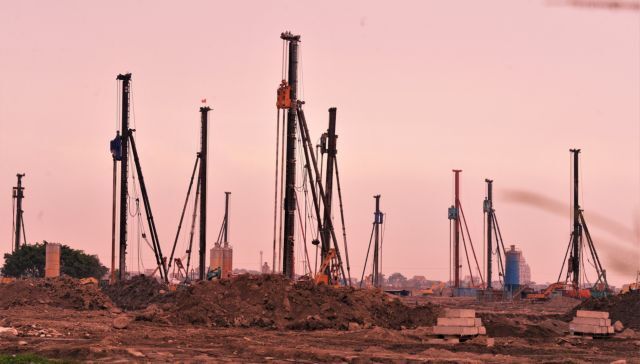
The ministry estimates total investment needs for the airport system at around VNĐ485 trillion (US$18.4 billion) during the 2021–2030 period.
This financing structure marks a significant shift from previous decades, with authorities seeking to mobilise a larger share of private capital.
State funding is expected to account for about 55 per cent of total investment, focusing mainly on core infrastructure, security and air traffic management, while the remaining 45 per cent would come from private investors through public-private partnerships (PPPs) and direct investment schemes.
The expansion has attracted growing interest from major private conglomerates, which are increasingly viewing aviation infrastructure as a strategic growth sector tied to tourism, logistics and real estate development.
Most recently, property developer FLC Group proposed investing in and upgrading Phù Cát and Pleiku airports, in partnership with aircraft leasing company FLC Aircraft Investment and Leasing JSC and Texas-based airport development and management company HAS Development Corporation.
The group said it was seeking approval from the Ministry of Construction to study investment opportunities under PPP practices or other legally permitted models.
A growing number of private conglomerates are also expanding into aviation infrastructure, attracted by long-term growth prospects in one of Asia's fastest-growing air travel markets.
Masterise Group is investing in Gia Bình International Airport with the establishment of Masterise Airport Corporation, with charter capital of VNĐ29.3 trillion ($1.1 billion).
Sun Group, which currently runs Vân Đồn and Phú Quốc airports, is developing Phan Thiết Airport, while T&T Group is investing in Quảng Trị Airport under a PPP model.
The renewed interest from private investors comes after the Law on Civil Aviation 2026 has created a more favourable framework for private participation in airport development and operation.
However, the airport expansion programme is accompanied by a tightening of regulatory standards, as authorities seek to ensure that rapid infrastructure growth does not come at the expense of safety and operational quality.
Under Government Decree 205/2026/NĐ-CP, which takes effect on July 1, companies seeking licences to operate airports will be required to meet stricter conditions on financial capacity, management systems and personnel.
Airport operators must have a minimum charter equity capital of VNĐ100 billion, while foreign ownership is capped at 30 per cent, unless otherwise permitted under international agreements to which Việt Nam is a party.
Policy focus shifts
Although aviation is increasingly viewed as a catalyst for broader economic development, policymakers have stressed that airport development must be carefully evaluated to avoid over-investment and inefficiency.
The planned airport network is giving Việt Nam one of the highest levels of aviation accessibility in the region.
According to the Ministry of Construction, by 2030 more than 95 per cent of Việt Nam's population would be able to access an airport within a 100-kilometre radius under the proposed network, compared with a global average of around 75 per cent.
The ministry said the scale of the planned airport network would be broadly comparable with regional peers.
Việt Nam's 32 airports by 2030 would compare with 39 in Thailand, 38 in Malaysia and 32 in Myanmar, although it is lower than the 97 airports in Japan (a larger and more populated country) and a lot higher than the 15 airports in the Republic of Korea, which is much smaller in both size and population.
Alongside the push for rapid expansion, the Government has sent a clear message that all airport projects must remain financially viable, economically efficient and environmentally sustainable.
Civil Aviation Authority of Việt Nam Director Uông Việt Dũng said the national airport network must ensure the overall efficiency of the system, avoid duplication of functions and remain consistent with airspace management requirements and long-term traffic forecasts.
Meanwhile, Deputy Prime Minister Phạm Gia Túc at a recent meeting warned that airport planning should not be driven by local ambitions alone, but must be integrated with the wider transport network, including expressways, railways, waterways and logistics systems.
He also called for rigorous evaluation of both financial and socio-economic returns to prevent wasteful spending and ensure efficient use of resources.
The construction ministry said potential airport projects would be reevaluated along with studying additional locations for possible inclusion in the network, while airports that no longer align with development needs could be removed.
Future airport planning would need to anticipate demand over the longer term, rather than simply address existing capacity constraints, the ministry said, adding that airport planning has become an important part in the long-term national development strategy.
Analysts say that if implemented effectively, the expansion could significantly enhance the country's connectivity and competitiveness, helping position Việt Nam as a regional aviation and logistics hub as global supply chains continue to shift toward Southeast Asia. — VNS