Việt Nam needs an industry to unlock the economic value of data: expert
Nguyễn Ngọc Dung, chief of office of the Việt Nam Data Association, discusses how Việt Nam can turn its vast data resources into economic value by building the technology, businesses and markets needed to support a data economy.

Việt Nam is seeking to unlock the value of its vast data resources as it advances its digital economy in line with Politburo Resolution 57, which identifies science, technology, innovation and digital transformation as key drivers of national development. Nguyễn Ngọc Dung, chief of office of the Việt Nam Data Association, talks to Việt Nam News reporter Mai Hương about how technology, businesses and data markets can help turn data into economic value.
Việt Nam has vast data resources, but much of the data remains fragmented and disconnected. What is the biggest obstacle to connecting these datasets?
The Data Law has only recently been enacted, and there are two major groups of datasets that need to be connected: those held by Government agencies and those held by businesses.
Ministries and Government agencies have been building databases for many years. However, each ministry and sector has developed its own data standards. To connect these databases, we first need to establish common standards.
These standards do not necessarily concern the structure of databases themselves, but about how data can be circulated, shared and exchanged. Establishing common standards is therefore a prerequisite for interoperability.
How can Việt Nam use data to drive the digital economy and the use of AI in governance while protecting personal data and privacy?
First, we need to understand what a data economy actually means.
Developing a data economy requires the creation of a data industry. It is similar to the rice industry. Việt Nam is one of the world's leading rice exporters, but developing the rice economy requires a strong industrial ecosystem covering everything from seed production and cultivation to irrigation, harvesting and processing.
The same applies to data. We need to build an industry capable of collecting, processing, analysing, sharing and commercialising data.
Technology will be the key to accelerating the development of this industry. However, we need to distinguish between technology and industry. An industry is formed when factories, companies and other organisations apply advanced technologies on a broad scale to create products and services.
For the data industry, this means using technology to process and analyse data, extract value from it, facilitate sharing and support innovation. That is when data can truly become an economic resource.
To ensure these elements work together seamlessly, the first requirement is a clear legal framework. The Government is developing a framework covering areas such as data governance, cybersecurity and personal data protection.
Business participation is also essential. Having only major technology companies such as Viettel and FPT would not be enough. Start-ups can become important components of the data industry by developing platforms, tools for faster data collection and more efficient analytical solutions.
They can also help the Government and local authorities use data to make better decisions.
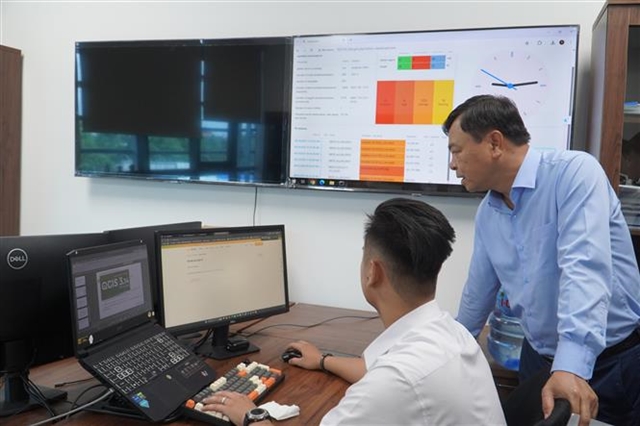
We also need users who are both suppliers and consumers of data, as well as scientists and researchers at universities and research institutes who can develop new technologies.
At present, there are still too few start-ups in this field. We need to nurture more technology companies to participate in the data industry and encourage investment funds to provide capital for them.
All these elements – Government, businesses, users, scientists, start-ups and investors – form the ecosystem needed for a data industry.
The Government could set specific problems for incubation centres, large corporations and start-ups to solve, while opening selected datasets to them. This would help establish data-sharing standards faster and prioritise data with the greatest market and economic potential.
When do you think Việt Nam will have a truly functioning data market, and how will data generate real economic value?
In fact, we already have a data market. Data has been traded for a long time. The problem is that before the Data Law was enacted, much of this trading took place in an informal or illicit market.
Now that data is legally recognised as an asset and a commodity, the Government can establish a proper regulatory framework for data transactions.
These transactions are expected to be increasingly organised through national data exchanges. The Government is developing regulations to facilitate the establishment and operation of such exchanges.
Once data is traded through regulated platforms, people and organisations holding data will have greater incentives to bring it to the market. Those who lack the tools or expertise to exploit their data can acquire the necessary technologies and services.
Recognising data as an asset under the law will therefore encourage data to circulate more efficiently and create significant added value.
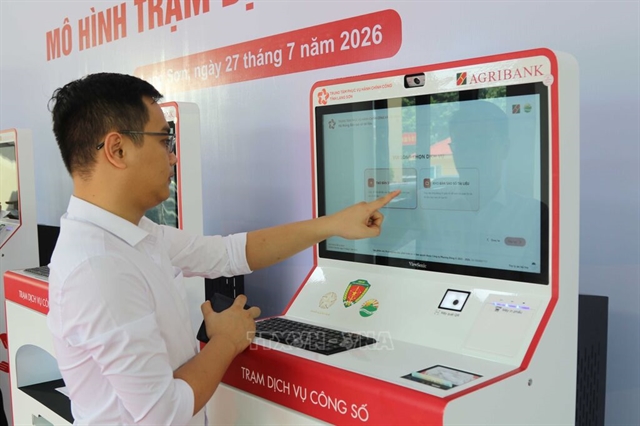
So will the price of data be determined by market principles? Where should the line be drawn between Government data that should be openly shared and data that can be commercialised?
In data science, particularly in the field of open data, data can be made available at different levels.
The first level is public data that can be freely accessed by citizens, such as legal documents. The second is data that users have to pay for. The third is a sandbox mechanism, which allows data whose potential market applications or risks have not yet been fully established to be tested before wider commercial use.
The fourth involves open data made available to start-ups and innovators. Users may be required to register their intended purpose and explain what kind of platform or solution they plan to develop. If the application delivers clear benefits to society and supports economic development, access can be authorised.
In other words, data moving from the public or private sector into the market should not follow a single model. There should be different levels of access and appropriate regulatory mechanisms for each type of data.
How can Việt Nam turn data into a strategic resource rather than simply collecting and managing it?
Data itself is already a resource. The important question is how we extract its value. Data that simply sits unused has limited value. But when combined with the right tools and technologies, particularly AI, its hidden value can be uncovered.
Start-ups and technology companies can play a key role in processing data and identify ing opportunities that are not immediately visible.
Data science specialists can then analyse and transform that data into products and services with the highest possible value.
Looking ahead, who will benefit most from the development of the data economy?
The biggest beneficiaries will ultimately be citizens, as they represent the country’s largest market. The data economy should create more convenient services and products across sectors, from healthcare and education to commerce and public services, in response to consumer demand.
Businesses and investors will also gain from new opportunities, but the wider population should see the greatest benefits as data becomes more widely used and shared. — VNS